
Grape phylloxera
Viteus cornutus
Grape phylloxera (Viteus vitifoliae) is a microscopic aphid-like insect belonging to the Phylloxeridae family that targets grapevines. It is notorious for being one of the most destructive pests in viticulture worldwide.
What the section contains
Grape phylloxera
The insect exists in several forms, including root-dwelling, leaf-galling, and winged forms. The root form is the most problematic, as it stays underground, making early detection extremely difficult.
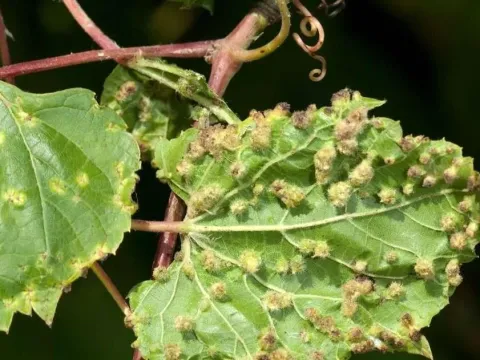
The leaf-galling form creates small swellings on the underside of leaves, which are the most visible sign of the pest's presence in a vineyard during the growing season.
Winged forms develop in late summer, allowing the pest to spread to new locations via wind, which can quickly turn a localized infestation into a regional issue.
This insect is highly specialized and feeds exclusively on the Vitis genus, which explains why it has co-evolved so effectively with the plant's physiological cycles.
The root form feeds on the grapevine roots, causing the formation of galls and necrotic lesions. These wounds restrict water and nutrient transport, leading to the plant's decline.
Infested vines show progressive wilting, stunted growth, and a significant drop in grape yield. Without intervention, death of the vine usually occurs within a few seasons.
Leaf-galling forms decrease the photosynthetic capacity of the foliage. While less destructive than the root form, they still weaken the vine and negatively affect overall vigor.
European grape varieties (Vitis vinifera) are highly susceptible to phylloxera because they lack the natural chemical defenses found in native American grape species.
The total economic impact is catastrophic, as entire vineyards can be destroyed, necessitating complete replanting with resistant rootstocks to maintain productivity.
The lifecycle of phylloxera is synchronized with the vine's development. Activity begins in the spring as soon as temperatures rise and the roots begin their active growth.
Leaf-galling generations occur during the peak of the growing season, with multiple overlapping generations potentially appearing every few weeks in warm climates.
The pest spends the winter in the soil as first-instar nymphs on the roots or within protected crevices of the vine's bark, waiting for favorable spring conditions.
Late summer marks the emergence of winged individuals, which is a critical time for monitoring and implementing containment measures to prevent further spread.
Soil moisture and temperature are key environmental factors; the pest thrives in environments that provide consistent moisture for root health while remaining warm enough for rapid reproduction.
The presence of galls on the leaves is the most obvious visual symptom. These bumps can cause the leaf blade to curl and become distorted, reducing photosynthesis.
Root symptoms include stunted vine growth, yellowing foliage, and a lack of vigor compared to healthy neighbors. This often manifests in circular patterns in the vineyard.
Examining the root system reveals galls or swellings on the root tips, which can eventually turn brown and rot, preventing the uptake of water and minerals.
In advanced infestations, entire sections of the vineyard may die, creating "gaps" in the rows as the insects expand their colony and move to adjacent vines.
Soil analysis or excavating roots at a depth of 20 to 50 centimeters is often required to confirm an infestation in cases where leaf symptoms are absent or minor.
The use of phylloxera-resistant rootstocks is the primary and most successful strategy. Most commercial vineyards today are grafted onto American Vitis species.
Strict quarantine protocols are essential, including the inspection of imported nursery stock and the disinfection of vineyard equipment to prevent soil movement.
Chemical control involving systemic soil-applied insecticides can be used to manage populations, although it is often costly and rarely eradicates the pest entirely.
Cultural management includes removing and destroying infested vines, including as much of the root system as possible, to starve the remaining population.
Regular monitoring using traps for winged forms and periodic root sampling helps detect outbreaks early, allowing for localized containment before a full-scale infestation occurs.