
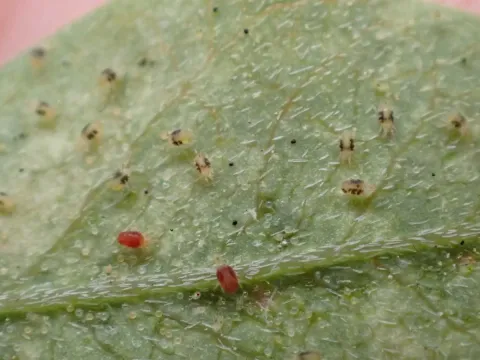
Multisetose spider mite
Tetranychus multisetis
The multisetose spider mite (Latin: Tetranychus multisetis) is a member of the Tetranychidae family. It is a highly specialized agricultural pest that thrives in warm, dry climates and poses a serious threat to various cultivation systems.
What the section contains
Multisetose spider mite
Morphologically, it is extremely similar to other spider mite species, often requiring microscopic examination of the setae to confirm the specific species. Adults are tiny, oval-shaped creatures that vary in color from pale green to brownish-red.
The mite follows a rapid developmental cycle: egg, larva, protonymph, deutonymph, and adult. In optimal summer conditions, a single generation can mature in less than 10 days, allowing the population to explode quickly.
Hibernating females overwinter in sheltered areas, such as soil debris, cracks in structures, or bark crevices. They emerge in the spring as soon as temperatures rise to infest young, growing vegetation.
Because they reproduce so quickly, they can colonize entire fields or greenhouse benches in just a few weeks. Females lay their eggs on the underside of leaves, ensuring the safety of the next generation from predators.
This mite is a polyphagous pest that targets vegetables, ornamentals, and fruit crops. It feeds by inserting its mouthparts into leaf tissue and sucking out the cellular contents, including chlorophyll, which is vital for the plant.
Initial signs of infestation appear as tiny, pale speckles on the leaf surface. As feeding continues, these spots merge, leading to yellowing (chlorosis), leaf bronzing, and eventually leaf drop, which significantly stunts plant growth.
A hallmark of Tetranychus multisetis is the fine, silky webbing produced across the underside of leaves and stems. This webbing protects the mites from environmental factors and helps them travel from one plant to another.
Heavy infestations can lead to complete plant collapse. By removing sap and nutrients, the mite weakens the host plant, making it significantly more susceptible to secondary viral and fungal infections.
Economic damage is most severe in greenhouse settings where the controlled environment allows the pest to thrive throughout the entire year, necessitating constant vigilance from growers.
Effective management begins with strict sanitation practices. Growers should remove weeds and plant debris from the perimeter of cultivation areas to eliminate potential breeding grounds for the mite.
Chemical control involves the use of specialized acaricides. Because these mites develop resistance to pesticides quite easily, it is essential to rotate products with different modes of action to maintain efficacy.
Biological control is a highly effective strategy, particularly in protected environments. Releasing predatory mites like Phytoseiulus persimilis or Amblyseius species can suppress pest numbers naturally.
Maintaining high humidity and appropriate temperature management in greenhouses discourages rapid mite reproduction, as these pests prefer dry, hot conditions for their life cycle.
- Routine scouting of the undersides of leaves.
- Maintaining proper plant spacing to improve airflow.
- Timely removal and burning of infested plant materials.
- Regular rotation of chemical control agents to prevent resistance.