
Red ring nematode
Rhadinaphelenchus
Description
How to identify
The red ring nematode belongs to the order Tylenchida and the family Aphelenchoididae, functioning as a significant plant-parasitic nematode.
It is characterized by its slender, filiform body, which allows it to thrive within the vascular tissues and intercellular spaces of its host plants.
The nematode relies heavily on the palm weevil for transmission, establishing a complex ecological relationship between the insect vector and the pathogen.
Identification usually involves dissecting the woody tissue of suspicious palm specimens and analyzing the extract using specialized microscopic techniques.
While invisible to the naked eye, their impact on the internal anatomy of the palm makes them one of the most destructive pests in tropical palm cultivation.
What it damages
This parasite primarily targets coconut and oil palms, causing the lethal red ring disease that can devastate agricultural plantations globally.
The nematodes migrate through the internal tissues of the palm, disrupting the vascular system and preventing the transport of water and nutrients.
This nutritional blockage leads to the rapid physiological decline of the host tree, often resulting in death within a very short timeframe.
Because the damage occurs internally, by the time external symptoms are visible, the tree is frequently beyond any possible recovery or treatment.
Economic losses are severe, as the death of mature, fruit-bearing trees can cripple the productivity of affected plantations for many years.
Signs of infestation
Symptoms often manifest as a progressive yellowing of the leaves, starting from the lower canopy and moving upwards as the infection spreads.
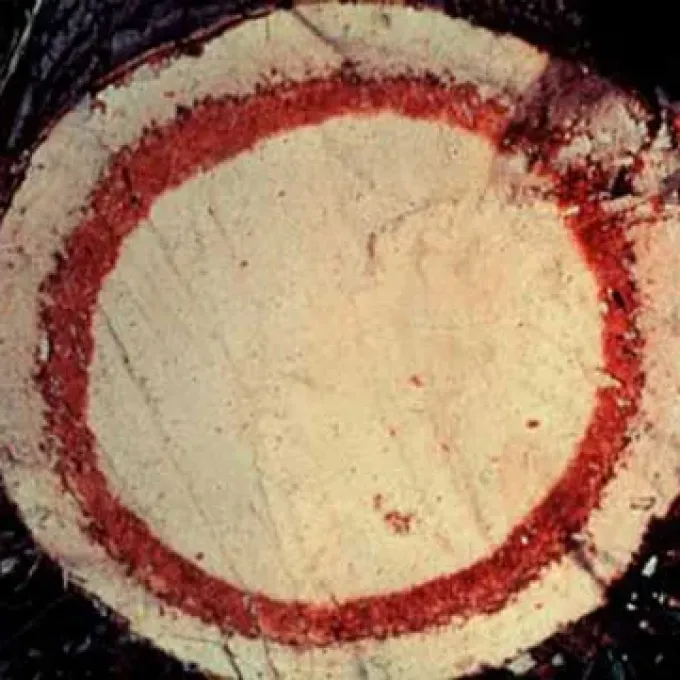
A diagnostic cross-section of the stem reveals a distinct, dark reddish-brown ring in the internal tissue, which gives the pest its common name.
The crown of the palm may exhibit stunted growth, with young leaves appearing deformed or failing to unfurl properly during the development phase.
In advanced stages, the tree structure weakens significantly, often resulting in the snapping of the trunk under moderate wind or mechanical stress.
Fruit production is typically inhibited, and any existing fruit clusters may drop prematurely due to the loss of systemic vigor in the infested palm.
Control measures
Management of the red ring nematode centers on the strict control of palm weevil populations, which act as the primary biological vectors for the parasite.
The standard recommendation for infected palms is immediate felling and total destruction, often through burning, to eliminate the reservoir of nematodes.
Implementing rigorous quarantine measures and inspecting all imported nursery stock is vital to prevent the introduction of the pest to clean areas.
Integrated Pest Management (IPM) programs should prioritize early detection through field scouting to identify and remove infected individuals promptly.
Hygiene practices, including the sterilization of cutting tools and equipment, are necessary to prevent the mechanical transmission of the nematode between plants.
Discussion
No discussions yet — be the first.