
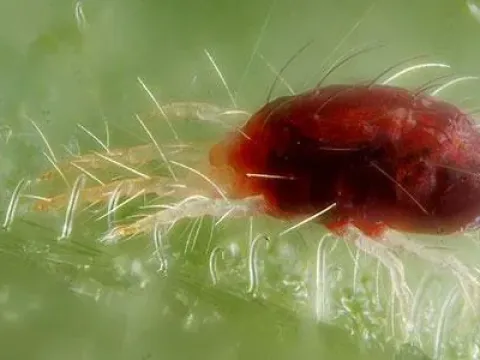
Cereal mite
Siteroptes graminum
The cereal mite, scientifically known as Siteroptes graminum, belongs to the family Siteroptidae. This microscopic pest is a significant threat to cereal crops, with adult specimens measuring approximately 0.2 to 0.3 mm in length.
What the section contains
Cereal mite
The species exhibits clear sexual dimorphism. Females possess a spindle-shaped body that becomes significantly enlarged when gravid, while males are smaller and more sclerotized, allowing them to navigate between plant structures with ease.
These mites reproduce rapidly, often completing multiple generations within a single growing season under favorable conditions. They overwinter as fertilized females in plant debris, grass sheaths, or within the crevices of crop residues.
Warm, dry weather conditions trigger the emergence of the mites from their overwintering sites, leading to the colonization of young grain crops. Wind dispersal is the primary method for the mite to spread across agricultural landscapes.
Due to their minute size and cryptic habitat inside the glumes of cereal ears, these pests often remain undetected until significant damage to the crop has already occurred.
The cereal mite primarily infests wheat, rye, barley, and oats. In addition to cultivated grains, the pest utilizes various wild grasses such as quackgrass and bromegrass as alternative hosts during periods when primary crops are unavailable.
The mites feed by piercing the plant tissue and extracting sap from the rachis and the base of the glumes. During feeding, they introduce toxins that disrupt the plant's physiological processes, causing localized tissue necrosis.
A critical aspect of their damage is their role as a vector for the fungus Fusarium poae. This interaction is the primary cause of the "white-head" disease, which renders the grain head sterile or severely underdeveloped.
The economic impact is substantial, as infected plants often fail to produce grain, or the yield is significantly reduced. The presence of the mites and associated fungi often leads to the accumulation of mycotoxins in the remaining grain.
Severe infestations can result in total crop failure in localized patches, particularly in fields with high weed pressure and poor agricultural management practices.
The hallmark symptom of infestation is the appearance of "white-heads," where the upper portion of the grain spike turns prematurely white while the rest of the plant remains green during the grain-filling stage.
Close inspection of the affected ears reveals shriveled glumes and darkening of the rachis. The tissue damage prevents the flow of nutrients to the developing kernels, leading to poor grain development or total abortion.
Plants affected early in the season often show signs of stunted growth and general chlorosis. The mites themselves can be found in colonies tucked inside the glumes, often requiring magnification for visual confirmation.
At the base of the kernels, one may observe necrotized tissue where the mites have aggregated. This localized damage often serves as an entry point for secondary fungal infections that further deteriorate the spikelet structure.
In the field, infected areas appear as irregular white patches or streaks, which become more pronounced as the healthy crop progresses through the milk-dough ripening stage.
Effective management of the cereal mite requires a holistic approach that integrates cultural, mechanical, and chemical control methods to suppress population levels throughout the season.
The most important preventive measure is the strict control of grassy weeds on field margins and within the crop. By removing these alternative hosts, the mite population is significantly reduced before the migration into the main field.
Using certified, clean seed and implementing deep plowing (moldboard plowing) helps to bury plant residues, effectively destroying the overwintering sites of the mites and breaking their life cycle.
Chemical intervention involving acaricides should be timed carefully based on field monitoring. Applications are most effective during the migration phase when mites are moving from their overwintering sites to the developing grain heads.
- Implement strict crop rotation to disrupt the mite's life cycle.
- Monitor fields for early signs of white-heads to determine the scope of infestation.
- Encourage rapid crop maturity through balanced fertilization to minimize the window of susceptibility.