
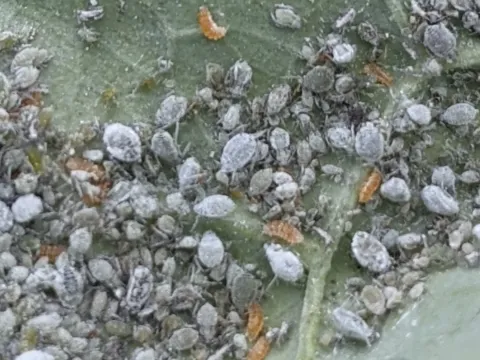
Cereal leaf midge
Phaenobremia helichrysis
The cereal leaf midge (Phaenobremia helichrysis) belongs to the family Cecidomyiidae (gall midges), order Diptera. These are very small insects with adults typically reaching 1.5–2 mm in length, possessing fragile bodies and delicate wings that make them difficult to spot in the field.
What the section contains
Cereal leaf midge
The larvae are spindle-shaped and often exhibit a color palette ranging from creamy white to bright orange or reddish, depending on their developmental stage. They are typically found in concealed areas like leaf sheaths or the underside of leaves.
The life cycle encompasses eggs, larvae, pupae, and adults. Overwintering occurs primarily in the soil as pupae, which provides protection against cold weather and mechanical interventions in the fields.
Under favorable climatic conditions, multiple generations can develop throughout the growing season. The speed of the life cycle is highly dependent on ambient temperatures and moisture levels during the wheat or barley development.
Due to their small size and cryptic nature, identifying them requires careful inspection of the vegetation using magnifying equipment, focusing particularly on areas showing signs of early chlorosis.
The midge primarily infests cereals, including wheat, barley, and rye. Larvae feed on the plant tissues, scraping the surface and sucking nutrients, which results in the depletion of the host plant's energy resources.
Damaged leaves often show signs of chlorosis, necrosis, and premature wilting. The loss of chlorophyll leads to reduced photosynthetic capacity, directly impacting the overall vigor of the crop during critical growth phases.
Severe infestations can lead to significant yield losses. Weakened plants are less capable of compensating for environmental stress, such as drought or heat, resulting in a reduced number of productive tillers.
Beyond direct feeding damage, the wounds created by the larvae serve as entry points for secondary pathogens, such as fungal or bacterial infections, which can further degrade the quality of the foliage.
In many regions, this pest is considered a secondary threat that becomes economically significant only when the balance of natural predators is disrupted or when weather conditions favor rapid population explosions.
The first signs of infestation are light-colored patches or streaks on the leaves. These often evolve into yellowish or necrotic areas as the larvae continue to feed, causing the leaf tissue to lose its integrity.
In later stages, leaves may curl or deform, effectively protecting the larvae from contact insecticides and predators. Searching inside the leaf sheath often reveals clusters of small larvae feeding on the stem or leaf base.
Field-level observations show patches of stunted growth, where infested plants appear smaller and less green than healthy individuals. A lack of uniform growth in a cereal field is a common indicator of pest activity.
The presence of sticky honeydew-like secretions (if present) or dark discoloration caused by larval saliva are also critical diagnostic signs that an agronomist should look for during field surveys.
Careful monitoring of the crop canopy with a hand lens is essential during the tillering and stem elongation stages to detect the pest before damage becomes irreversible.
Management strategies emphasize cultural practices, such as crop rotation and the destruction of volunteer cereals and weeds that harbor midge populations between growing seasons.
Deep plowing in the autumn is a highly effective mechanical method to bury pupae in the soil, preventing their emergence in the following spring and significantly reducing the initial infestation pressure.
Chemical control should be implemented based on economic thresholds and expert scouting. When necessary, systemic insecticides are used to reach larvae hidden within leaf sheaths.
Preserving natural enemies, including parasitoid wasps and various predatory beetles, is vital for long-term control. Selective pesticide applications that minimize harm to beneficial insects are preferred.
- Selecting resistant or tolerant grain varieties to reduce damage impact.
- Optimizing irrigation and fertilization to improve plant recovery.
- Using yellow sticky traps to monitor adult flight patterns and timing of intervention.