
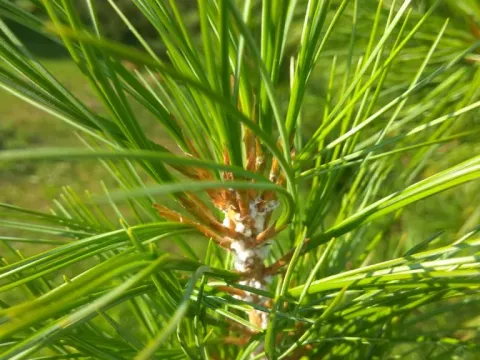
Pine woolly aphid
Pineus silvestris
The pine woolly aphid (Pineus pini) is a small insect belonging to the Adelgidae family, which is specialized in feeding on various species of pine trees.
What the section contains
Pine woolly aphid
Adult insects are typically very small, but they are easily spotted due to the white, fluffy, wax-like filaments they produce to cover their bodies for protection.
These insects have a complex life cycle involving multiple generations that may feed on different parts of the host tree throughout the growing season.
They possess specialized mouthparts used to pierce the bark and needles of the pine, allowing them to extract essential plant sap for their development.
Overwintering usually occurs in the nymph stage, with the insects sheltering in the bark crevices or at the base of the needles until the weather warms up.
The primary hosts of this pest include species like Scots pine, black pine, and other ornamental conifers commonly found in nurseries and residential landscapes.
As the aphids feed on the tree sap, the affected needles begin to lose their vigor, yellowing, curling, and eventually turning brown as the tree loses nutrients.
Heavy infestations can lead to stunted growth, dieback of individual branches, and in severe cases, the overall decline or death of young pine trees.
The feeding process significantly impairs the aesthetic value of the tree, as the foliage becomes deformed and patchy, reducing the density of the canopy.
Furthermore, the physical damage created by the aphids' feeding creates entry points for secondary fungal infections, which further stress the tree's immune system.
Activity typically begins in early spring as soon as temperatures rise above 5–8 degrees Celsius and the trees initiate their seasonal sap flow.
The first generation of nymphs emerges during the spring months, coinciding with the growth of fresh pine candles, which are highly susceptible to aphid attack.
Multiple generations occur throughout the summer, often leading to a buildup of populations that can persist if environmental conditions remain favorable.
As autumn temperatures drop, the aphids move toward sheltered locations on the bark to enter their dormant overwintering state, protected from the cold.
Peak damage is most visible during late spring and early summer when the population density is at its highest and the tree is actively growing.
The most obvious sign of an infestation is the presence of white, cotton-like wax clusters on the branches, needles, and bark of the pine tree.
Discoloration of the needles is common; they may turn yellow or mottled, followed by significant needle drop that leaves branches looking sparse and unhealthy.
Sticky honeydew secretions are often found on the foliage, which frequently lead to the growth of sooty mold, appearing as a black, dusty coating on the needles.
Stunted growth patterns and deformed, twisting needles are clear indicators that the tree has been under stress from a sustained aphid feeding session.
- White, fluffy wax deposits on twigs.
- Yellowing or curling of pine needles.
- Sticky honeydew residue on the canopy.
- Black sooty mold covering the foliage.
- Premature needle drop and branch dieback.
Systemic insecticides are the most effective way to control pine woolly aphids, as they are absorbed by the tree and poison the insects as they feed.
Treatment should be applied early in the spring, just before the buds break, to target the overwintering nymphs before they become protected by wax.
Pruning and disposing of heavily infested branches can help reduce the local population of the pest and prevent the spread to cleaner areas of the tree.
Maintaining tree health through proper watering and fertilization ensures the pine is resilient enough to recover from moderate aphid-related stress.
Horticultural oils can be used as a contact control method, as they suffocate the insects by coating them and blocking their respiratory system.