
Phaenobremia borealis
Phaenobremia borealis
Phaenobremia borealis is a species of predatory gall midge (family Cecidomyiidae) that plays a critical role in agricultural ecosystems by naturally suppressing aphid populations.
What the section contains
Phaenobremia borealis
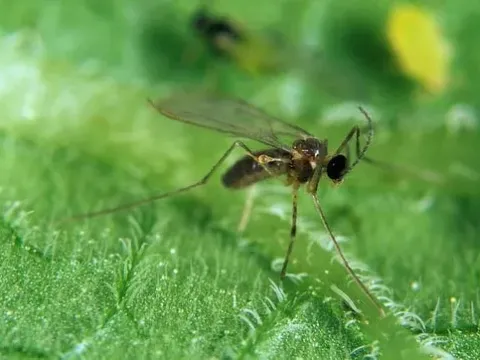
Adult midges are delicate insects with fragile bodies and slender legs, typical of the Cecidomyiidae family, making them difficult to spot without close inspection.
The larvae are distinctively orange or reddish-orange, which is the most reliable identifying feature when monitoring aphid colonies on leaves and stems.
The wing venation of adult Phaenobremia borealis is simplified, a trait used by entomologists to distinguish this species from other related cecidomyiids in a laboratory environment.
Developmental success is highly dependent on microclimatic humidity, which is essential for both egg hatching and the survival of the larvae in the field.
Technically, Phaenobremia borealis is not a crop pest but a beneficial predator that feeds on various aphid species that infest fruits, vegetables, and ornamentals.
The larvae actively hunt aphids, effectively reducing the damage caused by pests such as green apple aphids or currant aphids in orchards and gardens.
While they are considered beneficial, large populations might occasionally be displaced if surrounding ecological conditions change or if pesticide use is too frequent.
The larvae play a significant role in reducing the need for chemical intervention by providing natural, biological pest control during the peak aphid growth season.
In modern horticulture, the presence of these midges is encouraged as part of Integrated Pest Management (IPM) strategies to maintain a healthy ecological balance.
The activity of Phaenobremia borealis generally begins in late spring when ambient temperatures rise, facilitating the emergence of adults from overwintering sites.
Population peaks are typically observed during mid-summer, aligning with the periods of high aphid density on host plants like fruit trees and shrubs.
The species can complete multiple generations within a single growing season, provided that aphid colonies are abundant enough to support larval development.
Pupation occurs in the soil or within organic debris, where the insects are shielded from extreme weather conditions and fluctuations in humidity.
As temperatures drop in autumn, the population transitions into a diapause stage, overwintering as pupae to ensure survival until the following growing season.
The most visible sign of Phaenobremia borealis presence is the occurrence of small, bright orange larvae crawling amidst aphid colonies on tender plant tissue.
An accumulation of shriveled or empty aphid exoskeletons often suggests that these predatory larvae are feeding nearby, significantly thinning out the pest population.
Eggs are often laid by the female midge in close proximity to aphid clusters, serving as an early indicator of upcoming biological regulation of the pest.
A reduction in leaf curling on shoots, despite the presence of initial aphid infestation, is a positive indicator that the midge larvae are successfully at work.
Patches of clean, healthy foliage within a heavily infested plant suggest the localized impact of this predatory insect on aphid colonies.
There is no need for control measures against Phaenobremia borealis, as it is a beneficial insect and a valuable ally for farmers and gardeners.
To preserve this predator, growers should minimize the use of broad-spectrum insecticides, especially during the active growth and flowering stages of the crop.
Adopting IPM practices helps create an environment where natural predators can thrive, effectively reducing the overall reliance on synthetic chemical treatments.
Maintaining floral borders and hedgerows around fields can provide necessary habitats for adult midges, ensuring their presence throughout the growing season.
When chemical pest control is absolutely necessary, prioritize the use of selective pesticides that have minimal impact on predatory gall midges and other beneficial insects.