
Phenacaspis
Phenacaspis
Description
How to identify
Phenacaspis is a genus of scale insects belonging to the family Diaspididae, within the order Hemiptera. These insects are notorious pests that primarily feed on the sap of woody plants and shrubs.
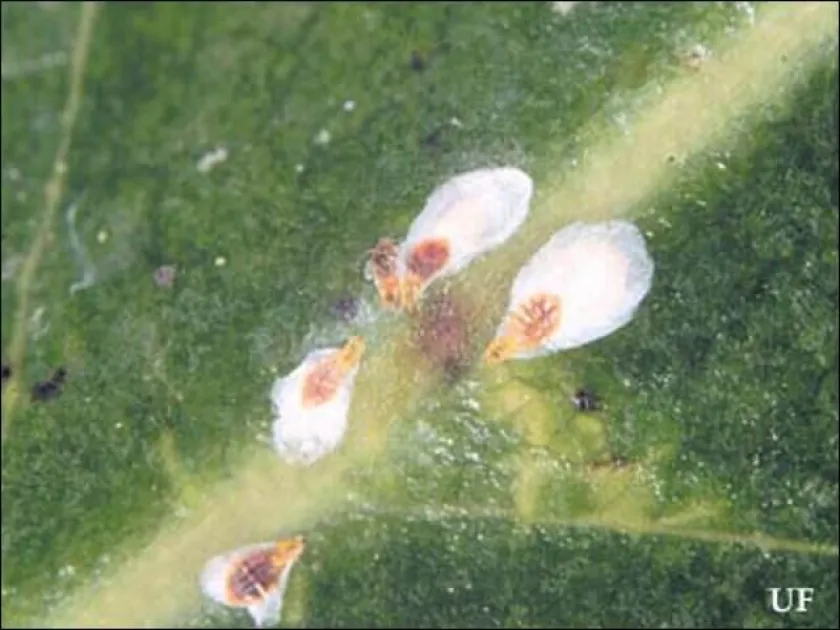
The adult female is characterized by a protective waxy scale (test), which serves as a shield against external threats. These scales are often white or light-colored, making them distinct when they form dense colonies on tree bark.
Adult males of this genus are winged and mobile, but they lack functional mouthparts and do not feed. Their sole purpose is to reproduce, after which they have a very short lifespan compared to the sedentary females.
The most active stage of the life cycle is the "crawler" (nymph). These minute, six-legged larvae emerge from beneath the female’s scale to migrate to new parts of the host plant or to be dispersed by wind to neighboring plants.
Taxonomic identification of Phenacaspis species often requires detailed microscopic examination of the female pygidium. Because many scale insects share similar morphology, professional diagnostics are essential for accurate identification.
What it damages
Phenacaspis infestation impacts a wide range of horticultural crops, including citrus, olives, and various ornamental trees. The insects attach themselves to the bark or leaves and suck the nutrient-rich sap.
Continuous sap extraction leads to the loss of plant vigor and the disruption of normal growth. As the insects multiply, they drain the plant’s energy reserves, causing significant stress to the host.
Damage symptoms often manifest as leaf chlorosis, yellowing, and premature abscission. In severe cases, the affected shoots or entire branches begin to wither and die back, significantly affecting the plant's structural integrity.
The feeding process creates puncture wounds that serve as entry points for various fungal and bacterial pathogens. This secondary infection often complicates the health status of the tree, leading to further decay.
If left unmanaged, the scale insect colonies can expand rapidly, covering large sections of the bark and potentially leading to the death of young or weakened plants.
When it appears
The life cycle of Phenacaspis is heavily influenced by environmental conditions, particularly temperature. In warmer climates, these insects can complete multiple generations within a single growing season.
Crawler emergence typically aligns with the warmer months of spring and summer. This period of peak activity is the most critical time for monitoring and implementing chemical control measures.
During the winter, Phenacaspis usually overwinters in a protected state, such as fertilized females or eggs, shielded by their wax tests. This adaptation makes them highly resistant to environmental fluctuations.
As spring temperatures rise, the metabolism of the insects increases, leading to egg-laying and the start of the next cycle. This rapid population buildup makes early detection vital for effective management.
Agronomists and gardeners should conduct routine inspections during the peak growth season, focusing on fresh green shoots and the undersides of leaves where crawlers prefer to settle.
Signs of infestation
The most obvious sign of an infestation is the presence of small, white, or greyish crusts on the branches. These are the waxy shields of the scale insects, which may appear as if the bark has been painted.
Affected plants often show signs of stunted growth and a general decline in health. The foliage may appear sparse, and the overall plant canopy may lose its vibrant green color.
Sticky residues on the plant surface, often referred to as honeydew, may be present. This substance is excreted by the insects and frequently attracts ants or promotes the growth of sooty mold.
Twigs and young branches might exhibit deformation or drying out. In heavy infestations, the bark may feel rough to the touch due to the high density of accumulated scale tests.
- Clusters of white/grey scale insects on the bark.
- Presence of ants searching for honeydew.
- Yellowing leaves and branch dieback.
- Stunted shoot growth and general lack of vitality.
Control measures
Controlling Phenacaspis requires a comprehensive strategy because the protective waxy covering renders the insects resistant to many standard contact insecticides.
Systemic insecticides are the preferred choice, as they are absorbed by the plant and ingested by the insects while feeding. These treatments are most effective when applied during the crawler emergence phase.
Pruning is an essential manual control method. Infested branches should be removed and destroyed immediately to reduce the overall population pressure and prevent the spread to healthy sections of the plant.
Biological control involves the use of natural predators, such as ladybird beetles or parasitic wasps, which can naturally regulate the scale insect population in a balanced ecosystem.
Maintaining high horticultural standards is a vital preventative measure. Healthy, well-fertilized, and properly irrigated plants are significantly more resilient to infestation than stressed or neglected ones.
Discussion
No discussions yet — be the first.