
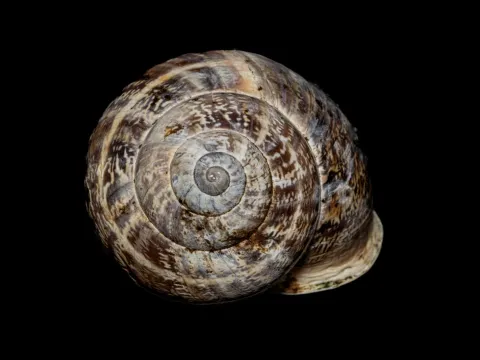
Otala vermiculata
Otala vermiculata
Otala vermiculata is a species of land snail belonging to the Helicidae family. These molluscs are characterized by a sturdy, globular, and slightly flattened shell that typically reaches 25–35 mm in diameter, often featuring dark, interrupted spiral bands.
What the section contains
Otala vermiculata
The soft body of the snail is usually greyish or brownish with a distinct wrinkled texture. This species is highly adaptable, allowing it to thrive in diverse environments ranging from coastal areas to agricultural fields.
The life cycle encompasses eggs, juveniles, and adults. Reproduction occurs through cross-fertilization, with eggs deposited in clusters within moist, hidden soil depressions to prevent desiccation.
These snails are primarily nocturnal, spending daylight hours in cool, damp refuges such as mulch, dense foliage, or under debris. Their ability to seal their shell aperture helps them survive harsh or dry conditions.
Populations can increase rapidly under favorable moisture conditions, making them a persistent challenge for gardeners and commercial growers alike.
As a generalist herbivore (polyphage), Otala vermiculata feeds on a wide range of plants, including leafy vegetables, crucifers, fruits, and ornamental garden plants.
Feeding damage typically presents as large, irregular holes in the foliage, which can quickly lead to complete defoliation of tender young plants. Seedlings are particularly vulnerable and may be destroyed entirely.
The snails produce significant amounts of mucus, which contaminates the surface of the produce, reducing its quality and aesthetic value. This residue can also serve as a vector for various plant pathogens.
In addition to leaves, they target developing fruit and flowers, causing deep scarring that invites fungal and bacterial rot, often rendering the crop unsellable.
Continuous feeding in greenhouses or irrigated gardens leads to stunted growth and reduced yields, as the plants cannot maintain necessary photosynthetic activity to recover from the damage.
The activity of Otala vermiculata is closely tied to humidity levels. They are most active during the cooler, wetter months of spring and autumn, which coincide with their main reproductive and feeding periods.
During the peak of summer, if the climate becomes dry, the snails enter an aestivation state (a form of summer dormancy), retreating to sheltered areas to wait for the return of moist conditions.
Overwintering occurs in the soil or protected crevices where temperatures remain relatively stable. As soon as spring rains initiate, adult snails emerge to feed and begin the egg-laying process.
Newly hatched snails are highly voracious and appear shortly after the first significant rains. This creates a secondary spike in damage as the juvenile population begins to grow rapidly.
Monitoring should be most intense during the transition seasons, particularly after heavy irrigation or rainfall, as these conditions stimulate immediate activity.
Visible ragged holes on leaves are the primary indicator of snail presence. Unlike insect damage, the edges of these holes are often irregular and may vary in size depending on the snail's age.
The most unmistakable sign is the presence of dried, shimmering mucus trails found on leaves, stems, paths, and surrounding soil, marking the path of the snail's recent movement.
Direct sightings of the snails, particularly during early morning hours or in the evening, confirm the infestation. Checking the undersides of pots and garden debris is a standard detection practice.
If plant stems are girdled or young tissues are missing at the base of the plant, it strongly suggests a nighttime attack by gastropods.
The development of secondary rot spots on fruits or vegetables that show signs of gnawing is a strong indicator of an ongoing infestation by snails.
Cultural management is the first line of defense: keeping the garden clear of weeds, organic debris, and standing wood eliminates the primary hiding spots for the snails.
Physical barriers such as copper tape, coarse gravel, or crushed eggshells can deter snails from reaching sensitive vegetable beds, although these are most effective on a small scale.
Manual collection in the early hours is effective for small areas. Creating "trap sites" using wet cardboard or wooden boards encourages the snails to congregate in one place for easy removal.
Biological control agents, specifically parasitic nematodes like Phasmarhabditis hermaphrodita, offer a high-efficiency solution for damp soil environments where snails are prevalent.
Chemical control involving molluscicides (baits) is a common strategy in agriculture.
- Ensure baits are placed where they are accessible to snails but protected from pets.
- Strictly follow the manufacturer's label for application rates and safety.
- Use integrated pest management to reduce reliance on chemicals over time.