
Nymphon gracile
Nymphon gracile
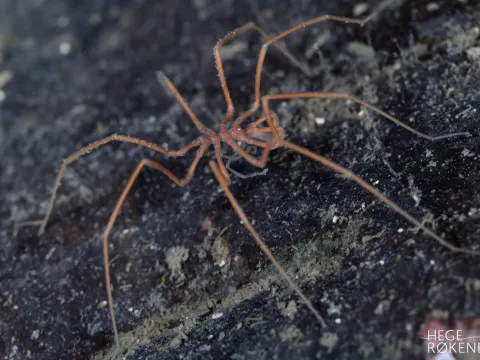
Nymphon gracile, commonly known as a sea spider, belongs to the class Pycnogonida or Pantopoda. Despite the name, it is not a true spider but a distinct marine arthropod.
What the section contains
Nymphon gracile
The body is slender and small, with four pairs of long, thin walking legs. The appendages are proportionately very long, which gives the creature a fragile appearance.
These organisms exhibit a unique anatomy where the internal organs, due to the limited space in the small trunk, extend into the cavities of the legs.
They are generally found in shallow marine waters, often hiding among hydroids and bryozoans on rocky substrates or seaweed beds.
It is crucial to note that Nymphon gracile is entirely a marine creature and has no ecological or economic interaction with land-based agricultural crops.
Nymphon gracile does not cause damage to agricultural plants, garden crops, or fruit trees as it lacks the physiological capability to survive on land.
Its diet consists strictly of small marine invertebrates, particularly hydroids, which it consumes using a proboscis to suck out tissue contents.
There is no record of this species acting as a pest, neither in greenhouses nor in open-field farming systems, as its biological niche is confined to the sea.
The concern of pest management does not apply to this species, as it represents no risk to food security or plant health.
In short, it should not be considered a pest, and any reports implying it might damage crops are taxonomically and biologically incorrect.
The life cycle of Nymphon gracile is influenced by coastal water temperatures and the availability of specific hydroid colonies.
Breeding typically occurs in the colder months or early spring, which is standard for many northern temperate marine species.
Males carry the eggs on specialized structures called ovigers until the larvae hatch and transition into the protonymphon stage.
Development involves a metamorphosis that occurs entirely within the marine environment, independent of any seasonal agricultural cycles.
Population density is governed by marine ecological factors, such as predator-prey relationships within the benthic community.
Signs of this species are limited to observations of their natural habitat, such as on rocky shores or in subtidal marine environments.
Visible signs of their presence include small feeding marks on colonial marine polyps, which are their primary food source.
There are no symptoms or signs of infestation on terrestrial vegetation, as the species cannot survive outside of a marine environment.
For those researching marine biodiversity, spotting them requires careful inspection of submerged seaweed or colonies of benthic organisms.
Their cryptic coloration and small size make them difficult to locate without specific search methods in their native underwater habitat.
No control measures are needed for Nymphon gracile, as it is a harmless marine organism that does not threaten agricultural interests.
Any attempt to apply pest control agents such as insecticides is entirely ineffective and ecologically harmful to marine life.
Integrated pest management strategies should focus on real terrestrial pests rather than marine organisms that have no interaction with agricultural systems.
If specimens are found near coastal agricultural zones, they naturally perish due to lack of moisture and inability to feed on terrestrial plant matter.
No agricultural protocol is required for this species, as it serves as a component of the marine food web rather than a agricultural pest.