
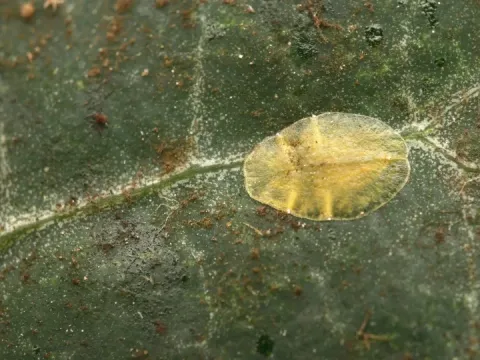
Olive scale
Filippia oleae
The Olive scale (Filippia oleae) is a small sap-sucking insect belonging to the family Coccidae. It is a major pest, particularly in regions where olive trees are cultivated commercially.
What the section contains
Olive scale
The adult female is sessile and protected by a hard, convex, brown shield-like structure. This shield acts as both a physical barrier against predators and a micro-environment for egg production.
Males are rarely observed, as they are small, winged, and short-lived, serving only to fertilize the females. The population is almost exclusively maintained by the sedentary females and their mobile nymphs.
The life cycle begins with the emergence of crawlers, which are the only mobile stage capable of dispersing to different parts of the plant or even neighboring trees.
Morphologically, the insect is highly specialized. Its mouthparts are adapted to pierce the plant tissues and extract phloem sap, which is the primary source of nutrition for the species throughout its development.
##damage##The primary host for this pest is the olive tree (Olea europaea). Heavy infestations cause significant physiological stress, weakening the tree and reducing its annual vegetative growth.
Secondary damage occurs due to the excretion of honeydew, a sugary substance that facilitates the growth of sooty mold. This black fungal layer covers the leaves, significantly reducing the tree's photosynthetic capacity.
Besides olives, the insect can infest various ornamental shrubs and other broad-leaved evergreens in Mediterranean climates, making it a generalist pest in certain garden ecosystems.
Long-term infestation leads to leaf drop, twig dieback, and reduced fruit yield. In commercial groves, the presence of these scales can lower the market quality of the harvested fruits.
Furthermore, the physical wounds created by the insect's feeding serve as entry points for various bacterial and fungal pathogens, potentially leading to more severe plant diseases.
Developmental timing is heavily dictated by the climate. Activity typically resumes in early spring as temperatures rise and trees enter the phase of vigorous growth.
The crawler stage is the most critical period for population expansion. These nymphs usually appear during the warmer months, taking advantage of the increased sap flow in young shoots.
Autumn marks the beginning of the preparation for winter. The scale insects seek refuge in protected niches, such as crevices in the bark or the undersides of leaves, to withstand lower temperatures.
Depending on the climatic zone, the pest may complete one or two generations per year. Warmer winters in recent years have contributed to increased survival rates and higher infestation levels.
Monitoring for the crawler stage is essential for effective timing of chemical or biological treatments, as this is the only time the insect is susceptible to contact pesticides.
The most obvious sign of an infestation is the appearance of small, brownish, bump-like protrusions on the twigs and branches, which are the protected female scale insects.
Sticky honeydew secretions on the foliage are a classic indicator. This substance is often highly visible and creates a distinct sheen on the leaves before the sooty mold takes hold.
A black, crusty coating on the leaf surface, known as sooty mold, indicates a long-standing infestation that has already significantly affected the tree's photosynthesis.
The presence of large ant colonies on the tree is a strong indicator of scale insects. Ants tend these insects for their honeydew and often protect them from natural predators.
Early signs of infestation can also include yellowish spots or localized wilting on leaves where the scales have established themselves and are actively extracting nutrients.
Control strategies often focus on the crawler stage. Systemic insecticides are highly effective during this period, as they are absorbed by the plant and kill the nymphs as they feed.
Horticultural oils or mineral oils are widely used as an environmentally friendly alternative. They work by smothering the insects and are safe for many beneficial species when applied correctly.
Biological control plays a vital role. Encouraging populations of ladybird beetles and parasitic wasps can significantly reduce the scale population density without the need for intensive chemical use.
Pruning is an effective cultural practice. By opening up the canopy and removing heavily infested branches, growers can improve airflow and reduce the humidity levels that favor scale reproduction.
- Maintain tree vigor through proper fertilization and irrigation.
- Use sticky barriers on tree trunks to prevent ants from protecting the scales.
- Perform regular inspections, especially during the crawler emergence season.