
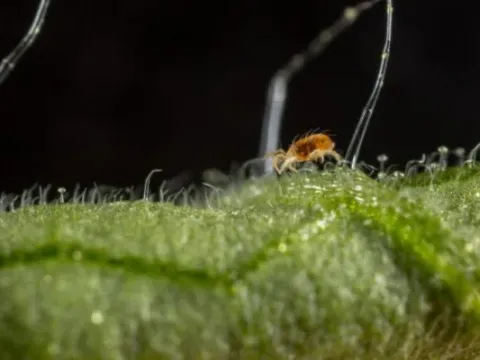
Mountain spider mite
Eotetranychus monticola
The mountain spider mite (Eotetranychus monticola) belongs to the class Arachnida, order Acariformes, and the family Tetranychidae. It is a tiny, often microscopic pest that poses a significant threat to various agricultural crops.
What the section contains
Mountain spider mite
The adult mites have an oval body with a pale green or straw-colored appearance, making them difficult to detect on the foliage of host plants.
Their life cycle consists of the egg, larva, protonymph, deutonymph, and adult stages. The progression between these stages is highly dependent on ambient temperature and humidity.
Females are generally larger than males and prefer depositing their eggs on the underside of leaves, specifically near the main veins where they are protected.
As the name suggests, this species is frequently found in mountainous and sub-alpine regions, thriving in specific microclimatic conditions typical of these zones.
The mountain spider mite is a polyphagous pest, meaning it attacks a wide range of host plants, particularly fruit trees, berry bushes, and certain ornamental plants.
The primary damage occurs when mites pierce the leaf epidermis and extract cellular contents, disrupting the plant's photosynthetic processes and overall vigor.
Typical host crops include apples, pears, plums, and grapevines, which are often susceptible to severe infestation in commercial orchard settings.
Leaf tissue damaged by mite feeding becomes chlorotic and eventually necrotic, leading to premature leaf drop and reduction in the plant's energy reserves.
In addition to direct physiological damage, severe infestations can lead to reduced fruit set and lower quality of the harvest due to the plant's overall stress.
Mite activity generally begins in the spring when temperatures rise above 12–15 degrees Celsius, allowing the overwintering population to emerge.
The peak of their population density typically occurs during the hot, dry summer months, which provide ideal conditions for rapid reproduction and multiple generations.
During the growing season, the mites can produce several successive generations, leading to explosive population growth if not monitored and managed properly.
In the autumn, as day length decreases and temperatures drop, adult females seek protected overwintering sites to survive the cold season.
Overwintering sites often include bark crevices, plant debris, or hidden places within the orchard structure where they enter a state of dormancy.
The initial signs of an infestation include the appearance of tiny stippling or white dots on the upper leaf surface, caused by the mites feeding on the underside.
The presence of fine, delicate webbing between the leaves and on the shoots is a definitive indicator of a significant mite colony presence.
As the feeding damage progresses, the leaves lose their color, turn yellow or bronze, and eventually dry out and fall from the branches prematurely.
The entire plant may show signs of stunted growth, poor vigor, and an overall unhealthy appearance that affects the final crop yield and quality.
- Stippling of leaves (small white dots).
- Fine silken webbing on shoots.
- Yellowing and bronzing of foliage.
- Premature leaf abscission.
- Reduced fruit development and quality.
Managing the mountain spider mite requires a well-integrated pest management strategy that combines cultural, biological, and chemical controls.
Maintaining proper irrigation is essential, as high humidity and adequate moisture levels can naturally limit the mites' ability to reproduce effectively.
When the economic threshold is reached, the application of specific acaricides is necessary to reduce the population and prevent significant damage.
It is vital to rotate different chemical classes to prevent the mites from developing resistance, ensuring that the control program remains effective over time.
Dormant season practices, such as bark cleaning and removing debris, help reduce the overwintering population, lowering the pressure on the trees in the following season.