
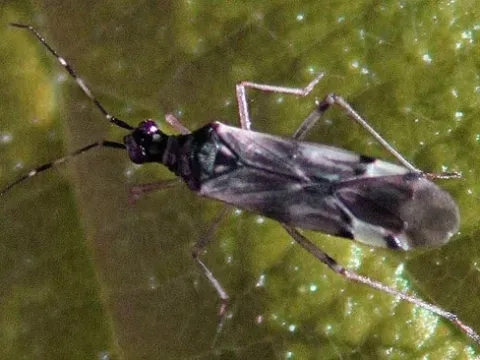
Dicyphus minimus
Dicyphus minimus
Dicyphus minimus belongs to the family Miridae (plant bugs), order Hemiptera. These are small insects, typically reaching a length of 3 to 4 millimeters.
What the section contains
Dicyphus minimus
The adults are characterized by a slender body shape with coloration ranging from light green to yellowish-brown, aiding their camouflage on green foliage.
The head features prominent compound eyes, and the antennae are remarkably long and filiform, which is a key diagnostic feature for visual identification.
Nymphs resemble smaller, wingless versions of the adults, usually displaying a brighter green color which makes them blend into the leaf veins.
Monitoring for these pests is effectively performed using yellow sticky cards, which help detect their presence in greenhouse environments early on.
While often considered a generalist, this bug is a significant pest of Solanaceous crops, with a particular preference for tomatoes and eggplants.
The feeding mechanism involves piercing plant tissues and extracting sap, which directly impacts the plant's ability to maintain healthy photosynthesis.
Dicyphus minimus is known to act as a potential vector for several phytoplasmas and viruses that can cause severe damage to commercial vegetable crops.
Severe infestations lead to significant losses in flower sets and young fruit, causing shedding and decreasing the overall yield potential of the crop.
Visible damage usually starts on the younger, more succulent leaves and spreads across the canopy if control measures are not implemented promptly.
The activity of this pest is closely linked to warm conditions, with populations peaking during the active growing season of the host plants.
In climate-controlled greenhouses, this species can reproduce throughout the year, with generation cycles shortening as the ambient temperature rises.
Temperature fluctuations significantly influence the speed of development from egg to adult, with 20–25°C being the preferred range for rapid population growth.
As the season progresses, insects may seek refuge in crop debris or structural cracks in the greenhouse, making sanitation a critical end-of-season task.
Early-season monitoring is vital as migration from surrounding weeds can lead to rapid colonization of new greenhouse plantings in the spring.
Initial signs of infestation appear as small chlorotic stippling on the leaves, resulting from the bug's probing and feeding activities on the plant cells.
Advanced feeding symptoms include leaf yellowing, curling, and stunted growth, which can be easily confused with nutritional deficiencies by inexperienced growers.
Growers should look for small black fecal droplets on the underside of leaves and cast skins (exuviae) left behind by nymphs during their developmental stages.
Fruit damage often manifests as irregular scarring or discoloration, which reduces the marketability and visual quality of the harvested produce.
Checking the growing points and leaf axils during regular scouting is essential, as these areas provide shelter for both adults and juvenile stages.
A successful management strategy relies on strict sanitation, including the removal of weed hosts that harbor Dicyphus species around the production area.
Post-harvest deep cleaning and disinfection of greenhouse structures are required to eliminate populations residing in the facility before the next crop cycle.
Biological control using predatory bugs or entomopathogenic fungi can suppress populations before they reach economic injury levels.
When chemical intervention is necessary, targeted insecticides with systemic action should be used in accordance with regional regulations and label instructions.
- Use of fine-mesh screening on ventilation windows to block entry
- Deployment of yellow sticky traps for consistent population monitoring
- Removal of infested plant parts as soon as symptoms are detected