
Black scarab beetle
Heteronychus sinopis
Description
How to identify
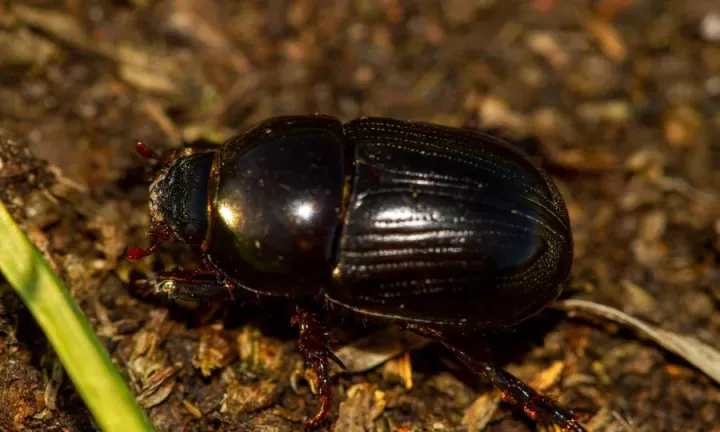
The black scarab beetle (Heteronychus sinopis) belongs to the family Scarabaeidae within the order Coleoptera. Adult beetles are typically 10 to 15 mm long and have a distinct, glossy black appearance.
Their body structure is highly specialized for subterranean life. The forelegs are broad and heavily toothed, serving as efficient tools for digging through dense soil profiles where the insects reside.
Larvae have a characteristic C-shaped body with a cream-white color and a hard, brown head capsule. They develop within the soil, feeding primarily on decaying organic matter and roots.
Identification often requires careful examination of the beetle's scutellum and the specific puncture patterns on the elytra, which differentiate them from other harmless scarab species.
These insects are nocturnal and exhibit strong positive phototaxis, meaning adults are frequently attracted to artificial light sources, such as streetlamps or traps, during the night.
What it damages
While both larvae and adults occupy the soil, the adult stage is responsible for the most severe economic damage. Adults gnaw into the subterranean stems of young plants, causing sudden wilting and death.
The host range is diverse, including essential crops like potatoes, maize, tomatoes, and various grasses. In potatoes, beetles create deep, circular holes in tubers, severely reducing market value.
When infestation levels are high, the beetles can cause significant stand loss, particularly during the early vegetative stages when plants are most vulnerable to mechanical injury.
These entry wounds created by the beetles act as gateways for secondary fungal and bacterial infections, such as soft rot, which can cause further destruction of the crop during storage.
Fields with high amounts of crop residues are more susceptible to infestations, as these materials provide optimal conditions for the beetles to overwinter and complete their life cycle.
When it appears
The activity cycle begins in the spring as soil temperatures rise. Adult beetles typically emerge from their overwintering sites in the soil around April or May to start their seasonal movement.
The peak period of activity occurs during the summer months, specifically June and July. During this time, the beetles are actively feeding, mating, and laying eggs in the soil.
Heteronychus sinopis completes one generation per year. Adults spend the winter deep underground, protected from frost, and resume their life cycle as conditions become favorable the following year.
Towards the end of the summer, a second smaller wave of activity may occur, as the new generation of adults feeds extensively to accumulate fat reserves necessary for winter survival.
Environmental factors such as soil moisture content are critical; increased humidity generally correlates with higher larval survival rates and increased beetle pressure on crops.
Signs of infestation
The most common sign of an infestation is the sudden wilting of seedlings in a field that appears otherwise healthy. Upon closer inspection, the plant stem will show clear signs of chewing damage below the soil line.
For potato crops, visual signs include rounded entry holes in the tubers, which often lead to deep tunnels inside the flesh. These symptoms are easily distinguished from wireworm damage.
Stunted growth, yellowing foliage, and uneven stand development across the field are common indicators that a beetle population is actively feeding on the root systems.
After heavy rainfall or irrigation, one may observe small soil mounds or exit holes on the surface of the soil, indicating the recent movement of beetles from their subterranean galleries.
Effective scouting often involves the use of light traps at night to monitor the arrival and density of the beetles, which helps farmers time their control interventions precisely.
Control measures
Good agricultural practices are the foundation of management. Deep plowing in the autumn helps to disturb the soil, exposing overwintering adults to adverse weather and natural predators.
Crop rotation is essential for long-term control. By avoiding planting susceptible host crops in the same area for two to three years, the beetle population can be significantly suppressed.
Chemical control options include the use of soil-applied granular insecticides or seed treatments. These provide a protective barrier around the young plant during the critical growth phase.
Maintaining a clean field by managing weeds and removing plant debris reduces the availability of secondary food sources, making the field less attractive to the beetles.
- Use of systemic seed treatments.
- Regular monitoring with light traps.
- Deep tillage for soil disruption.
- Timely application of soil-active insecticides.
Discussion
No discussions yet — be the first.