
Raspberry cane midge
Pegomya rubivora
Description
How to identify
The raspberry cane midge (Pegomya rubivora) belongs to the order Diptera, family Anthomyiidae. It is a specialized pest that targets various plants within the Rubus genus.
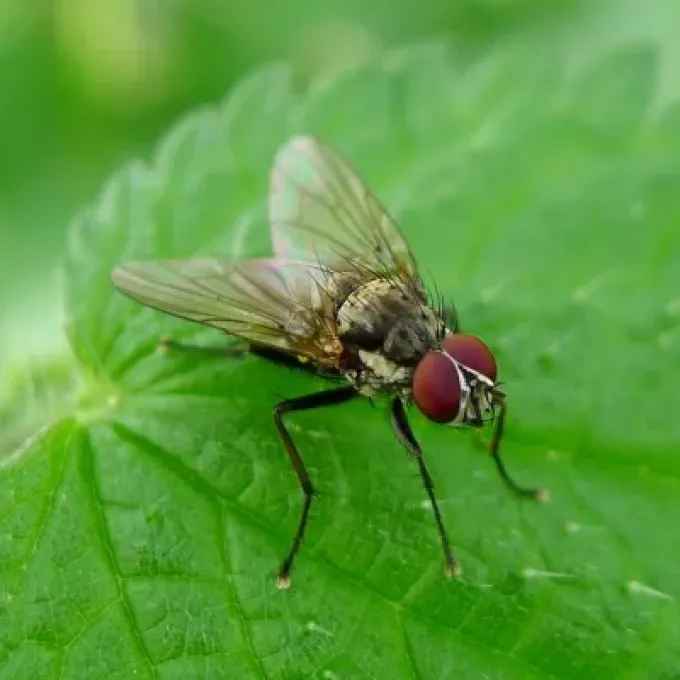
Adult flies are relatively small, measuring approximately 5-6 mm in length, and are usually greyish in color. They are most active during the spring growing season.
The larvae are typically creamy-white, legless maggots that reside entirely within the plant tissues, making them difficult to detect during the early stages of infestation.
Their life cycle revolves around the development of the raspberry bush. They overwinter as pupae in the soil at the base of the plants, emerging as adults in the spring.
Once the adults emerge, they mate and the females lay eggs on the young, tender shoots of the raspberry canes, initiating the next generation of the pest.
What it damages
This pest primarily infests raspberry crops. The damage is caused by the larvae feeding inside the stems, which disrupts the vascular system of the young canes.
As the larvae tunnel through the internal tissues, they create deep canals. This prevents water and essential nutrients from reaching the upper parts of the shoot.
The immediate consequence is the wilting and subsequent death of the shoot tips. This often leads to significant yield losses for the affected canes.
If the infestation is severe, a large number of replacement canes can be destroyed, weakening the plant's overall vigor and productivity for subsequent seasons.
The damage often goes unnoticed until the wilting becomes severe, by which time the larvae may have already matured or begun the transition to the next phase.
Signs of infestation
The most visible sign of an infestation is the sudden wilting of the tips of young raspberry canes in late spring or early summer, which often droop noticeably.
A close inspection of the stem surface will often reveal a darkened or slightly necrotic area where the larva initially entered the cane.
When cutting open a suspected cane, one will observe distinct tunnels or hollow channels running through the center of the stem, often containing frass.
Affected leaves on the terminal part of the cane typically turn yellow, curl up, and eventually drop off, signalling the decline of that specific shoot.
- Wilting and drooping shoot tips.
- Discoloration or darkening of the cane at the entry point.
- Hollow internal channels revealed upon dissection.
- Premature leaf yellowing and dieback.
Control measures
The most effective cultural practice is the early identification and physical removal of infested canes. These should be cut off and burned immediately.
Tilling the soil around the base of the raspberry bushes in autumn or early spring can help disturb the pupae, leading to increased mortality rates.
Proper weed management is essential, as some related species of wild plants can serve as secondary hosts for the raspberry cane midge during the season.
Chemical control measures may include the application of appropriate insecticides during the adult flight period to prevent egg-laying on the fresh shoots.
Integrated pest management strategies, such as promoting natural predators and maintaining healthy soil conditions, can significantly reduce the pressure of this pest.
Taxonomy
- Latin name
- Pegomya rubivora
- Order
- Diptera (flies)
- Family
- Anthomyiidae
- EPPO code
- PEGORU
Discussion
No discussions yet — be the first.