
Onion fly (Pegohylemyia gnava)
Pegohylemyia gnava
Description
How to identify
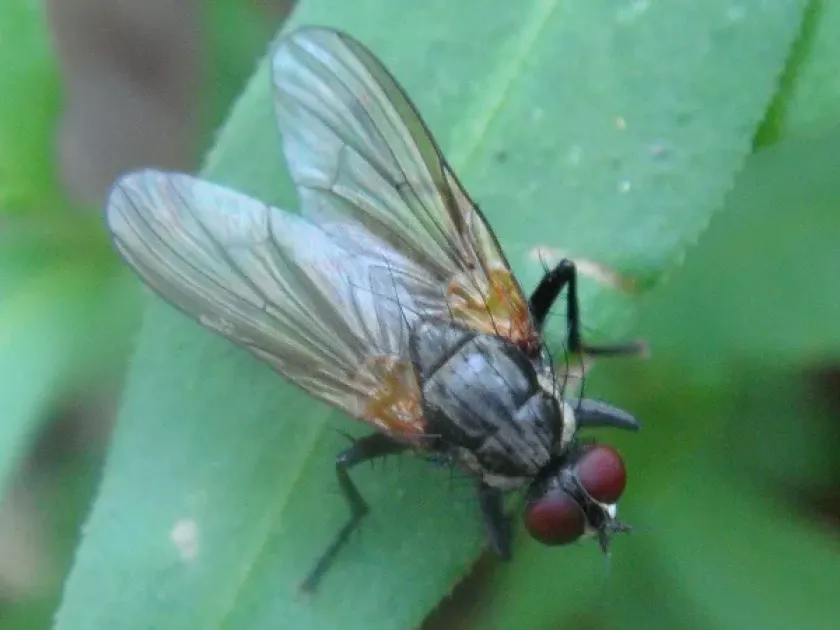
The onion fly (Pegohylemyia gnava) belongs to the family Anthomyiidae, order Diptera. It is a small fly that looks quite similar to a common housefly, measuring about 6–8 mm in length, with a greyish body and characteristic wing venation.
The larva is the destructive stage of this pest. It is legless, elongated, and ranges from white to yellowish in color, reaching up to 10 mm in length. Its head is pointed, equipped with sharp hooks used to penetrate the bulb tissues.
The life cycle undergoes complete metamorphosis. Adults emerge in spring, mate, and begin laying small, white eggs near the host plants. The cycle from egg to adult is highly dependent on ambient temperature.
Development typically includes one or two generations per year, depending on the climatic zone. The pupal stage is the overwintering form, buried in the soil where it can survive cold temperatures.
Understanding the life cycle is crucial for implementing effective pest management strategies, as the timing of interventions must align with the adult flight and egg-laying periods.
What it damages
This pest specifically targets various Allium crops, including onions, shallots, leeks, and garlic. It causes direct damage by feeding on the internal tissues of the bulbs and leaf bases.
As the larvae feed, they tunnel into the bulbs, causing the plant tissues to decay and rot. This not only destroys the crop but also invites secondary bacterial infections that lead to a foul smell and complete loss of the vegetable.
Early signs of damage include stunted growth and yellowing of the foliage, even when water and nutrient availability are adequate for normal development.
The economic impact can be severe in regions with high infestation pressure, leading to significant yield losses and reducing the storage life of harvested produce.
Small-scale gardens and large-scale commercial fields alike are susceptible to significant devastation if monitoring and control measures are neglected.
When it appears
The flight of adult flies typically begins in late spring, often correlating with the blooming period of fruit trees like apple trees. This is a critical indicator for monitoring pest activity.
The first generation usually poses the highest risk to seedlings and young plants, which are less resilient. Damage at this stage can result in the loss of entire crop rows.
A second generation of adults usually appears in mid-summer, threatening mid-to-late season crops. If conditions remain favorable, a third generation may occur in warmer climates.
Optimum conditions for the fly's development are temperatures between 18°C and 25°C. Excessive heat or drought can temporarily slow the cycle, but they do not eliminate the pest population.
Adults are most active during sunny days, as they require warmth to facilitate flight and mating behavior, which subsequently increases the rate of egg deposition.
Signs of infestation
Visible signs of infestation include the wilting and yellowing of onion leaves, starting from the tips and progressing downwards until the entire plant withers.
When you attempt to pull a damaged plant, it often separates easily from the soil because the base and roots have been severely hollowed out by the larvae.
Patches of dying or stunted plants on a field or garden bed are a classic indicator of a localized infestation. These areas often expand over time if not treated.
A closer inspection of the base of the plant often reveals the presence of white larvae inside the decayed bulb tissue, often accompanied by a distinct, rotting odor.
In the early morning, you may observe adult flies resting on the leaves or hovering near the soil surface, actively searching for suitable host plants to deposit their eggs.
Control measures
Crop rotation is the foundation of management. Never plant onions in the same location for at least three consecutive years to break the pest's reproductive cycle effectively.
Spatial isolation of new onion beds from the previous season's site is highly effective, as the adult flies do not typically travel long distances to find host plants.
Early sowing can help the plants reach a size where they are more resilient to larval feeding by the time the first generation of flies emerges in the spring.
Utilizing physical barriers, such as floating row covers, during the peak flight season can prevent adult flies from reaching the plants to lay their eggs.
- Apply systemic insecticides based on agricultural guidelines.
- Remove and destroy severely infested plants immediately.
- Perform deep autumn tillage to expose pupae to winter temperatures.
- Interplant with companion crops like carrots to deter flies with scent.
Taxonomy
- Latin name
- Pegohylemyia gnava
- Order
- Diptera (flies)
- Family
- Anthomyiidae
- EPPO code
- HYLEGN
Discussion
No discussions yet — be the first.