
Onion fly
Pegohylemyia
Description
How to identify
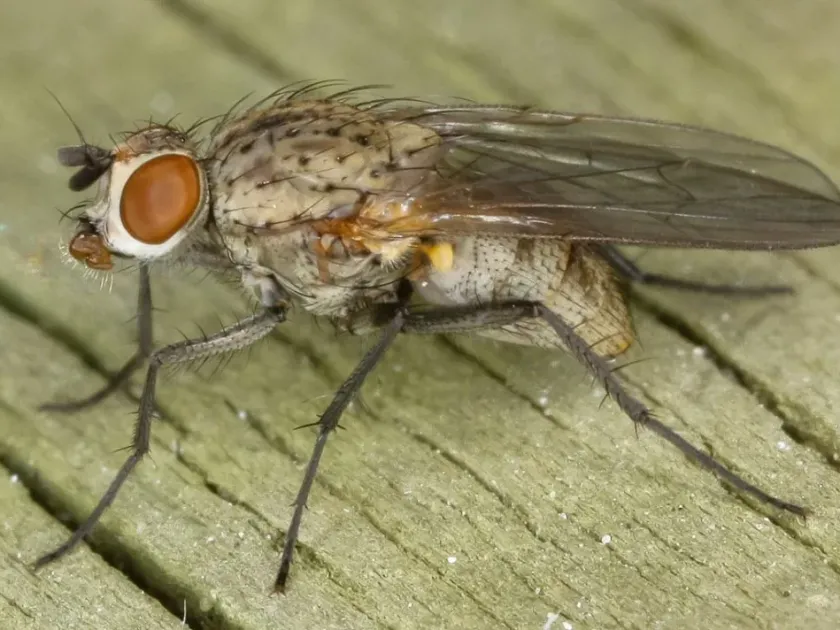
The onion fly (Delia antiqua) belongs to the order Diptera and the family Anthomyiidae. Adult flies are approximately 6–7 mm long with an ash-gray body.
Larvae are white, legless maggots that grow up to 10 mm in length. They are the stage responsible for the primary damage caused to onion and garlic crops.
The pest overwinters as a puparium (a protective case) within the soil. In spring, emergence typically occurs during the blooming period of fruit trees.
Females lay eggs in groups near the base of the plant or under the scales. The life cycle can include up to three generations per growing season.
Development is highly dependent on ambient temperature and soil moisture levels, which significantly influence the rate of reproduction and pest pressure.
What it damages
The onion fly primarily targets onion, garlic, leek, and shallot. Larvae feed on the roots and internal tissues of the bulb, causing severe damage.
Feeding by the maggots leads to rapid decay of the bulb. This not only destroys the current plant but also promotes secondary infections by bacteria and fungi.
Young plants are particularly vulnerable. When larvae infest a seedling, the entire plant often withers and dies within a few days of the attack.
In mature onions, the larvae create tunnels inside the bulb. This reduces the quality of the produce and makes it entirely unsuitable for long-term storage.
Mass infestations can result in total crop failure in small gardens or commercial fields if timely preventive actions are not taken by the grower.
When it appears
The first generation appears in late May or early June, posing a major threat to young onions and garlic during their early development stages.
Second and third generations emerge throughout the summer. These later generations often infest bulbs that are already nearing harvest maturity.
The flies are most active during warm and relatively dry weather. Heavy rainfall can interrupt the egg-laying process and reduce the overall fly population.
Adults are active during the day, flying from plant to plant to find suitable locations for their eggs. This movement requires constant monitoring of the fields.
The duration of a single generation is typically 3 to 6 weeks, necessitating regular inspections of the onion beds throughout the entire spring and summer.
Signs of infestation
Early symptoms include wilting and yellowing of the leaf tips. This discoloration gradually spreads downward until the entire leaf collapses.
The bulbs of affected plants become soft and emit a foul smell. Checking the base of the plant often reveals decaying tissue and the presence of white maggots.
Affected plants are easily pulled from the soil because the root system is destroyed by the feeding activities of the larvae.
Differences in growth rates between healthy and infested plants are a key indicator. Stunted growth in specific spots often marks an infestation point.
Upon slicing a suspicious bulb, tunnels are clearly visible, often filled with rotting organic matter and larvae at various stages of their development.
Control measures
Crop rotation is the most effective cultural control measure. Never grow onions in the same location for more than two consecutive years.
Intercropping with carrots is a well-known biological strategy. The strong scent of carrots acts as a deterrent for onion flies, protecting the crop.
Deep plowing or tilling of the soil after harvest helps to expose puparia to freezing temperatures and natural predators, reducing their survival rate.
- Using floating row covers to physically block access to the plants.
- Removing and destroying all infested plant material immediately.
- Applying wood ash or tobacco dust around the base of the plants.
- Using approved systemic insecticides as a preventive seed treatment.
Chemical control should be implemented only when necessary, following local agricultural guidelines and observing strict harvest safety intervals.
Taxonomy
- Latin name
- Pegohylemyia
- Order
- Diptera (flies)
- Family
- Anthomyiidae
- EPPO code
- PEGHSP
Discussion
No discussions yet — be the first.