
Turnip fly
Egle muscaria
Description
How to identify
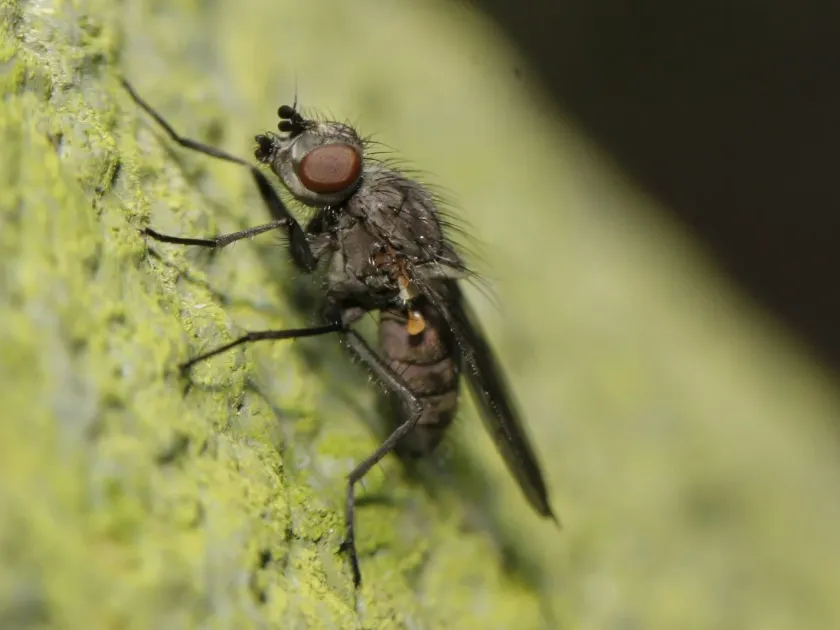
The turnip fly (Egle muscaria) is a species of dipteran insect belonging to the Anthomyiidae family. It is a relatively small fly, often overlooked due to its plain gray coloration and similarity to other common garden flies.
Adults are active during the day, feeding on plant nectar and pollen. While they are not harmful in their adult form, their life cycle includes a larval stage that poses a significant threat to various agricultural crops.
The life cycle consists of the egg, three larval instars, pupa, and adult. The number of generations per year depends on regional climatic conditions, with warmer climates potentially supporting multiple overlapping generations.
These pests primarily overwinter as pupae within the soil at a depth of 10 to 15 centimeters. As temperatures rise in the spring, the adult flies emerge to begin mating and searching for suitable host plants.
The eggs are small, white, and elongated. Female flies typically lay them near the base of host plants, such as radish, turnip, or cabbage, ensuring that larvae have immediate access to food upon hatching.
What it damages
The larval stage is responsible for all the damage. The larvae burrow into the roots and stems of cruciferous vegetables, creating tunnels that disrupt the plant's nutrient and water transport systems.
As the larvae feed, they weaken the plant significantly, leading to stunted growth, wilting, and in severe cases, the complete death of the crop. This is particularly critical during the seedling stage.
Damaged root vegetables lose their market value and become unpalatable due to the presence of larvae and associated tissue decay. The tunnels provide entry points for secondary bacterial and fungal infections.
If the infestation occurs close to harvest, the quality of the vegetables is severely compromised. Even minor damage can lead to rapid rotting during storage, potentially spreading to healthy produce in the same batch.
In addition to direct structural damage, the infestation causes physiological stress to the plant, making it more susceptible to other environmental stressors and diseases during the growing season.
When it appears
The emergence of adult turnip flies typically begins in early spring, often in April or May, synchronized with the onset of favorable temperatures and the growth of host crops.
The peak of egg-laying activity coincides with the early development of young vegetables. This window is the most critical time for monitoring and implementing protective measures in the field.
During the summer months, the pest continues its cycle, with activity levels often fluctuating based on soil moisture and ambient temperatures. Dry spells can sometimes slow down development but keep plants weak.
As autumn approaches, the population begins to prepare for winter dormancy. The insects pupate in the soil, entering a state of diapause that allows them to survive the cold season.
Agronomists track the adult flight periods to time their management strategies effectively, ensuring that interventions are applied just before the females begin depositing eggs on the crops.
Signs of infestation
The first signs of infestation often include yellowing or bluish-tinted leaves on young plants. Gardeners might notice these symptoms and mistake them for nutrient deficiency or water stress.
Upon closer inspection, the base of the plant shows entry holes where larvae have burrowed into the stem or root. If the plant is pulled, the roots appear hollowed out and partially consumed.
A foul, rotting odor near the base of the plant indicates the presence of secondary infections caused by the feeding activity of the larvae. These plants usually have a very weak root system.
Yellow sticky traps placed near the crops help detect the presence of adult flies. Early detection via these traps allows for timely intervention before large numbers of eggs are laid.
Carefully digging around the plant base might reveal the presence of small white eggs in soil cracks or near stems, which confirms the ongoing infestation and the need for immediate control actions.
Control measures
Crop rotation is the cornerstone of control. By avoiding planting cruciferous vegetables in the same spot for several years, you effectively break the life cycle of the turnip fly in that specific location.
Physical barriers, such as lightweight row covers or agricultural fleece, are highly effective in preventing adult flies from landing on plants to lay their eggs, especially during the early growth stage.
Deep plowing or tilling the soil in the autumn is recommended. This disturbs the overwintering pupae and exposes them to predators and freezing temperatures, significantly reducing the population for the next season.
Maintaining a clean field by removing weeds, especially those in the Brassicaceae family, reduces alternative food sources and shelters for the flies.
- Remove and destroy severely infested plants to reduce the local pest population.
- Use repellent sprays such as wood ash or herbal infusions if allowed by organic guidelines.
- Apply approved insecticides only when monitoring confirms that the economic damage threshold has been exceeded.
Taxonomy
- Latin name
- Egle muscaria
- Order
- Diptera (flies)
- Family
- Anthomyiidae
- EPPO code
- HYLEMU
Discussion
No discussions yet — be the first.