
Egle fly
Egle
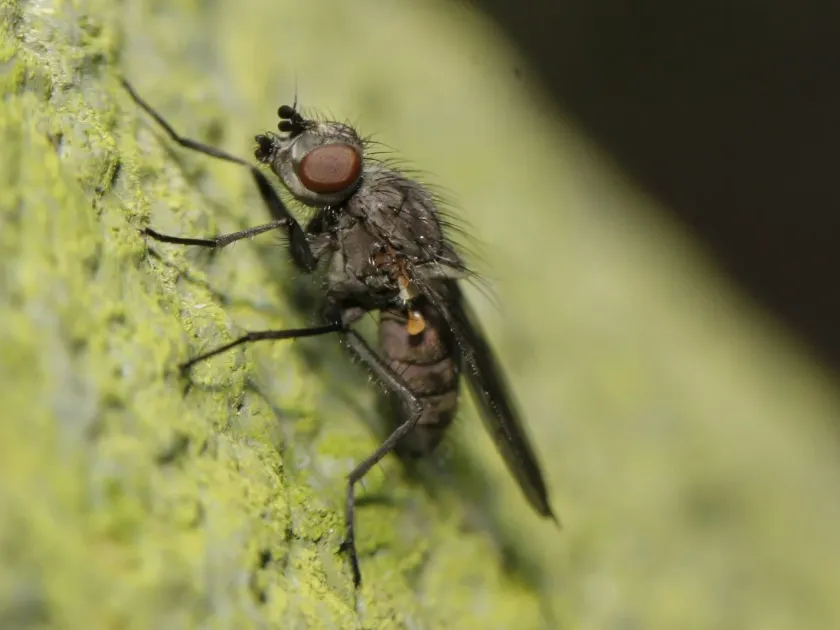
Description
How to identify
The genus Egle belongs to the Anthomyiidae family, commonly known as root-maggot flies or flower flies. These small, grayish-black flies are often difficult to distinguish from related species.
The larval stage is the most damaging, characterized by white, legless maggots that tunnel through plant tissues, primarily in the reproductive organs.
Adult flies are active pollinators and nectar feeders, but their primary role in agriculture is as the reproductive stage of the pest.
The life cycle involves four stages: egg, larva, pupa, and adult, with overwintering occurring in the soil as pupae.
Identification often requires examining the mouthparts of the larvae or the specific damage patterns on host plants.
What it damages
The primary hosts for Egle species are plants in the Brassicaceae family, including various cultivars of cabbage, radish, and turnip.
Larvae commonly infest buds and flowers, consuming the internal tissues and preventing normal pollination and seed development.
In addition to floral organs, the pests can bore into growing tips, causing distortion or death of the main stem.
Root system damage may occur in some species, leading to stunted growth, nutrient deficiency symptoms, and increased susceptibility to diseases.
Economic damage is most significant in seed production fields where direct loss of reproductive tissue occurs.
When it appears
Adult flies emerge early in the spring, coinciding with the first flowering of wild and cultivated Brassicaceae.
Egg-laying activity peaks during the budding phase of host crops, when succulent tissues are most available.
Depending on the latitude and climate, multiple generations can occur within a single growing season.
As temperatures drop in autumn, larvae move deeper into the soil to pupate, entering diapause to survive the winter months.
Monitoring for adult flight is crucial during the late spring to time control measures effectively before egg deposition occurs.
Signs of infestation
Wilting, yellowing, and premature death of buds are the most common early indicators of an Egle infestation.
Dissecting a damaged bud often reveals the presence of one or more larvae accompanied by fine granular frass.
Holes in the epidermis of the flower stalk or base of the plant indicate entry points or emergence holes of the mature larvae.
Malformed or stunted growth of the apical meristem or entire plant suggests a significant larval presence in the stem base.
General plant decline without obvious above-ground pests often points to damage occurring at the root or crown level.
Control measures
Crop rotation is the foundation of management; moving brassica crops to new fields breaks the pest cycle effectively.
Deep cultivation of soil after harvest helps destroy pupae by exposing them to environmental extremes and natural predators.
Physical barriers such as fine-mesh insect netting provide excellent protection for high-value seed crops during the adult flight period.
Chemical control is possible through systemic insecticides, but application must be timed precisely with the adult flight and early egg-laying stages.
- Sanitation of crop fields to remove debris where pupae may harbor.
- Elimination of wild Brassicaceae weeds that act as alternative hosts.
- Encouraging natural biological control agents like ground beetles and parasitic wasps.
Taxonomy
- Latin name
- Egle
- Order
- Diptera (flies)
- Family
- Anthomyiidae
- EPPO code
- EGLESP
Discussion
No discussions yet — be the first.