
Urban fly
Delia urbana
Description
How to identify
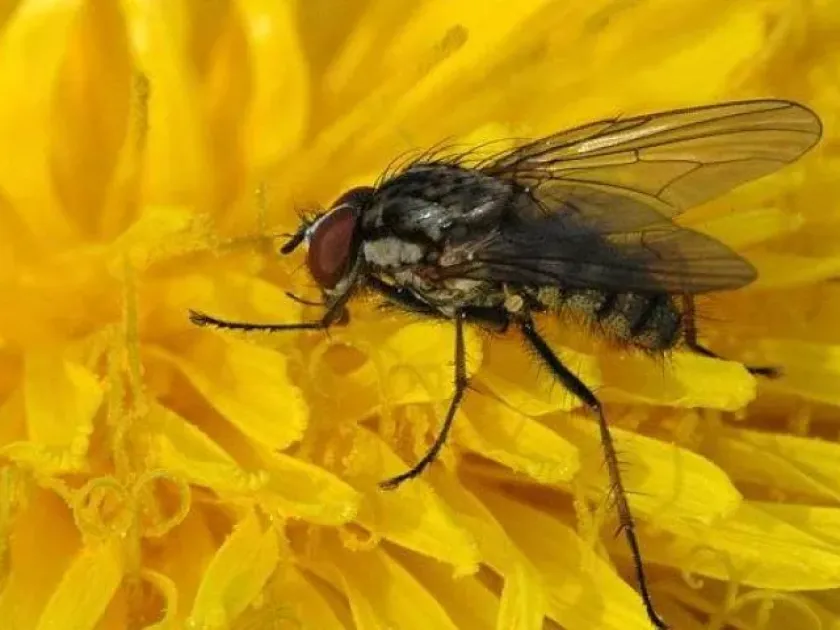
The urban fly (Delia urbana) belongs to the order Diptera and the Anthomyiidae family. It is a small, gray-black insect that resembles other flies like the onion fly.
Adult flies typically measure 5 to 6 millimeters in length. They feature transparent wings with specific venation patterns characteristic of the Anthomyiidae family.
The larvae are cylindrical and creamy-white, reaching up to 8 millimeters. They possess a specialized mouthpart used for feeding on plant tissues.
The life cycle involves complete metamorphosis: egg, larva, pupa, and adult. The pest overwinters as a puparium in the soil at depths of 15–20 centimeters.
Adults emerge in spring when soil temperatures reach approximately 10–12 degrees Celsius, which aligns with the planting season for many vegetables.
What it damages
The urban fly is a significant pest for various vegetable crops. Larvae primarily target germinating seeds, seedlings, and the roots of young plants.
Affected crops include cabbage, radish, onions, carrots, and various solanaceous crops that are susceptible during the early stages of establishment.
The primary damage occurs when larvae tunnel into the stems or roots, consuming the internal tissues and causing the plant to weaken or collapse.
In addition to direct tissue damage, larvae disrupt the plant's vascular system, leading to stunted growth, yellowing leaves, and often total plant death.
These feeding sites frequently become entry points for soil-borne pathogens, leading to secondary bacterial or fungal infections that destroy the root system.
Signs of infestation
The first indicator of infestation is sudden wilting of seedlings during warm, sunny hours, even if the soil has been adequately watered.
Inspection of the root zone often reveals internal tunnels and decay caused by larval feeding activity within the stem or root.
Poor seed emergence is a common sign, as larvae often destroy the embryo before it can push through the soil surface.
The lower stems of infected plants may appear discolored, brown, or mushy due to the invasive damage inflicted by the larvae.
A high density of small gray flies hovering near the base of young plants is a strong warning sign of an ongoing infestation and egg-laying.
Control measures
Crop rotation is the most effective cultural practice; avoid planting susceptible crops in the same area for at least three consecutive years.
Deep fall tillage helps control the population by exposing overwintering puparia to predators and harsh winter temperatures on the soil surface.
Using row covers or agro-textiles during the initial growth phase effectively prevents female flies from accessing the soil to lay their eggs.
Treating seeds with appropriate insecticidal coatings provides critical protection during the germination and seedling stage.
If the infestation reaches economic thresholds, applying authorized systemic insecticides can provide targeted control of the adult population and larvae.
Taxonomy
- Latin name
- Delia urbana
- Order
- Diptera (flies)
- Family
- Anthomyiidae
- EPPO code
- HYLEUR
Discussion
No discussions yet — be the first.