
Black bean fly
Delia nigrescens
Description
How to identify
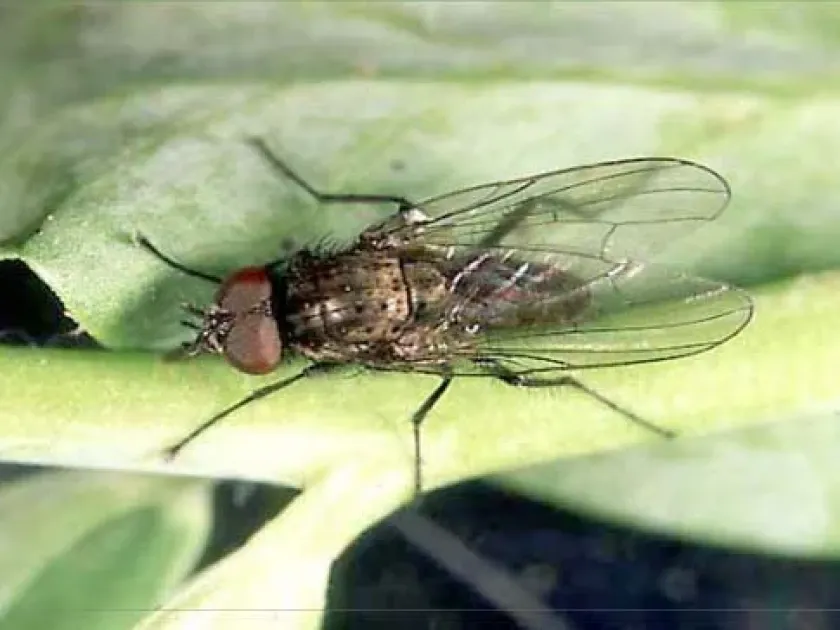
The black bean fly (scientific name: Delia nigrescens) is a destructive dipteran insect belonging to the Anthomyiidae family. These small, dark-colored flies are often overlooked in the field due to their modest size and tendency to stay near the soil surface.
The adult fly is approximately 5 to 6 mm long with a black body, resembling common houseflies but with more specific wing venation and a slender morphology. Its larvae are typical maggots, white in color and cylindrical, feeding primarily on decomposing organic matter and young plant tissues.
Their life cycle is highly sensitive to soil moisture and temperature. Females are attracted to the volatile compounds released by rotting organic matter, which is where they prefer to lay their eggs, ensuring a ready food supply for the hatching larvae.
Distinguishing Delia nigrescens from other species of the genus Delia requires careful observation of their habitat preference and the specific types of seedlings they attack during the early stages of growth.
Understanding their population dynamics is crucial for integrated pest management, especially in vegetable production where direct-seeded crops are most at risk during the cool, wet spring months.
What it damages
This pest is a significant threat to various agricultural crops, particularly legumes such as beans and peas, as well as cucurbits and brassicas. The larvae cause the most damage by feeding on seeds and emerging seedlings.
The most severe damage occurs when larvae penetrate the seed coat, consuming the germ and preventing germination entirely. This often leads to sparse stands and necessitates costly replanting efforts for farmers.
As seedlings grow, the larvae tunnel into the hypocotyl and root systems, cutting off the supply of water and nutrients to the aerial parts of the plant. This causes rapid wilting and collapse of young seedlings.
The feeding tunnels created by the larvae also serve as entry points for various soil-borne pathogens, including bacteria and fungi, which exacerbate the damage by causing secondary rot in the plant tissues.
Plants that are damaged during their earliest growth stages rarely recover, and even if they survive, their development is significantly stunted, ultimately reducing the final harvest yield.
When it appears
The emergence of overwintered adults typically occurs in early spring, once soil temperatures reach 10-12 degrees Celsius. This timing aligns with the sowing of many cool-season crops, increasing the risk of infestation.
Adult flies are most active during the spring, with a peak period for egg-laying that can last for several weeks. Depending on the regional climate, the fly can produce multiple generations throughout the growing season.
Cool, damp weather is highly favorable for the survival and development of the larvae. Conversely, hot and dry summer conditions tend to suppress the activity of the black bean fly, although irrigation can maintain locally favorable conditions.
The fly utilizes odor cues to locate areas with fresh organic matter, meaning fields recently treated with raw manure are particularly susceptible to heavy infestation during the early spring period.
As winter approaches, the flies prepare to overwinter in the soil as puparia, where they remain dormant until the following spring, protected from adverse temperatures by the soil structure.
Signs of infestation
The most visible sign of an infestation is poor stand establishment, often characterized by irregular gaps in crop rows. Where plants do emerge, they often appear yellowed, weak, and stunted.
When investigating the roots of affected seedlings, farmers will find characteristic feeding tunnels. Upon digging up ungerminated seeds, larvae can often be found inside, accompanied by signs of rot and decay.
Plants affected by the pest often wilt suddenly on sunny days because their root systems are too compromised to maintain water balance. These plants are easily dislodged from the soil when pulled.
The presence of small, round holes at the base of the stems of surviving seedlings is a diagnostic sign of larvae having penetrated the plant tissue.
Economic damage is usually assessed by the percentage of plant loss in the field. When infestation levels are high, entire fields may be completely destroyed within a matter of days after germination.
Control measures
Effective management begins with sound agronomic practices. Deep autumn plowing can help disrupt the pupae in the soil, reducing the population for the following spring season.
Choosing the right planting time is essential; sowing into warmer soils encourages faster germination and rapid development, allowing plants to pass through the vulnerable stage before larvae can cause significant damage.
Avoid using raw or fresh manure near planting time, as it attracts egg-laying females. Only fully decomposed compost should be used to minimize the risk of infestation.
Chemical control usually involves using systemic insecticides as seed treatments. This protects the seedling from within during the critical germination phase, providing a buffer against early larval attacks.
- Implement a strict crop rotation to break the pest cycle.
- Remove and destroy all crop residues promptly after harvest.
- Use yellow sticky traps to monitor for adult fly populations.
- Cover young seedlings with protective fabrics where feasible.
- Apply registered insecticides only after monitoring indicates thresholds are met.
Taxonomy
- Latin name
- Delia nigrescens
- Order
- Diptera (flies)
- Family
- Anthomyiidae
- EPPO code
- DELINI
Discussion
No discussions yet — be the first.