
Cabbage root fly
Delia floralis
Description
How to identify
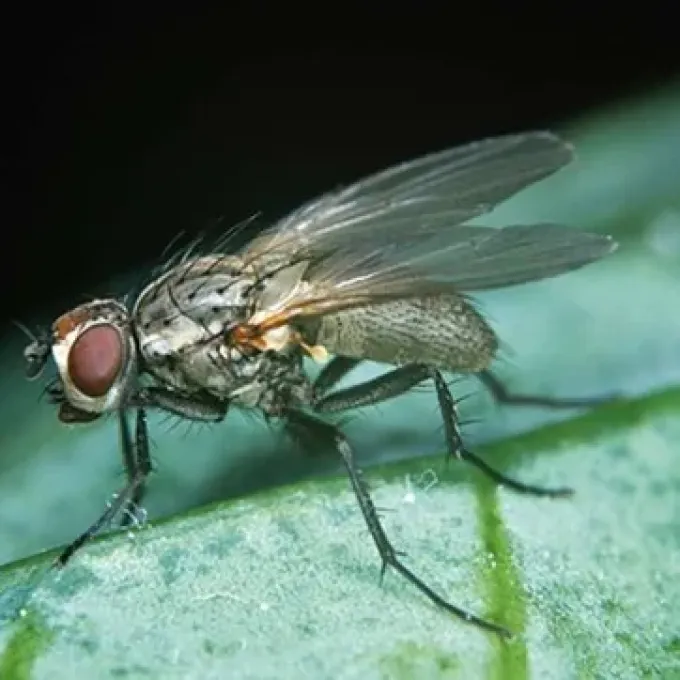
The cabbage root fly (Delia floralis) is a dipteran insect belonging to the Anthomyiidae family. The adult fly is approximately 6–7 mm long and has a greyish body with prominent dark bristles on the thorax.
Adult flies are often confused with common houseflies, but they have distinct anatomical features, such as specific wing vein patterns and head structure. They are primarily active during the day, feeding on plant nectar.
The eggs are oval-shaped, white, and about 1 mm in length. They are typically laid in small clusters in the crevices of the soil near the stems of host plants, where they are protected from direct sunlight.
The larvae are cream-colored, legless maggots that can grow up to 10 mm long. They possess a rasping mouthpart which they use to tunnel into the roots of the host plants, causing internal damage.
The pupal stage occurs within a hard, brown casing known as a puparium, which is buried in the soil. This stage is highly resilient and serves as the overwintering mechanism for the species.
What it damages
This pest is a major threat to crops within the Brassicaceae family, including all varieties of cabbage (white, red, savoy), cauliflower, broccoli, Brussels sprouts, and kohlrabi.
Other host crops include radishes, turnips, swedes, and oilseed rape. The pest can significantly impact both home gardens and large-scale commercial vegetable production across temperate regions.
The larvae are responsible for the damage. Upon hatching, they burrow into the plant's roots or lower stem, feeding on the vascular tissue. This feeding behavior disrupts water and nutrient uptake.
Stunted growth, yellowing of leaves, and sudden wilting during the daytime are classic signs of larval feeding. In severe infestations, the root system is completely destroyed, leading to plant death.
The feeding tunnels created by larvae often become entry points for secondary pathogens, such as soft rot bacteria, which accelerate the decomposition of the plant tissue and cause massive yield losses.
When it appears
Delia floralis typically completes one generation per year. The adult flies emerge from the soil in late spring, usually around May or June, depending on local climatic conditions and soil temperature.
The flight and oviposition period lasts for several weeks. During this time, female flies seek out vulnerable young plants to lay their eggs near the soil surface, favoring cool and moist conditions.
After a short incubation period, the larvae emerge and begin feeding on the roots. This phase usually lasts for about a month, which covers the critical growth stage for many vegetable crops.
Once the larvae reach maturity, they leave the roots and move deeper into the soil to pupate. The pupae remain dormant in the ground until the following spring, ensuring the survival of the population.
Monitoring for adult flight is crucial, as timing insecticide applications or physical barrier placement depends on catching the window of peak activity before egg-laying occurs.
Signs of infestation
A tell-tale sign of an infestation is the drooping or wilting of the outer leaves during warm periods of the day, despite adequate soil moisture levels. This indicates a compromised root system.
Leaves of infested plants may also exhibit a bluish or purplish tint, followed by chlorosis (yellowing). Plants will appear stunted or weak compared to non-infested specimens in the same plot.
Carefully digging up a suspected plant will reveal the damage. The roots will often show visible furrows or tunnels, and in advanced stages, they appear decayed or partially consumed by maggots.
One may notice the presence of small entrance or exit holes on the taproot and rootlets. The area around the stem-soil interface may also show signs of secondary decay or fungal colonization.
When gently pulled, infested plants come out of the ground easily because their anchors have been destroyed. Finding live maggots near the roots confirms the diagnosis of cabbage root fly presence.
##control##Integrated pest management starts with robust crop rotation. Avoiding planting cruciferous vegetables in the same ground for at least three to four years breaks the pest's cycle significantly.
Tilling the soil deeply after harvest helps to expose the overwintering pupae to the surface, where they become vulnerable to predators like birds and harsh environmental conditions.
Using physical barriers such as fine mesh netting or fleece covers during the peak flight season prevents the adult flies from reaching the base of the plants to lay their eggs.
Chemical control involving insecticidal soil treatments or granules can be applied if monitoring shows high population pressure. Always follow local regulations and specific product guidelines for the crop.
Providing optimal growing conditions through proper fertilization and irrigation helps plants build resilience, allowing them to better withstand or recover from low-to-moderate levels of larval damage.
Taxonomy
- Latin name
- Delia floralis
- Order
- Diptera (flies)
- Family
- Anthomyiidae
- EPPO code
- HYLEFL
Discussion
No discussions yet — be the first.