
Carnation fly
Delia brunnescens
Description
How to identify
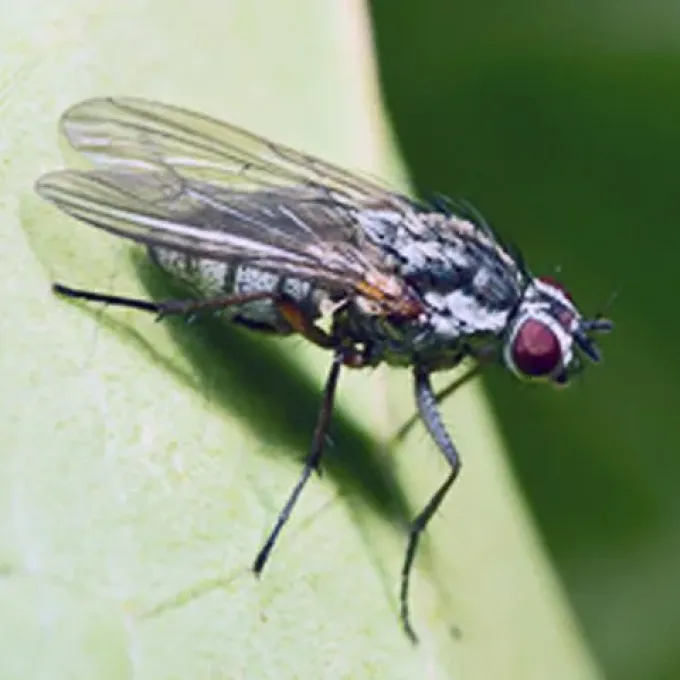
The carnation fly (Delia brunnescens) is a member of the Anthomyiidae family within the order Diptera. This pest is specifically adapted to feed on plants of the Caryophyllaceae family, with a marked preference for various species of Dianthus.
Adult flies are relatively small, typically measuring 5–7 mm in length. They are characterized by a grayish-brown body and transparent wings, appearing somewhat similar to other species in the Delia genus, which often makes visual identification difficult.
The larvae are typical of the family, being legless, cylindrical, and white or cream-colored. As they reach maturity, they grow to approximately 10 mm in length, possessing mouthparts specialized for boring into plant tissues.
Eggs are small, white, and elongated, usually deposited in clusters near the base of the plant or in the leaf axils. This strategic placement ensures that larvae can access food sources immediately upon hatching.
The pupal stage occurs within a puparium, a hard, brown, barrel-shaped structure found in the soil. The insect overwinters in this stage at a depth of 10–15 cm, providing it with excellent protection against environmental stresses.
What it damages
Damage is primarily caused by the larvae, which burrow into the stems and buds of carnations. Their feeding behavior destroys the internal vascular tissues, leading to immediate stress for the host plant.
When larvae target the stem, they disrupt the flow of water and nutrients, resulting in the wilting and eventual death of the affected shoot. Severe infestations can cause the entire plant to collapse.
Bud infestation is particularly detrimental to commercial floriculture. Larvae consume the developing floral parts from within, preventing the flower from opening and rendering the bloom entirely unmarketable.
Secondary infections are common, as the tunnels created by the larvae provide entry points for bacteria and fungi. This often leads to tissue rot, further accelerating the decline of the infested plant.
The severity of the damage depends on the density of the larvae population. In greenhouse environments or dense garden plantings, a single infestation cycle can destroy a large percentage of the flower crop.
When it appears
Adult flies emerge from overwintering puparia in the spring once soil temperatures reach 12–15°C. This timing generally aligns with the active growth phase of the Dianthus plants.
The carnation fly typically completes two to three generations per year, depending on the local climate and temperature. This multi-generational cycle poses a prolonged threat throughout the growing season.
The peak activity of the flies corresponds with the budding and flowering stages of the host plants. During this period, females are highly active in depositing eggs on the most vulnerable parts of the carnation.
High temperatures speed up the development of the larvae, potentially shortening the duration of each generation. However, extreme heat and drought may limit the lifespan of the adult flies.
As autumn approaches and temperatures drop, the final generation of larvae pupates in the soil. These pupae remain dormant throughout the winter, surviving freezing temperatures until the next spring emergence.
Signs of infestation
Early symptoms include yellowing and wilting of the terminal shoots. Gardeners often mistake this for water stress or nutrient deficiency, but close inspection often reveals entry holes at the base of the stem.
Distorted or deformed buds that fail to open are a classic sign of internal infestation. If these buds are opened, the white larvae are almost always visible, actively feeding on the developing petals.
The presence of fine, brownish frass (excrement) around the leaf axils or on the stems is a diagnostic indicator that larvae are currently active and feeding inside the plant.
Stunted growth, particularly in young plants, often indicates that the root collar or lower stem has been compromised by the feeding activity of the larvae.
- Yellowing and wilting of young shoot tips.
- Distorted growth and irregular development of stems.
- Visible excrement in the leaf axils.
- Buds that fail to develop and eventually turn brown or rot.
Control measures
Cultural control, such as crop rotation, is essential. Avoid planting carnations in the same location for at least three consecutive years to disrupt the life cycle of the overwintering pupae.
Deep cultivation of the soil in the autumn is a highly effective mechanical control method. It brings the puparia to the surface, exposing them to predators and freezing temperatures, which significantly reduces the population.
For chemical control, systemic insecticides are most effective. Applications should be timed to coincide with the period of peak adult flight and egg-laying to prevent larvae from successfully burrowing into the tissue.
Weed management is critical, as several wild species of Caryophyllaceae serve as alternative hosts. Eliminating these weeds around the garden reduces the overall pest pressure.
Sanitation practices, including the immediate removal and destruction of any infested buds or wilted stems, are vital to prevent the spread of the fly to healthy parts of the planting.
Taxonomy
- Latin name
- Delia brunnescens
- Order
- Diptera (flies)
- Family
- Anthomyiidae
- EPPO code
- HYLEBN
Discussion
No discussions yet — be the first.