
Seedcorn maggot
Delia
Description
How to identify
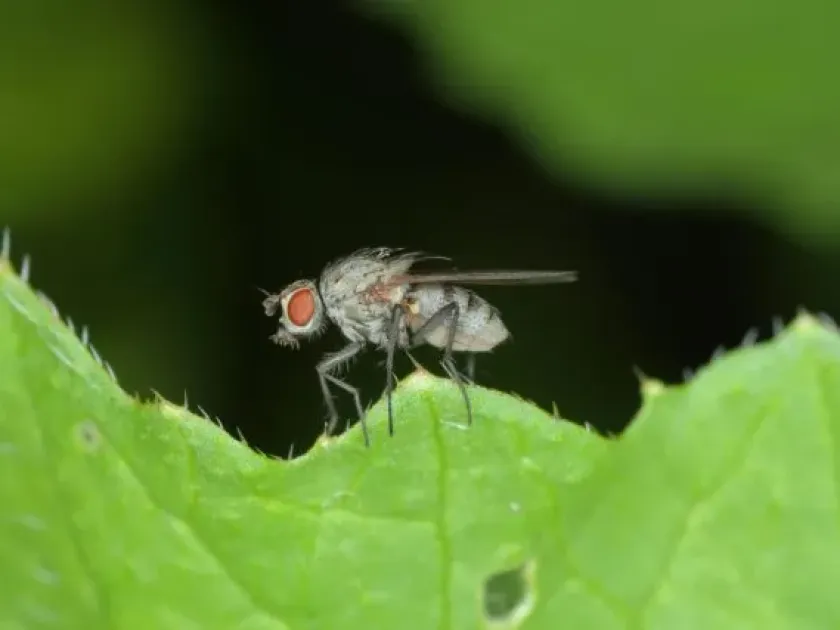
The seedcorn maggot (Delia platura) is a member of the Anthomyiidae family in the Diptera order. Adult flies are approximately 3–5 mm long, greyish in color, with distinctive dark stripes on the thorax.
Larvae are legless, creamy-white to yellowish-grey, and reach up to 7 mm in length. Their head end is pointed and equipped with dark mouth hooks used for feeding on plant tissue.
The pupal stage occurs within a dark-brown, seed-like shell known as a puparium. They typically overwinter as pupae in the soil at depths of 15–20 cm, though some adults may survive in protected areas.
The insect's biological cycle is highly dependent on soil temperature. Adults emerge in early spring when soil temperatures reach 10–12°C. The flies are attracted to decomposing organic matter and moist soil.
Females lay eggs in the soil near germinating seeds. Development from egg to larva takes about 3 to 7 days, depending on environmental factors, after which the larvae begin tunneling into seeds and seedlings.
What it damages
This pest is highly polyphagous, attacking a wide range of crops including corn, beans, peas, soybeans, cucumbers, onions, and various brassicas. It is especially destructive in cool, damp seasons.
The primary damage occurs when larvae tunnel into germinating seeds, often destroying the embryo before it can emerge from the soil. This leads to poor crop stands and the need for reseeding.
When attacking emerging seedlings, larvae tunnel into the stem, typically entering near the soil line. This causes wilting, stunted growth, or the complete collapse of the plant.
Delayed germination caused by cool weather increases the window of vulnerability. Plants that grow slowly due to adverse conditions are at the highest risk of severe damage.
Secondary infections are a major concern. The feeding activity of the larvae creates open wounds that serve as entry points for soil-borne pathogens, leading to bacterial and fungal rot.
When it appears
The seedcorn maggot is most active during the early spring months. The first generation is generally the most destructive for early-planted crops when soil temperatures are still relatively low.
Depending on the region, there can be 2 to 4 generations per year. The timing of fly emergence for subsequent generations varies, but they remain a threat during the entire vegetation period.
Peak fly populations often coincide with the timing of crop planting. Moist, cool springs provide the perfect environment for population surges and rapid larval development.
Late-season infestations can occasionally occur, primarily impacting vegetables planted in the summer, although the damage is often less severe than that observed in early spring.
Environmental conditions that favor slow germination are the biggest factors in determining the severity of the season for this specific pest.
Signs of infestation
The most common sign is a sparse or irregular crop stand. Fields may have empty patches where seeds failed to sprout because they were consumed by larvae shortly after planting.
Infected seedlings often show signs of wilting or yellowing. If you carefully uproot a struggling seedling, you may find the stem hollowed out by larval tunneling.
Seeds dug up from areas with poor germination may appear soft, decaying, or completely hollowed out, with larvae often present in or near the damaged seed tissue.
Darkened or rotting areas at the base of the stem or on the seed surface are strong indicators of maggot activity, often compounded by secondary rotting organisms.
Seedlings that are attacked but survive the initial damage usually remain stunted and lack the vigor required to produce a viable commercial harvest.
Control measures
Good agricultural practices are the first line of defense. Tilling the soil in the fall helps bury organic matter and exposes pupae to predators and environmental stress, reducing spring populations.
Promoting rapid seedling emergence is crucial. Using high-quality seed, avoiding planting in excessively cold or wet soil, and ensuring optimal soil fertility help plants outgrow the vulnerable window.
Chemical control is often necessary for high-risk fields. Treating seeds with insecticidal seed treatments is the most effective way to prevent larval damage during germination.
Foliar sprays for adult flies are rarely effective due to the extended period of emergence and the fact that most damage occurs underground where sprays cannot reach.
- Ensure proper drainage to prevent waterlogged soils that attract egg-laying flies.
- Avoid planting immediately after incorporating fresh green manure or heavy organic fertilizers.
- Rotate crops to minimize the build-up of local fly populations.
- Use shallow planting techniques to encourage faster emergence in cool springs.
Taxonomy
- Latin name
- Delia
- Order
- Diptera (flies)
- Family
- Anthomyiidae
- EPPO code
- DELISP
Discussion
No discussions yet — be the first.