
Botanophila
Botanophila
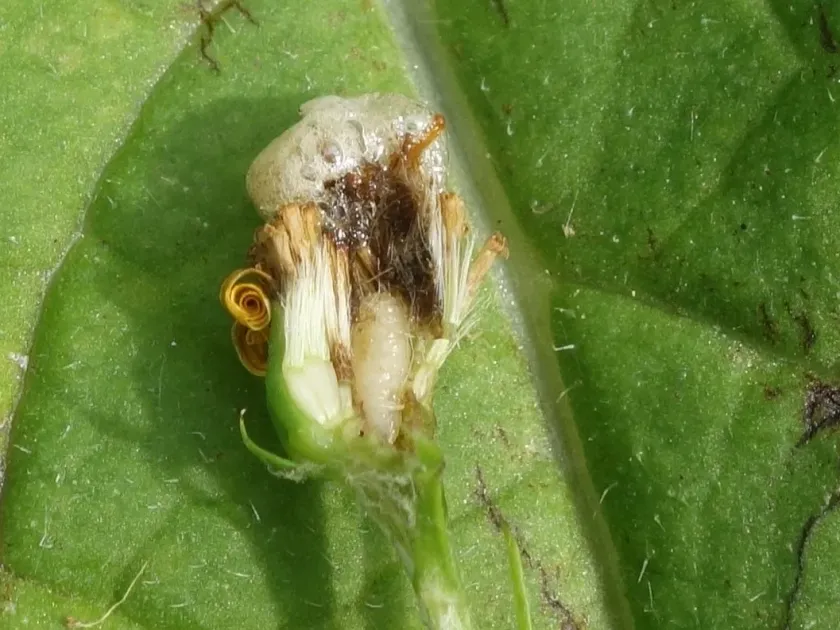
Description
How to identify
The genus Botanophila belongs to the Anthomyiidae family, part of the order Diptera. These are small flies that resemble the common house fly or the onion fly.
Adults typically have a gray or blackish body with visible hairs. The head is mobile, and the eyes in males often touch, whereas they are separated in females.
The larvae are typical of anthomyiid flies: white or yellowish, legless, cylindrical with a tapered front end, featuring mouth hooks for feeding.
Precise species identification within this genus usually requires microscopic examination of male genitalia, as many adults appear visually identical.
These insects thrive in temperate climates, preferring humid and shaded areas where they complete their life cycle stages.
What it damages
Botanophila larvae are phytophagous and damage the vegetative and reproductive parts of various plants, including vegetables and ornamentals.
The damage is primarily inflicted on roots, stems, and flower buds. Depending on the species, the fly may specialize in brassicas, onions, or even wild flora.
When stems are infested, larvae tunnel into the internal tissues, disrupting plant nutrition, causing wilting, and eventually leading to plant death.
Damage to buds and flowers prevents the formation of seeds and fruits, significantly reducing the overall yield of the cultivated crop.
Beyond direct mechanical injury, the feeding tunnels serve as entry points for secondary bacterial and fungal infections that lead to decay.
When it appears
Adults of the first generation emerge in early spring when the soil temperature reaches 10–12 degrees Celsius, coinciding with the early growth of crops.
Females lay eggs near the root collar or directly on plant tissues, often selecting moist soil surfaces or leaf axils.
The life cycle from egg to adult takes several weeks to a month, allowing for multiple generations within a single growing season.
Activity peaks and heavy damage often occur during periods of persistent rain, as larvae are highly sensitive to soil desiccation.
Pupation typically occurs in the soil, where puparia overwinter safely until conditions become favorable for the next season.
Signs of infestation
A primary sign of infestation is the sudden wilting of young plant tips during the day, which may temporarily recover after watering.
Inspection of the root system or the base of the stem often reveals larval tunnels and the presence of white larvae within the plant tissue.
Affected plants often show stem deformation, yellowing, premature senescence of lower leaves, and a noticeable slowdown in growth rates.
On the soil surface near the root collar, one might observe signs of boring and larval frass, appearing like fine brownish dust.
Opening infested buds reveals larvae feeding on the delicate tissues of the ovary, eventually causing the buds to abort or drop off.
Control measures
The cornerstone of management is proper crop rotation; avoiding susceptible crops on the same site for 3–4 years disrupts the pest's life cycle.
Deep autumn tillage promotes the exposure and destruction of overwintering puparia in the topsoil, significantly reducing the spring population.
The use of row covers or insect-proof netting during peak flight periods provides a physical barrier, preventing females from laying eggs.
Biological control using entomopathogenic fungi or bacteria is effective against early-stage larvae present in the soil.
- Adhering to optimal planting dates.
- Removing weeds that act as alternate hosts.
- Applying authorized insecticides when economic thresholds are reached.
- Routine removal and destruction of infested plants.
Taxonomy
- Latin name
- Botanophila
- Order
- Diptera (flies)
- Family
- Anthomyiidae
- EPPO code
- BOTASP
Discussion
No discussions yet — be the first.