
Rain fly
Anthomyia pluvialis
Description
How to identify
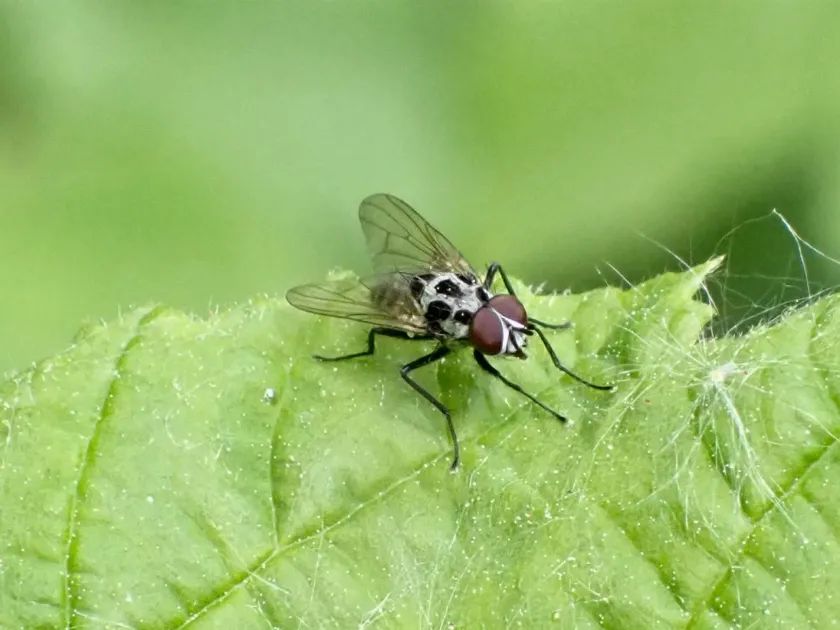
The rain fly (Anthomyia pluvialis) is a small dipteran insect belonging to the Anthomyiidae family. Physically, the adult fly resembles a common housefly, but it features a distinct grey coloration with characteristic black spots on its abdomen.
The life cycle of this pest involves complete metamorphosis, progressing through egg, larva, pupa, and adult stages. The adults possess fully developed wings, allowing them to migrate across garden areas to find suitable breeding grounds.
The larvae are typically legless, white to yellowish in color, and have bodies that taper toward the anterior end. Their development is largely soil-bound, making them closely associated with the moisture levels of the growing medium.
This species thrives in temperate conditions and is highly adapted to humid environments, which explains its common name and periodic population surges after rainy weather.
It is widespread across many regions and is known for its ability to survive in various soil types, posing a persistent challenge for gardeners and vegetable growers alike.
What it damages
The primary damage is caused by the larval stage of the rain fly. These larvae feed within plant tissues, often targeting stems and roots, which severely impacts the plant's structural integrity and nutrient uptake.
Various vegetable crops are susceptible to these pests, especially those in the Brassicaceae family. Feeding by the larvae weakens the plant and stunts its growth, often leading to total yield loss in young plants.
Damage to the root system is particularly detrimental, as it prevents the plant from absorbing necessary water and minerals, leaving it unable to recover during dry spells.
The tunnels created by the larvae provide an entry point for secondary infections. Pathogenic fungi and bacteria frequently colonize these wounds, leading to soft rot and faster decay of the plant tissues.
The severity of the infestation usually depends on soil health and the history of crop rotation on the plot. A lack of proper agricultural management often exacerbates the damage caused by these insects.
When it appears
Adult activity of Anthomyia pluvialis begins in late spring when temperatures stabilize. They remain active through the summer months until the onset of autumn chill.
Adult flies feed on nectar and are frequently found near blooming flowers or weed patches. During this time, they locate suitable host plants and lay eggs in the soil near the stems.
Larvae hatch within a short period and immediately begin feeding. A single generation cycle can last approximately 30 to 45 days, depending on environmental temperatures.
The insect enters diapause during the autumn, overwintering as pupae deep within the soil. This dormancy allows the species to survive the winter and emerge as adults in the following spring.
The spring emergence often aligns with the planting of new seedlings, making young, tender plants particularly vulnerable to the initial wave of the year's generation.
Signs of infestation
The first indicator of an infestation is the sudden wilting or yellowing of leaves, which does not subside even after adequate watering. Plants appear stunted and chlorotic.
Visual inspection of the stem base may reveal small holes or signs of tissue erosion. Carefully cutting open a symptomatic stem often reveals the presence of larvae tunneling inside.
Observation of adult flies hovering near the soil or resting on nearby foliage is a significant indicator that egg-laying is occurring in the immediate vicinity.
Secondary symptoms, such as the development of foul-smelling soft rot at the crown of the plant, are common markers that larvae have breached the plant's protective barriers.
Excavating the soil around the affected root area can uncover pupal shells or active larvae, confirming the identification of Anthomyia pluvialis as the cause of plant stress.
Control measures
Implementing a strict crop rotation schedule is the most fundamental management strategy. Moving vulnerable crops away from previously infested soil helps break the life cycle of the pest.
Deep autumn tillage or soil turning is a highly effective cultural control measure. It exposes the overwintering pupae to the elements and natural predators, significantly reducing the population for the next season.
The use of physical barriers, such as floating row covers or fine insect netting, provides an effective shield for young seedlings, preventing adult flies from reaching the soil to lay eggs.
Biological control methods, such as applying entomopathogenic fungi or beneficial nematodes, can help regulate the larval population in the soil without resorting to harsh chemical pesticides.
- Regular soil cultivation between rows to disturb the soil and expose larvae.
- Consistent weeding to remove alternative food sources and resting spots for adults.
- Prompt removal and destruction of heavily infested plants to prevent larvae from completing their development.
Taxonomy
- Latin name
- Anthomyia pluvialis
- Order
- Diptera (flies)
- Family
- Anthomyiidae
- EPPO code
- ANMYPL
Discussion
No discussions yet — be the first.