
Ambrosia beetle
Zygogramma tortuosa
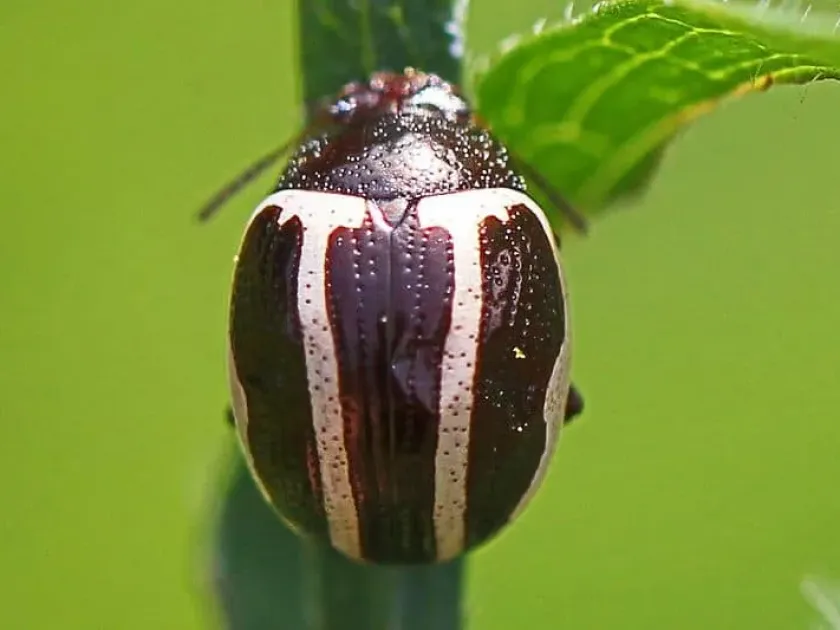
Description
How to identify
Zygogramma tortuosa is a species of leaf beetle belonging to the family Chrysomelidae, order Coleoptera. It is well-known for its strict dietary preference for plants in the genus Ambrosia.
Adult beetles typically measure 5 to 7 mm in length and possess a distinctive coloration, featuring dark longitudinal stripes on their light-colored wing covers (elytra).
The larvae are generally grayish or yellowish and possess a robust body structure designed for active feeding on the foliage of their host plants.
This beetle is recognized for its high host specificity, which makes it a unique object of study in entomology and biological weed control programs globally.
The insect undergoes a complete metamorphosis, including egg, larval, pupal, and adult stages, with each stage specifically adapted to the ragweed environment.
What it damages
The primary damage caused by Zygogramma tortuosa is the skeletonization of leaves, which severely stresses and hinders the growth of common ragweed.
Although it is a beneficial agent for weed control, high population densities can occasionally lead to spillover effects on nearby sensitive crops if conditions are ideal for the beetle.
Damage symptoms involve the consumption of the leaf blade, leaving only the midrib and larger veins intact, which significantly reduces the photosynthetic efficiency of the weed.
In cases of severe infestation, the plant may lose most of its foliage, leading to stunted growth, reduced seed production, and eventual death of the infested individual.
Agricultural experts monitor this beetle to ensure it remains focused on its host weed rather than migrating to economically important cultivated crops.
When it appears
The beetle overwinters in the adult stage by burying itself into the soil, providing protection against extreme winter temperatures and frost.
As soil temperatures rise in the spring, the beetles emerge and begin feeding on the young, emerging ragweed shoots, initiating the season's activity.
During the growing season, multiple generations can emerge, with the population peaking during the warmest months when host plant availability is at its maximum.
Eggs are typically laid on the underside of leaves or along stems, ensuring that neonate larvae have immediate access to food upon hatching.
As temperatures decline in autumn, the beetles prepare for diapause, seeking suitable overwintering sites within the soil profile once again.
Signs of infestation
Initial signs of presence include the appearance of small irregular holes in the leaves of host plants, which gradually increase in size as larvae feed.
A closer inspection of the plant canopy often reveals the presence of both adults and larvae, especially on the undersides of the leaves near the soil line.
Yellowing of the foliage and premature wilting are clear indicators that a colony of Zygogramma tortuosa is actively feeding and causing damage to the host.
The presence of feeding tracks and frass on the leaves serves as a diagnostic sign for identifying the activity level of the beetle population.
Widespread damage across a patch of weeds often results in a significant reduction of plant density in the affected area, indicating successful colonization.
Control measures
Management of Zygogramma tortuosa is rarely focused on eradication, as it often acts as a natural suppressant for highly invasive ragweed populations.
However, when population levels threaten nearby sensitive agriculture, integrated pest management strategies must be implemented to protect crops.
- Regular monitoring of fields to detect migration of the beetle towards crops.
- Use of buffer zones between ragweed-infested areas and cultivated fields.
- Selective insecticide application only if the economic threshold is exceeded.
- Maintaining healthy crop growth to increase tolerance to incidental damage.
- Promoting natural predators that help regulate the population density of the beetle.
Sustainable control relies on balancing the beetle's utility in weed management with the necessity of ensuring agricultural crop safety during the growth season.
Taxonomy
- Latin name
- Zygogramma tortuosa
- Order
- Coleoptera (beetles)
- Family
- Chrysomelidae
- EPPO code
- ZYGGTO
Discussion
No discussions yet — be the first.