

Description
How to identify
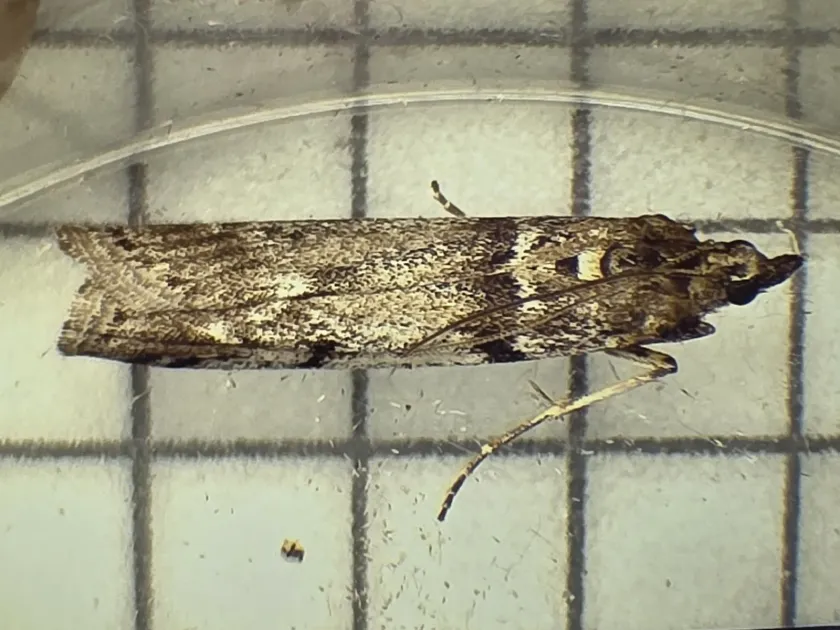
The gooseberry fruitworm is a moth belonging to the Pyralidae family. The adult moth has a wingspan of approximately 30 mm, with grayish-brown forewings featuring a distinct dark central spot and transverse bands that provide excellent camouflage on bark.
This pest undergoes a complete metamorphosis, consisting of egg, larva (caterpillar), pupa, and adult stages. The larval stage is the primary cause of damage, as these caterpillars feed aggressively on the developing fruit of berry bushes.
The caterpillar typically measures up to 15 mm in length, displaying a color range from bright green to pinkish-brown. A dark head is a key morphological characteristic used for field identification of this specific species.
The insect overwinters as a pupa within a dense silken cocoon located in the surface layer of the soil beneath the bushes. This biological trait makes soil management an essential component of an effective control strategy.
Adult moths emerge in the spring during the flowering phase of gooseberries and currants. Females lay eggs inside the flower buds or young ovaries, ensuring that newly hatched larvae have immediate access to food.
What it damages
Gooseberries, black currants, and red currants are the primary hosts for this pest. In cases of high infestation, the fruitworm can destroy a vast majority of the annual yield on affected plants.
Larvae consume the pulp and seeds of the berries. A single caterpillar is capable of damaging several berries by moving between them using silken threads to web them together, causing premature ripening and subsequent rot.
Infested berries change color prematurely, often looking shriveled or scorched. This loss of quality makes the entire crop unmarketable and unsuitable for processing or fresh consumption.
Severe infestations weaken the host plant, reducing its physiological vitality and overall resistance to harsh winter conditions. Persistent attacks over multiple seasons can lead to significant decline in bush productivity.
Neglected gardens without regular pruning or soil maintenance are particularly prone to outbreaks, as they provide ideal environments for the pest to complete its life cycle undisturbed.
When it appears
The life cycle of the gooseberry fruitworm is tightly synchronized with the phenology of its host plants. Emergence of the adult moths coincides with the spring blooming period, which is a critical stage for pest establishment.
The pest produces only one generation per year. Larval development lasts approximately one month, after which the caterpillars descend into the soil to pupate for the remainder of the season and the winter months.
The dormant pupal stage occurs in the soil, making autumn and early spring the best time to disrupt the pest's lifecycle through physical soil intervention.
Environmental factors, such as unusually warm springs, can trigger earlier and more massive emergence of adult moths, requiring agricultural managers to be prepared for timely intervention.
Understanding these biological timing intervals is essential for effective monitoring and application of control agents, ensuring that treatments are applied when larvae are most vulnerable.
Signs of infestation
The first visible sign of infestation is the premature discoloration of berries. While healthy berries remain green, infested ones take on a ripe appearance ahead of schedule, often looking discolored or wilted.
Webbing is a telltale sign; caterpillars spin fine silken threads to tie berries together. This webbing provides protection while the larvae migrate between fruits, leaving clear evidence of their presence.
Inside the infested fruit, one can observe larval excrement and empty tunnels where the caterpillars have consumed the internal pulp. This confirms the damage is caused by fruitworms rather than fungal pathogens.
Premature dropping of ovaries during the early growth phase is another symptom, often resulting from larvae boring into the flower stalk or the base of the developing berry.
If an infested berry is dissected, the caterpillar is usually found within. When disturbed, it becomes active, which helps differentiate it from other pests that might be present in the garden.
Control measures
- Mounding soil around the base of bushes in early spring to prevent emerging moths from reaching the branches.
- Manually picking and destroying infested berries containing larvae before the insects enter the soil.
- Autumn cultivation or digging of the soil under bushes to expose and destroy overwintering pupae.
- Applying biological insecticides during the period of peak moth activity and early larval development.
- Using chemical control measures only when necessary, strictly adhering to pre-harvest intervals.
Cultural control methods are highly recommended as they are environmentally friendly and reduce the need for synthetic chemicals while effectively lowering the pest population.
Mulching the soil surface with black plastic or landscaping fabric creates a physical barrier that prevents adult moths from successfully emerging from the soil beneath the bushes.
Chemical intervention should be reserved for severe outbreaks and must be timed correctly—usually before or immediately after the flowering period—to maximize efficacy while minimizing impact on pollinators.
Pruning bushes to improve airflow and light penetration creates a less favorable microclimate for the fruitworm and helps in the early detection of infested fruit clusters.
Content graph
Connections · Gooseberry fruitworm
Most often together:
Marketplace
Products · 2

Biology
Taxonomy
- Latin name
- Zophodia convolutella
- Order
- Lepidoptera (butterflies)
- Family
- Pyralidae
- EPPO code
- ZOPHCO
Community
Discussion
No discussions yet — be the first.