
Glossy soil snail
Zonitoides nitidus
Description
How to identify
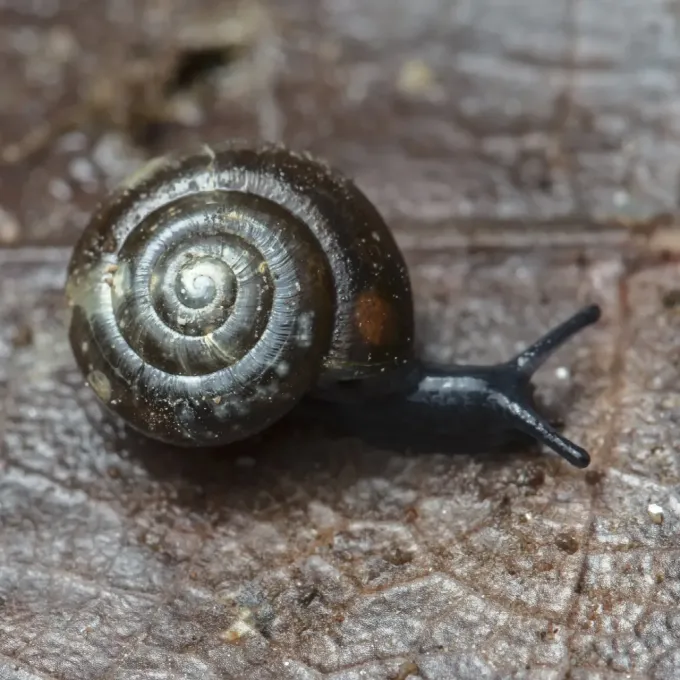
The glossy soil snail (Zonitoides nitidus) is a small terrestrial mollusk of the family Gastrodontidae. It is characterized by a shiny, nearly flat, dark brown shell, typically measuring about 6 to 7 millimeters in diameter.
The body of the snail is usually dark gray or black, which helps distinguish it from other larger garden snail species common in agricultural landscapes.
This species is highly hygrophilous, preferring habitats with consistently high humidity levels, such as marshy areas, floodplains, and dense, shaded vegetation.
In cultivated fields and gardens, they are frequently found under mulch, decaying leaves, or garden debris where the microclimate remains moist throughout the day.
While their small size allows them to evade detection for long periods, their reproductive capability can lead to rapid population growth in favorable moist conditions.
What it damages
The glossy soil snail is a polyphagous pest known to cause damage to a wide variety of vegetable crops, berries, and seedlings, especially in greenhouses.
They feed primarily on the tender foliage of leafy greens such as lettuce, cabbage, and spinach, leaving behind irregular, ragged holes that can severely reduce plant quality.
In root crops like potatoes and carrots, they create pits or deep gouges when the vegetables are near or partially exposed above the soil surface.
Berries such as strawberries are highly susceptible, with the snails consuming the fruit tissue, which not only causes direct losses but also opens the fruit to secondary bacterial and fungal infections.
Young seedlings are particularly vulnerable, as the snails may sever the stems at the soil level, leading to the total loss of the young crop in early stages of development.
When it appears
The activity of Zonitoides nitidus is closely tied to moisture levels and temperature; they are most active during wet, rainy seasons and at night.
They overwinter in the soil or under organic debris, emerging in early spring as soon as temperatures rise and the soil warms up.
Summer heat is generally avoided; during dry spells, they retreat into deeper soil layers or dense, damp cover to prevent desiccation.
The peak of their feeding activity typically occurs in late summer and autumn, especially if these seasons are characterized by high rainfall.
Their life cycle is well-adapted to surviving fluctuations in environmental conditions, allowing them to maintain stable populations in humid agricultural environments.
Signs of infestation
The most prominent sign of infestation is the presence of silvery, dried mucus trails on leaves, stems, and the surrounding soil, especially visible in the early morning.
Damaged leaves show irregular holes and bitten edges, often accompanied by thin, translucent areas where the leaf epidermis has been scraped away.
Physical inspection during the day under mulch, damp wood, or dense weeds will often reveal the snails themselves, confirming the identity of the pest.
Injured root vegetables exhibit distinct, crater-like lesions or irregular feeding scars, which are classic indicators of molluscan activity rather than insect damage.
Wilting of seedlings without apparent root-zone damage by insects often points to nocturnal feeding by these snails on the lower parts of the plant stems.
Control measures
Effective management requires a combination of cultural practices to modify the habitat and chemical interventions when populations exceed the economic threshold.
- Improving soil drainage to reduce the overall moisture level in the field and around garden beds.
- Removing garden debris, boards, and overgrown weeds that provide the snails with necessary shelter during the day.
- Using barrier materials like crushed eggshells, wood ashes, or coarse sand to create unfavorable surfaces for snail movement.
- Application of molluscicides, such as iron phosphate baits, which are effective and safer for the surrounding environment.
Encouraging biodiversity by protecting natural predators such as carabid beetles, toads, and birds can significantly help in suppressing snail populations naturally.
Taxonomy
- Latin name
- Zonitoides nitidus
- Order
- Molluscs
- Family
- Gastrodontidae
- EPPO code
- ZONINI
Discussion
No discussions yet — be the first.