
Zonitoides
Zonitoides
Description
How to identify
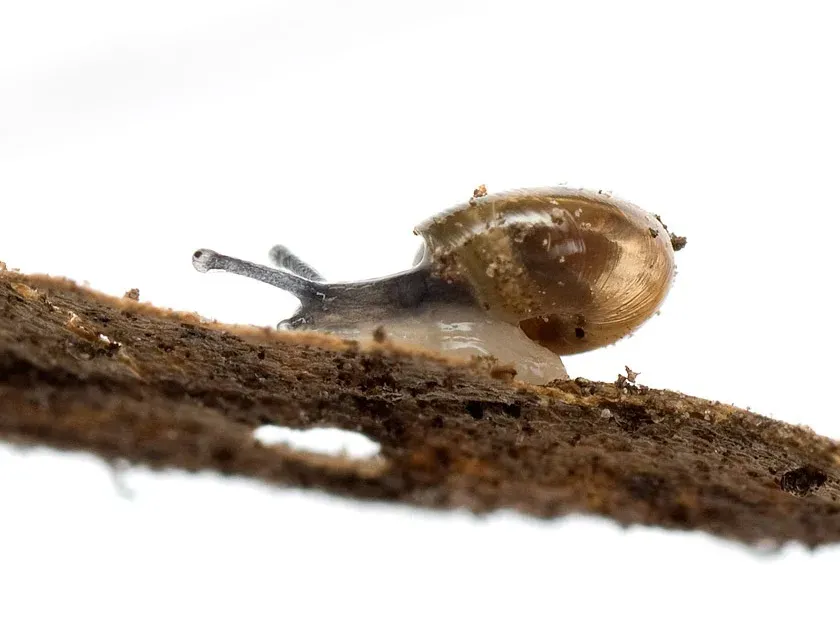
Zonitoides is a genus of small, air-breathing land snails belonging to the family Zonitidae. The species Zonitoides arboreus, often referred to as the glossy wood snail, is a significant nuisance in nurseries and greenhouses.
These snails are notably small, typically measuring 5 to 6 millimeters in diameter. Their shells are thin, translucent, and glossy, exhibiting a characteristic amber or brownish-yellow coloration.
The soft body of the snail ranges from light grey to yellow. Due to their minute size and nocturnal behavior, they are often overlooked until significant crop damage becomes visible.
Zonitoides thrives in moist, shaded environments. They are frequently found residing under decaying organic matter, leaf litter, or deep within the soil of potted plants, protected from sunlight.
Their distribution is often linked to the trade of greenhouse supplies, as they easily hide in soil mixes, nursery pots, and under plant trays, spreading rapidly across agricultural facilities.
What it damages
As a polyphagous pest, Zonitoides causes extensive damage to a wide range of horticultural crops. Seedlings, leafy greens, strawberries, and ornamental bulb plants are particularly susceptible to their grazing.
They feed by rasping the plant tissue, resulting in small, irregular holes or complete skeletonization of the leaf blades. In many cases, they target the growing points, which stops plant development immediately.
Root damage is also common, especially in pot-grown plants. The snails feed on roots or bulbs, creating entry points for opportunistic pathogens such as fungi and bacteria, leading to severe root rot.
For young seedlings, a light infestation is often enough to devastate an entire batch overnight, as the snails are highly effective at stripping fresh, tender tissues before the plant has a chance to establish.
In ornamental horticulture, these snails can destroy delicate flowers and succulent tissues, leaving unsightly scarring and rendering the plants unfit for sale.
When it appears
The activity of Zonitoides is primarily dictated by ambient moisture levels. In outdoor environments, they are most active during the growing season, particularly in wet, humid spring and summer months.
In controlled environments such as greenhouses and conservatories, these snails can remain active throughout the entire year, as they thrive in the constant warmth and high humidity provided to the crops.
Their reproductive cycle allows for multiple generations per year. Eggs are laid in clusters within the moist substrate, and the hatchlings begin feeding immediately, leading to rapid population explosions.
During the day, they exhibit negative phototaxis, meaning they retreat from light to avoid desiccation. This makes them almost entirely nocturnal, concentrating their feeding activity under the cover of darkness.
Environmental management is key to suppressing their lifecycle. Eliminating stagnant moisture and reducing humidity levels can significantly hinder their reproduction and survival rates.
Signs of infestation
The most reliable sign of a Zonitoides infestation is the presence of silvery, dried mucus trails left on leaf surfaces, stems, and greenhouse benches, which shimmer in the light.
Visual inspection often reveals ragged holes on the underside of lower leaves. When dealing with potted plants, finding the snails requires checking the undersides of pots and the surrounding damp soil surface.
- Shiny, dried slime trails on surfaces.
- Irregular feeding holes on seedling foliage.
- Unexplained wilting and poor growth of potted plants.
- Empty, tiny amber-colored shells found in the soil.
One can detect them by inspecting the plants after dark with a flashlight or by placing a moist piece of cardboard or wood on the soil, which acts as a gathering site during the day.
For bulbous plants, look for rot at the base of the stem or the bulb scales, as the snails frequently cluster in these areas, causing hidden internal damage.
Control measures
Effective management begins with strict sanitation. Removing fallen leaves, plant debris, and unnecessary clutter helps eliminate their daytime hiding spots and disrupts their habitat.
Physical barriers can be highly effective. Creating dry zones around plants or using abrasive materials like diatomaceous earth or crushed eggshells can deter the snails from reaching vulnerable stems.
Biological control includes fostering a healthy population of natural predators such as ground beetles, toads, and hedgehogs, which naturally feed on these small mollusks.
For chemical control, use professional molluscicides formulated with iron phosphate, which is safer for the environment and pets, or metaldehyde-based baits, strictly following the label instructions.
Implementing trap-and-collect methods is recommended for smaller areas. Simple traps using hollowed-out potatoes or moist planks can be placed in the evening to collect snails for disposal the following morning.
Taxonomy
- Latin name
- Zonitoides
- Order
- Molluscs
- Family
- Gastrodontidae
- EPPO code
- ZONISP
Discussion
No discussions yet — be the first.