
Arborous soil snail
Zonitoides arboreus
Description
How to identify
The arborous soil snail (Zonitoides arboreus) is a small terrestrial gastropod belonging to the Gastrodontidae family.
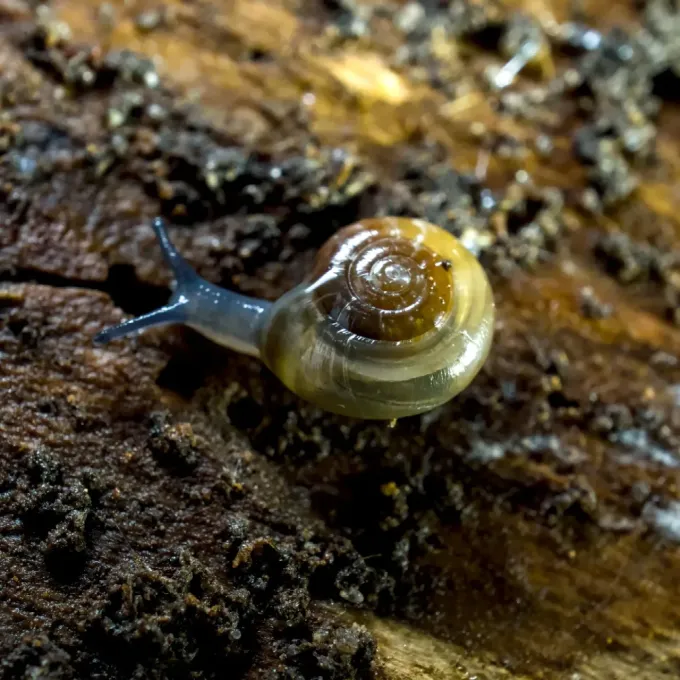
It possesses a small, glossy, amber-colored shell that typically reaches a diameter of 3 to 5 millimeters.
The shell features smooth, fine radial striations and consists of about 4 to 5 whorls, making it quite distinct upon close microscopic inspection.
The snail's soft body is generally light-colored, ranging from grey to beige, which helps it blend into organic matter and moist soil.
Despite their small size, these snails are highly adaptable and can be found in various environments ranging from forest litter to greenhouses.
What it damages
This species is known to cause significant damage to seedlings and young plants, often attacking roots and stems in moist substrates.
In greenhouses and nurseries, it is a problematic pest for ornamental plants, particularly orchids, where it bores into the root system.
Mushroom farms are especially vulnerable, as the snails feed directly on the mycelium and developing fruit bodies, leading to crop loss.
Vegetable crops, including lettuce and sensitive greens, often suffer from leaf scarring and holes caused by the feeding activity of these snails.
Beyond physical damage, their presence is often associated with the spread of bacterial or fungal pathogens that cause root rot in weakened plants.
When it appears
Activity levels are highly correlated with humidity and temperature, peaking during rainy seasons or in consistently wet greenhouse conditions.
In temperate climates, they remain active throughout the warmer months and seek refuge deeper in the soil or under debris during winter.
They are primarily nocturnal or active during overcast days when the risk of desiccation is minimal.
Rapid population growth can occur in protected environments where stable moisture levels allow for year-round breeding cycles.
The life cycle is quite fast, meaning that under optimal conditions, a minor infestation can quickly become a serious agricultural challenge.
Signs of infestation
Early signs of infestation include irregular holes in young leaves and stems, often accompanied by thin, shiny mucus trails.
Root system decline, manifested by wilting or stunted growth in potted plants, is a classic sign of feeding damage by these small molluscs.
Presence of the snails can be confirmed by inspecting the undersides of containers, pots, or wood debris placed on the soil surface.
In mushrooms, the appearance of small irregular bites on the cap edges is a definitive indicator of snail presence.
If soil or potting mix appears disturbed or contains small debris patterns, it is advisable to check for the presence of this snail.
Control measures
Effective management focuses on creating unfavorable conditions for the snails, primarily by reducing excess soil moisture and humidity.
Sanitation is critical: remove decaying plant material, leaf piles, and any objects on the ground that provide daytime shelter.
Chemical control using molluscicides containing iron phosphate is generally safer for the environment and effective against this species.
Biological control methods include introducing predatory nematodes that specifically target soil-dwelling molluscs.
- Implement regular cleaning of pots and greenhouse trays;
- Use coarse materials like grit or sand to create physical barriers;
- Avoid excessive evening watering to reduce surface moisture;
- Manually collect and remove snails during dusk or night;
- Ensure proper drainage in all plant-growing areas.
Taxonomy
- Latin name
- Zonitoides arboreus
- Order
- Molluscs
- Family
- Gastrodontidae
- EPPO code
- ZONIAR
Discussion
No discussions yet — be the first.