
St John's wort gall midge
Zeuxidiplosis giardi
Description
How to identify
The St John's wort gall midge, scientifically known as Zeuxidiplosis giardi, is a tiny insect belonging to the family Cecidomyiidae in the order Diptera.
Adult midges are very small and elusive, often overlooked in the field. Their life cycle is entirely dependent on the presence of Hypericum species.
Female midges lay their eggs on the youngest leaves and shoot tips of the host plant, providing immediate access to nutrients for the developing larvae.
The larvae are typically orange or yellowish and thrive inside galls, which are specific plant growths induced by the insect's own chemical secretions.
The development from egg to adult is relatively fast, allowing for multiple generations during the growing season under favorable conditions.
What it damages
Zeuxidiplosis giardi is a specialist pest that targets St John's wort (Hypericum perforatum) and its close relatives.
The feeding larvae damage the apical buds and young foliage, which are the most critical parts for the plant's vertical growth and leaf development.
Infested plants suffer from stunted growth, reduced biomass, and weakened vitality, which directly impacts the quality of harvested medicinal herbs.
Severe infestations can lead to massive leaf deformation and a decrease in the concentration of active medicinal compounds within the plant tissues.
The damage is cumulative; as the season progresses, uncontrolled midge populations can render entire patches of the crop commercially non-viable.
Signs of infestation
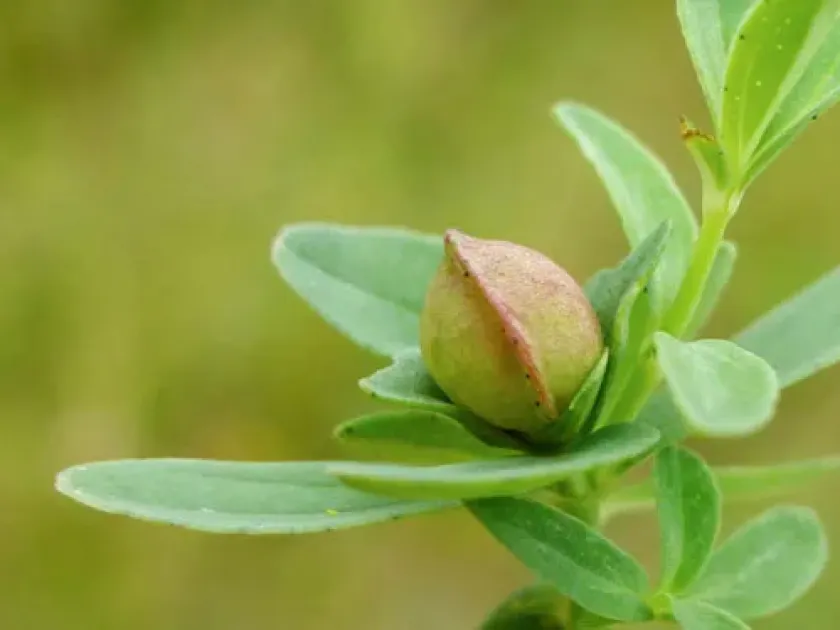
The most visible sign of infestation is the formation of distinctive rounded or oval galls on the leaves and terminal shoots of the plant.
These galls are essentially protective homes constructed by the plant in response to the larvae's feeding, serving as both food source and shelter.
Affected plants often display twisted, curled, or abnormally thickened leaves, giving the tips of the shoots a tight, clustered appearance.
As the galls mature, the damaged leaf tissue may begin to yellow, wither, or eventually die, leading to an overall disheveled look of the plant.
Observing these cluster-like formations at the tips of St John's wort is a clear indicator that Zeuxidiplosis giardi is present in the field.
Control measures
Management of the St John's wort gall midge relies heavily on non-chemical approaches to ensure the quality of the herbal crop remains uncompromised.
- Early detection and physical removal of galled shoot tips to disrupt the pest's reproductive cycle.
- Strategic disposal of all infested plant material away from the cultivation site to prevent re-infestation.
- Crop rotation and maintaining a significant distance from wild Hypericum populations.
Soil cultivation in the autumn is recommended as a preventive measure, as many gall midges spend the wintering stage in the soil or ground debris.
Encouraging natural predators, such as parasitic wasps or generalist insect predators, can help maintain the midge population below the economic threshold.
Taxonomy
- Latin name
- Zeuxidiplosis giardi
- Order
- Diptera (flies)
- Family
- Cecidomyiidae
- EPPO code
- ZEXDGI
Discussion
No discussions yet — be the first.