
Zetzellia
Zetzellia
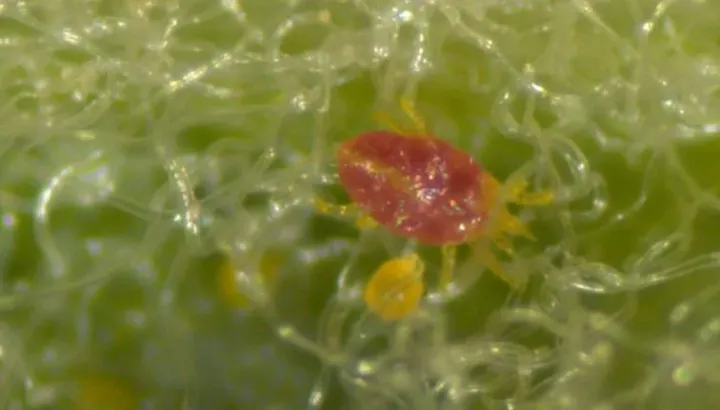
Description
How to identify
Zetzellia mali is a species of predatory mite belonging to the family Stigmaeidae (order Trombidiformes). It is a tiny, beneficial organism vital for orchard health.
The adult mites are approximately 0.4 mm in length and exhibit a characteristic bright yellow to orange coloration.
They possess specialized mouthparts designed for piercing the eggs and larvae of various pest mites that inhabit fruit trees.
The life cycle consists of the egg, larva, two nymphal stages (protonymph and deutonymph), and the adult stage.
Overwintering occurs primarily in the adult female stage, typically hidden within bark crevices or under dried leaf litter on the tree.
What it damages
It is crucial to clarify that Zetzellia mali is not a pest but a beneficial predator that protects fruit trees from damage.
The primary prey for these mites includes the European red mite and other species of phytophagous mites that suck sap from leaves.
By consuming the eggs and young stages of pests, they naturally suppress mite populations and prevent economic losses.
The presence of these predators is an indicator of a stable and healthy orchard ecosystem managed with minimal chemical intervention.
They do not consume plant tissues, making them strictly non-injurious to the crops they inhabit.
When it appears
The active season for Zetzellia mali begins in early spring, synchronized with the emergence of their prey.
Population density typically peaks during mid-summer, correlating with the high activity of European red mites.
The mites go through multiple generations throughout the summer, allowing them to rapidly respond to pest outbreaks.
As daylight decreases and temperatures drop in late autumn, the mites seek protective overwintering sites.
Environmental conditions, particularly humidity and temperature, significantly influence the rate of their development and reproductive success.
Control measures
To preserve the population of Zetzellia mali, growers should prioritize Integrated Pest Management (IPM) practices.
The use of broad-spectrum pesticides should be avoided, as they are toxic to beneficial predators as well as pests.
Selective acaricides that target specific pests without harming predators should be chosen for necessary control measures.
Routine monitoring of predator-to-prey ratios is recommended before applying any chemical treatment to the orchard.
Maintaining a diverse orchard environment helps ensure the survival and long-term establishment of these valuable biological control agents.
Taxonomy
- Latin name
- Zetzellia
- Order
- Mites
- Family
- Stigmaeidae
- EPPO code
- ZETZSP
Discussion
No discussions yet — be the first.