
Blueberry aphid
Wahlgreniella vaccinii
Description
How to identify
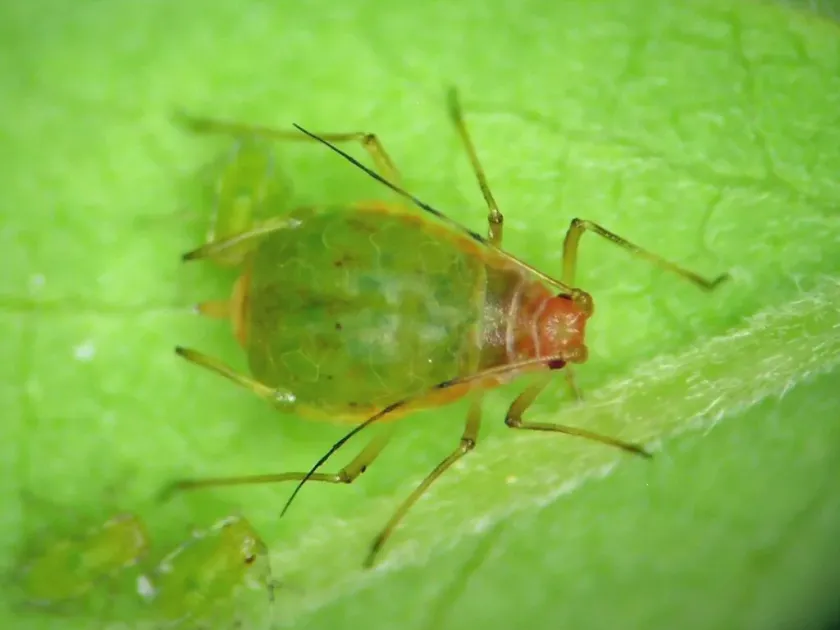
The blueberry aphid (Wahlgreniella vaccinii) is a small insect belonging to the order Hemiptera and the family Aphididae. It is a specialized pest that thrives on various members of the Ericaceae family.
Adults are typically light green or yellowish-green, providing excellent camouflage against the foliage of host plants. The species is characterized by specific morphology in its siphunculi and antennae, typical for the Wahlgreniella genus.
These aphids are often found in colonies on the underside of leaves or clustered near growing tips. Due to their small size and color, they are frequently overlooked during initial field inspections.
Their life cycle involves overwintering eggs laid on the branches of host plants. With the arrival of spring, nymphs emerge and progress through several generations during the growing season.
Accurate identification requires careful inspection of apical buds and leaves, often using a hand lens to distinguish them from other aphid species found on different plant families.
What it damages
The primary hosts for Wahlgreniella vaccinii include cultivated and wild species of the genus Vaccinium, such as highbush blueberries and cranberries.
As piercing-sucking insects, they feed on plant sap, which drains essential nutrients from the plant. This leads to stunted growth, reduced vigor, and poor development of new shoots.
Heavy infestations can lead to leaf curling, chlorosis, and potential flower bud drop, which directly impacts the commercial yield of berry plantations.
Beyond physical damage, these aphids serve as potential vectors for plant viruses. The introduction of viral pathogens through their feeding process can cause severe, long-term health issues for the crop.
The feeding sites often become susceptible to secondary infections, such as sooty mold, which grows on the sugary honeydew excreted by the aphids, further reducing photosynthetic efficiency.
When it appears
Aphid activity begins in early spring, synchronized with the bud break and the emergence of new, succulent foliage on the host plants.
Population peaks typically occur during late spring and early summer when temperatures are optimal for rapid reproduction and development.
As the season progresses toward autumn, the aphids shift toward the production of sexual forms. These individuals mate and lay eggs, which serve as the overwintering stage for the following year.
Generation times are highly dependent on ambient temperature, allowing for multiple overlapping generations throughout the warmer months if conditions remain favorable.
Field scouting should commence as soon as leaves unfurl, continuing regularly until the end of the main growth period in mid-summer.
Signs of infestation
The most visible symptom of infestation is the curling and distortion of new, tender leaves at the terminals of branches. This distortion is often the first indicator for growers.
The presence of sticky honeydew on the surface of leaves and stems is a strong diagnostic sign. This substance often attracts ants, which will farm the aphids for their secretions.
A black, sooty appearance on leaves is a secondary indicator of aphid presence, resulting from the colonization of fungi on the aphid honeydew.
General yellowing or chlorosis of the shoot tips, combined with stunted shoot development, often indicates a significant buildup of the aphid population.
- Curled and deformed terminal leaves.
- Visible sticky honeydew deposits on foliage.
- Presence of sooty mold fungus on the plants.
- Increased ant activity around blueberry bushes.
Control measures
Management of the blueberry aphid relies on an Integrated Pest Management (IPM) approach that balances chemical intervention with cultural practices.
Systemic insecticides are generally effective if applied during the early stages of infestation. It is critical to adhere to pre-harvest intervals and avoid spraying during peak bloom to protect pollinators.
Biological control plays a key role, as natural enemies like lady beetles, lacewings, and hoverfly larvae often keep aphid populations below damaging thresholds.
Cultural methods include managing nitrogen fertilizer applications. Excessive nitrogen promotes overly succulent growth, which is highly attractive to aphids and increases their reproductive rate.
Regular monitoring and scouting are essential for identifying localized hotspots, allowing for targeted control measures instead of broad-spectrum applications across the entire plantation.
Taxonomy
- Latin name
- Wahlgreniella vaccinii
- Order
- Hemiptera (bugs, aphids, leafhoppers)
- Family
- Aphididae
- EPPO code
- WAHLVA
Discussion
No discussions yet — be the first.