
Wahlgreniella
Wahlgreniella
Description
How to identify
Wahlgreniella is a genus of aphids within the family Aphididae, part of the order Hemiptera. These small insects are common pests often found on ornamental plants, particularly roses, where they feed on sap using their specialized piercing-sucking mouthparts.
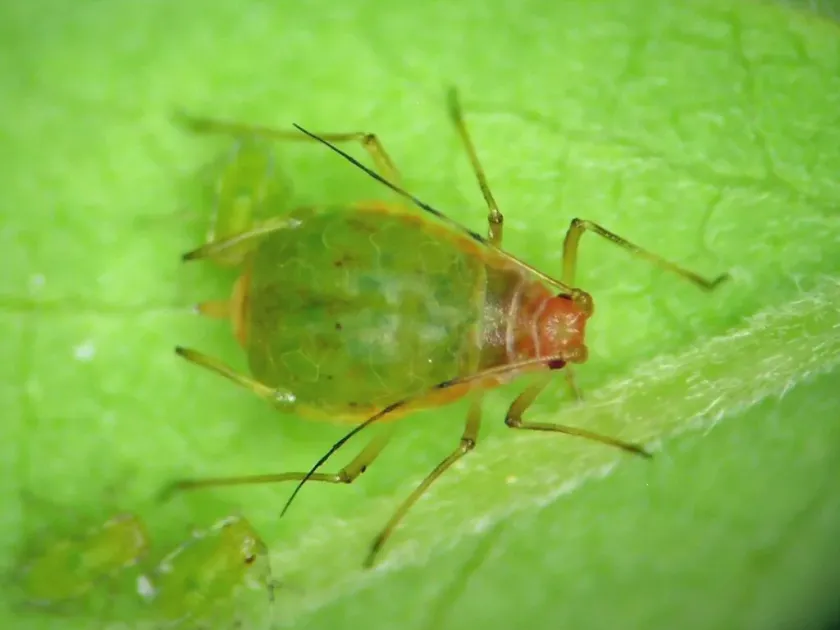
Adult Wahlgreniella aphids typically exhibit a light green or yellowish body, providing excellent camouflage against the foliage. They feature long siphunculi on the posterior of the abdomen and antennas that are often as long as their entire body length.
The life cycle involves rapid reproduction, often through parthenogenesis, where females produce offspring without mating. This allows populations to explode in size during favorable spring and summer conditions, forming dense colonies on host plants.
They can exist in both wingless and winged forms. While the wingless ones stay localized, the winged individuals are essential for colonizing new host plants, facilitating the rapid spread of the infestation throughout a garden or nursery.
The insects overwinter as eggs on the buds or stems of the host plants, which hatch in early spring to begin a new cycle of infestation as soon as the first young leaves appear.
What it damages
Wahlgreniella species primarily infest plants in the Rosaceae family, with a strong preference for rose bushes. They specifically target the most tender parts of the plant, such as young leaves, stems, and flower buds.
By constantly extracting plant fluids, they deplete the plant's essential nutrients and sugars, causing the foliage to weaken and growth to stunt significantly. This leads to a general decline in the plant's vigor and decorative appearance.
Beyond direct feeding damage, these aphids are recognized as vectors for various plant viruses. When they move from an infected plant to a healthy one, they can transmit diseases that may be fatal to the plant.
The physical damage includes leaf curling, twisting of young shoots, and deformities in flower buds, which prevents the plant from blooming properly or results in poor-quality, misshapen flowers.
High population densities can cause severe stress, making the infested plants more susceptible to secondary environmental stressors like drought, heat, or other pathogenic infections that exploit weakened tissue.
Signs of infestation
The most immediate sign of an infestation is the curling and yellowing of young, succulent leaves. These leaves often appear stunted and lose their natural luster due to the loss of cell sap.
The presence of honeydew, a sticky, sugary substance secreted by the aphids, is a clear indicator of a colony. This residue often attracts ants, which may actively protect the aphids from their natural predators.
Sooty mold, a black, crust-like fungus, often grows on top of the honeydew deposits. This not only makes the plant look dirty but can also inhibit photosynthesis if it covers a significant portion of the leaf surface.
Careful inspection of the underside of leaves and the tips of the shoots usually reveals clusters of these small insects. In early stages, the colonies might be small and scattered, but they grow rapidly if unchecked.
Deformed flower buds that fail to open or appear stunted are a major red flag that an aphid population is draining the plant's resources during the critical stages of bud development.
Control measures
Early intervention is crucial for managing Wahlgreniella. Mechanical removal, such as washing the plant with a strong stream of water, can be effective in reducing colony size during the early stages of infestation.
Encouraging natural predators is a sustainable approach. Ladybugs, lacewings, and hoverfly larvae are voracious consumers of aphids and can naturally regulate populations in a healthy, balanced garden ecosystem.
If chemical control is necessary, systemic insecticides are the most effective because they are absorbed by the plant and kill the aphids as they feed on the sap, providing longer-lasting protection.
It is vital to rotate different chemical classes of insecticides to prevent the development of resistance. Always apply pesticides in accordance with local regulations and in the evening to minimize impact on pollinators.
- Regular monitoring of tender new growth.
- Proper pruning to remove heavily infested sections.
- Promoting biodiversity to support predatory insects.
Taxonomy
- Latin name
- Wahlgreniella
- Order
- Hemiptera (bugs, aphids, leafhoppers)
- Family
- Aphididae
- EPPO code
- WAHLSP
Discussion
No discussions yet — be the first.