
Chinese mystery snail
Viviparus malleatus
Description
How to identify
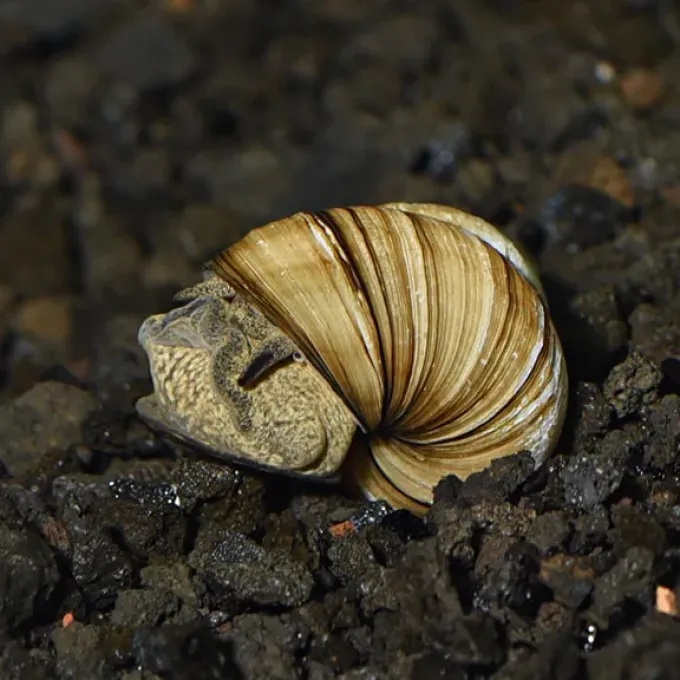
The Chinese mystery snail (Viviparus malleatus) is a large freshwater gastropod belonging to the Viviparidae family, recognizable by its conical shell that can reach up to 60 mm in height.
This species is ovoviviparous, meaning it gives birth to live young, which grants the offspring a high rate of survival compared to species that lay eggs in exposed water.
They inhabit slow-moving or still waters, preferring silty or sandy substrates often found in irrigation canals, rice paddies, and aquaculture ponds.
The snails possess an operculum, a hard lid that seals the shell, allowing them to withstand temporary dehydration and adverse water conditions, facilitating their spread.
Their adaptive nature and ability to tolerate varying temperatures make them a persistent challenge in agricultural environments where they easily establish large colonies.
What it damages
The primary agricultural damage caused by Viviparus malleatus involves feeding on young shoots and seedlings of rice and other aquatic crops.
By grazing on the tender tissues, snails often destroy the crop at the most vulnerable stage, resulting in reduced stand density and potential total harvest loss.
In hydroponic and aquaponic setups, their presence can obstruct water flow in pipes, damage pumps, and introduce various organic impurities into the system.
Snails disturb the substrate by foraging, which increases turbidity and disrupts the nutrient balance essential for the optimal growth of the crops.
High population densities lead to severe competition for space and resources, placing significant stress on cultivated plants and lowering the quality of the final produce.
When it appears
Activity in Chinese mystery snails is closely linked to water temperature, usually beginning in early spring when water warms up to 10–12 degrees Celsius.
During the summer, the metabolic rate increases, and the population reaches peak activity, coinciding with the most rapid growth phase of many water-dependent crops.
Snails actively forage across the paddy floors throughout the summer, multiplying rapidly and increasing the pressure on young, palatable plant material.
As autumn temperatures drop, the snails reduce their activity, retreating into the substrate or deeper areas to enter a dormant state for the winter.
In controlled environments or mild climates, the life cycle remains continuous, necessitating year-round monitoring and proactive management strategies.
Signs of infestation
One of the earliest signs of an infestation is the observation of snail shells, either intact or empty, along the banks and bottom of irrigation channels.
Visible damage to plants appears as ragged edges on leaves and stems, with seedlings potentially being eaten down to the waterline or below.
Water turbidity often increases suddenly due to the snails digging and moving through the muddy substrate, altering the clarity of the water significantly.
During field inspections, groups of snails are frequently found clustered around the roots or organic matter, where they congregate to feed efficiently.
The presence of excessive slime trails on submerged surfaces and structural elements of the irrigation system further confirms the active movement of the snail population.
Control measures
Mechanical removal using nets, traps, or hand-picking during the initial stage of the growth season is a primary method to keep snail populations in check.
Draining the paddies or ponds for a short period is a highly effective agricultural practice that exposes the snails to desiccation, limiting their survival.
Biological control, by introducing or encouraging local fish predators that consume mollusks, can help maintain an ecological balance in the pond or field.
When necessary, specific molluscicides can be used, provided that the application complies with environmental regulations to protect the water quality and non-target organisms.
Regular maintenance of canals, removal of excessive organic sludge, and diligent field monitoring are essential for preventing the rapid spread of this invasive species.
Taxonomy
- Latin name
- Viviparus malleatus
- Order
- Molluscs
- Family
- Viviparidae
- EPPO code
- VIVIMA
Discussion
No discussions yet — be the first.