
Bengal mystery snail
Viviparus bengalensis
Description
How to identify
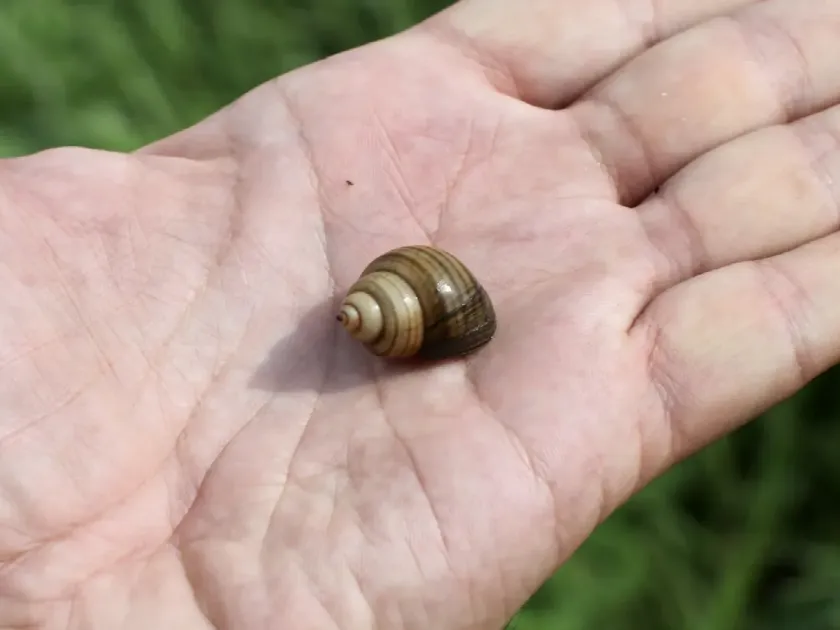
The Bengal mystery snail (Viviparus bengalensis) belongs to the family Viviparidae, order Architaenioglossa. It is a freshwater gastropod with a conical shell featuring up to 6 whorls, typically olive-green or brown with distinct dark spiral bands.
Adult specimens reach a height of 30–40 mm. A defining characteristic is their ovoviviparous reproduction, where females give birth to fully developed miniature snails, significantly increasing juvenile survival rates within the water body.
These snails thrive in stagnant or slow-moving freshwater environments abundant in submerged vegetation. They are highly adaptable to fluctuating water oxygen levels and temperature ranges.
Systematically, this species is often confused with other members of the Viviparus genus; however, the specific shape of the shell aperture and coloration allow for accurate identification of Viviparus bengalensis in the field.
Populations can expand rapidly when organic debris is abundant and water temperatures are moderate, making population management essential for productive aquaculture environments.
What it damages
Significant economic damage is caused to rice farming operations and specialty ponds cultivating aquatic plants such as lotus, water chestnut, or various edible aquatic macrophytes.
Bengal mystery snails actively feed on young shoots and leaves of submerged or floating vegetation, leading to stunted growth, weakness, and the eventual death of the cultivated crop.
In dense populations, these snails can completely destroy young rice plantings, causing damage to both the root systems and the above-water portions of seedlings during the flooding period.
Beyond direct herbivory, these snails can act as intermediate hosts for various trematodes, posing an epizootic threat to fish stocks in integrated pond systems.
Secondary damage occurs through the fouling of water with metabolic waste, which promotes eutrophication and encourages the growth of unwanted microflora that suppresses beneficial plant life.
When it appears
Activity commences in early spring as water temperatures rise above 12–15 degrees Celsius, prompting snails to emerge from dormancy and begin active foraging.
The peak of reproductive activity occurs during the summer months (June–August), when water temperatures are optimal for the rapid development of offspring.
As water temperatures drop and day length decreases during autumn, the snails' metabolic rate slows, and they retreat to deeper areas of the water body to overwinter.
In tropical and subtropical climates, the life cycle remains relatively continuous, with less pronounced seasonal variations compared to temperate zones.
In rice field ecosystems, pest outbreaks often coincide with the irrigation flooding phase, providing ideal colonization conditions for new individuals.
Signs of infestation
Visual indicators of infestation include characteristic perforated damage on the leaves of plants submerged or floating in the water column.
During surveys of the substrate and stems, one can often find clusters of snails, especially during early morning or evening hours when they surface for respiration or feeding.
The presence of empty shells left by predators or snail mucus trails on plant stems provides strong evidence of a large resident population.
Stunted crop development and patches of yellowing or wilting vegetation during periods of appropriate water depth are frequent signals of mollusk damage.
Turbid patches may appear on the water surface as snails feed, stirring up bottom sediments and disturbing the water clarity and gas exchange efficiency of the habitat.
Control measures
Mechanical removal using fine-mesh nets and hand-picking during peak reproductive periods remains the primary management method for small-scale operations.
Effective agrotechnical practices include the periodic drying of rice paddies, as most Viviparus bengalensis individuals are intolerant of prolonged soil desiccation.
- Biological control: Introducing molluscivorous fish species, such as black carp, into the aquaculture system.
- Water quality management: Limiting the accumulation of excess organic matter and detritus.
- Chemical control: Utilizing specialized molluscicides, strictly adhering to regulatory guidelines and environmental safety protocols.
Chemical applications require caution, as many agents toxic to snails may also affect fish and other non-target aquatic organisms, thus favoring spot-treatment approaches.
Regular maintenance of drainage channels by removing silt and dense vegetation significantly reduces the available habitat for snail breeding and colonization.
Taxonomy
- Latin name
- Viviparus bengalensis
- Order
- Molluscs
- Family
- Viviparidae
- EPPO code
- VIVIBE
Discussion
No discussions yet — be the first.