
Grape phylloxera
Vitisiella oenephila
Description
How to identify
Grape phylloxera (Daktulosphaira vitifoliae) is a microscopic sap-sucking insect of the family Phylloxeridae. It is a major pest that poses a severe threat to commercial viticulture worldwide.
The pest exists in two main forms: the leaf-galling form, which lives on foliage, and the root-feeding form, which colonizes the root system of grapevines. Both forms cause significant damage to the plant.
Phylloxera reproduces parthenogenetically, meaning females can lay eggs without mating. This reproductive strategy allows the population to explode quickly under favorable temperature conditions.
The life cycle is complex and involves several stages, including wingless nymphs and winged forms that can migrate between plants. Most of their life is spent feeding on the roots of the vine.
Due to its high destructive potential, grape phylloxera is subject to strict quarantine regulations in many countries to prevent its spread into unaffected regions.
What it damages
The primary host is Vitis vinifera, the common European grapevine. Other Vitis species, particularly native North American vines, often show resistance to the pest's damage.
Root-feeding phylloxera causes the formation of nodules (nodosities) and larger galls (tuberosities) on the roots. These wounds prevent the vine from absorbing water and nutrients effectively.
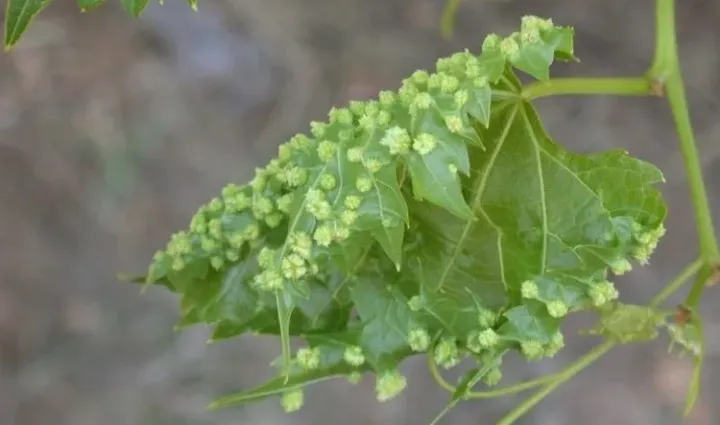
Leaf-galling phylloxera produces hundreds of tiny galls on the underside of leaves. While this affects the photosynthetic capacity, the root damage is the main cause of vine decline and mortality.
Infested vines show stunted growth, yellowing leaves, and reduced yields. Over several years, the root system is destroyed, leading to the eventual death of the entire plant.
The insect spreads through soil, infested rootstock, irrigation water, and even through wind-dispersed nymphs, making containment a significant challenge for vineyard management.
When it appears
Phylloxera activity begins in early spring, coinciding with the bud break of the grapevines. As soil temperatures warm up, overwintering nymphs resume feeding on the roots.
Throughout the growing season, multiple generations occur. The rate of development is highly dependent on climate, with warmer temperatures accelerating the reproduction cycle significantly.
During the summer months, the pest reaches its peak population density. Vineyard managers often observe signs of leaf-galling during this peak activity period.
As temperatures drop in the autumn, the insects move deeper into the soil or toward the root system to survive the winter. They enter a state of dormancy until the next growing season.
The cumulative damage caused throughout the season results in a steady decline of the vine's health, often becoming most apparent during periods of heat stress or drought.
Signs of infestation
The most visible sign is the development of leaf galls on the foliage. These are small, raised bumps on the underside of the leaves where the insects hide and lay their eggs.
Symptoms of root damage include a general loss of vigor, canopy thinning, and yellowing leaves. The vine may look chlorotic as if it is suffering from a nutritional deficiency.
Examination of the roots often reveals characteristic swelling and rotting areas. Decaying tissue due to secondary fungal or bacterial infections often accompanies the root damage.
The decline of the vineyard is usually localized, appearing in patches where vine growth is clearly inferior to neighboring healthy plants. These patches expand over time.
- Leaf galls on the foliage.
- Stunted shoot growth.
- Chlorotic appearance.
- Root swelling and necrosis.
- Localized vine death.
Control measures
The most effective management strategy is the use of phylloxera-resistant rootstocks. Grafting susceptible varieties onto resistant American hybrids is the industry standard for survival.
Strict quarantine measures are essential. Growers must only source certified disease-free nursery stock to avoid introducing the pest into clean vineyard blocks.
Chemical control is difficult, especially for root populations. Systemic insecticides can manage leaf-galling, but they rarely eliminate established root-feeding populations effectively.
Cultural methods, such as flooding the vineyard for extended periods in certain soil types, can drown the pest, though this is rarely practical for large-scale operations.
In cases of severe localized infestation, the best approach is often the removal and destruction of affected vines, including the root system, followed by site sanitization to protect the surrounding vineyard.
Taxonomy
- Latin name
- Vitisiella oenephila
- Order
- Diptera (flies)
- Family
- Cecidomyiidae
- EPPO code
- JANEOE
Discussion
No discussions yet — be the first.