
Desert scorpion
Vaejovis spinigerus
Description
How to identify
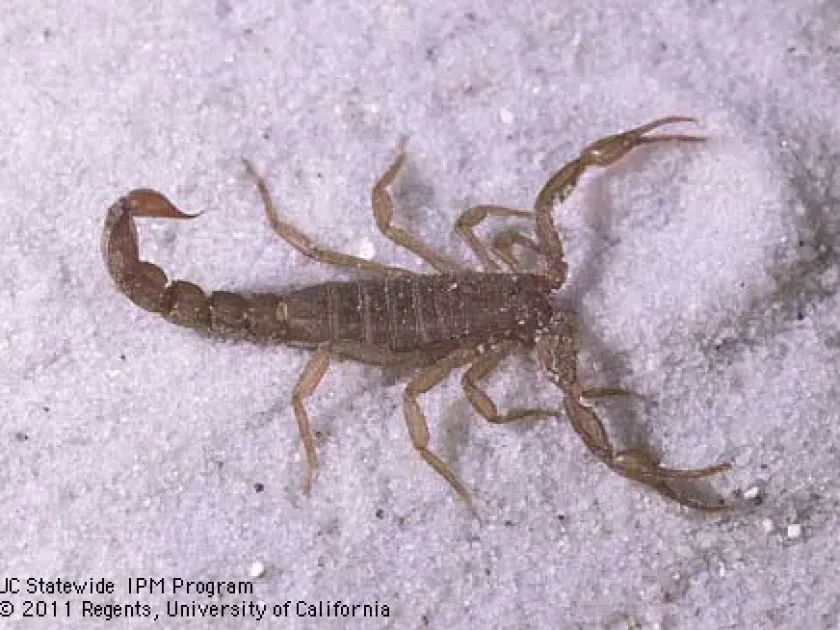
The desert scorpion, scientifically known as Vaejovis spinigerus, is a member of the Vaejovidae family. It is typically recognized by its light brown or sandy coloration, which provides excellent camouflage in arid environments.
Adults generally reach lengths of approximately 6 to 7 centimeters. Their bodies consist of a cephalothorax and a segmented abdomen, terminating in a telson equipped with a venomous stinger used for hunting.
They possess specialized sensory organs called pectines on the underside of their abdomen, which allow them to detect minute ground vibrations, aiding in their nocturnal hunting strategies.
Females exhibit maternal care, carrying their nymphs on their backs until their first molt, a behavior that significantly increases the survival rate of the offspring in harsh climates.
These scorpions are primarily ground-dwellers, often favoring rocky outcrops and areas with dry, loose soil where they can easily find refuge during the heat of the day.
What it damages
It is important to emphasize that Vaejovis spinigerus is not a phytophagous insect and does not feed on plant tissues. Therefore, it does not directly consume or damage crops.
The indirect damage they may cause involves disrupting the soil ecosystem. By preying on beneficial insects and natural pest controllers, they can unintentionally weaken the biological regulation of crop pests.
In greenhouses and agricultural facilities, the presence of these scorpions presents a safety risk to workers. While their venom is generally not lethal to humans, the stings are extremely painful.
The density of a scorpion population is often a biological indicator of an abundance of prey insects in the area, suggesting an underlying infestation of smaller invertebrates.
From an agronomic perspective, the desert scorpion should be viewed as a sign of environmental conditions rather than a direct threat to crop productivity.
When it appears
The activity level of the desert scorpion is strictly dictated by temperature. They are most active during the warmer months, spanning from late spring through early autumn.
During the winter season, these scorpions enter a state of dormancy, retreating deeper into the soil or into crevices where the temperature remains relatively stable.
They are strictly nocturnal, emerging from their burrows only after sunset to hunt, which helps them avoid the extreme dehydration caused by direct sun exposure.
Reproductive cycles are usually synchronized with the peak of the warm season to ensure that nymphs have sufficient time to develop and grow before winter dormancy begins.
Fluctuations in ground moisture also influence their activity; heavy rains can force them out of their burrows, making them more frequently encountered in field environments.
Signs of infestation
One of the most reliable indicators of a desert scorpion infestation is the presence of exuviae, the discarded chitinous skins shed during the molting process, found near their nesting sites.
Distinctive burrows or tunnels beneath rocks and within soil cracks serve as strong evidence that the area is being used as a habitat by the species.
The most effective method for detecting these scorpions is using ultraviolet (UV) light at night, as their exoskeletons contain chemicals that cause them to fluoresce under blacklight.
Accumulations of prey insect fragments, such as empty head capsules or wings near potential hiding spots, often point to a localized population of active predators.
Workplace reports of painful contact or stings while handling soil or debris are common indicators that the site has a established population of scorpions.
Control measures
Chemical control specifically targeting scorpions is often ineffective due to their lifestyle; therefore, an integrated approach focusing on habitat modification is recommended.
The most successful strategy involves removing environmental harborages, such as rock piles, wood debris, and accumulated agricultural waste, where scorpions naturally seek shelter.
Regular soil cultivation, such as deep plowing or frequent tilling, physically destroys burrows and disrupts the habitat, making the environment unsuitable for their reproduction.
For greenhouse operations, installing fine-mesh barriers and ensuring structural integrity of the facility can prevent scorpions from entering production areas.
- Remove debris, stones, and wood piles.
- Implement deep tillage to destroy burrows.
- Manage the prey population (other insects).
- Use protective clothing and gloves during fieldwork.
Taxonomy
- Latin name
- Vaejovis spinigerus
- Family
- Vaejovidae
- EPPO code
- VEJOSG
Discussion
No discussions yet — be the first.