
Wupatki scorpion
Serradigitus wupatkiensis
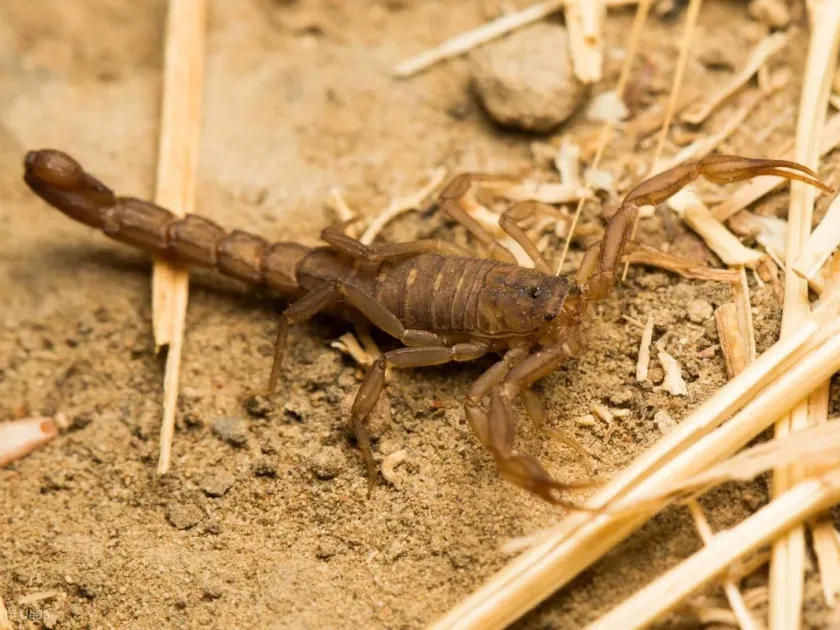
Description
How to identify
The Wupatki scorpion (Serradigitus wupatkiensis) is a member of the Vaejovidae family within the Scorpiones order. This species is specifically adapted to arid environments and rocky terrains.
Typically, these scorpions are small, measuring between 3 to 4 centimeters in length. Their coloration is usually a pale, yellowish-brown, providing camouflage on desert soils and volcanic rocks.
Identification often relies on the morphology of their pedipalps and the specific arrangement of sensory organs on the sternum, which are key diagnostic features for this particular species.
The species is primarily nocturnal, spending most of its life in burrows to avoid heat and predation, making it rarely visible to farmers during standard daylight field inspections.
Its biological structure allows it to thrive in nutrient-poor environments, and it is known for being highly resilient to fluctuations in soil moisture and extreme temperature changes.
What it damages
It is crucial to clarify that the Wupatki scorpion is not a herbivore. It does not feed on plant tissues, so it does not cause direct crop consumption or yield loss through browsing.
However, the indirect impact arises from its burrowing behavior. When scorpions establish nests within field soils, they can disrupt the root architecture of young seedlings.
This mechanical disruption of the root zone can increase the vulnerability of plants to soil-borne pathogens, as damaged roots provide an easy entry point for fungi and bacteria.
In high-density populations, their activity can contribute to localized wilting or stunting of crops, particularly in specialized greenhouse setups or areas with artificial irrigation systems.
While the economic impact is generally classified as low compared to true phytophagous pests, their presence can be a minor nuisance in sensitive agricultural environments.
When it appears
The Wupatki scorpion shows increased activity during warmer seasons, beginning in late spring when ground temperatures rise sufficiently to support their metabolic needs.
Peak activity occurs during summer months, especially after precipitation or irrigation events, which attract the small arthropods that serve as the scorpion's main food source.
As autumn approaches and temperatures drop, their activity level significantly decreases as they prepare for winter dormancy, often seeking deeper soil layers for insulation.
During the winter, the species enters a state of diapause, residing deep underground where the soil temperature remains relatively stable throughout the dormant season.
Understanding these seasonal patterns allows farmers to schedule intensive field maintenance, such as deep tilling, during periods when scorpions are least active on the surface.
Signs of infestation
The most reliable sign of a scorpion's presence is the discovery of small, crescent-shaped burrow entrances in the soil, often located near the base of rocks or large plants.
Unexpected plant wilting in well-irrigated sections of a field, caused by root disruption, may indicate the presence of a burrowing site beneath the soil surface in the root zone.
The finding of abandoned exuviae (cast-off exoskeletons) in sheltered locations near fields is a strong indicator that a population of scorpions is active in the vicinity.
Since these scorpions exhibit fluorescence under UV light, night monitoring with a specialized lantern is the most effective way to confirm their presence and population density.
A sudden increase in localized soil disturbance, characterized by small piles of sifted dirt around burrow entrances, also serves as a visible marker of their activity.
Control measures
Control of Serradigitus wupatkiensis is primarily based on non-chemical agronomic practices, as the use of insecticides is both ineffective and environmentally damaging.
Regular cultivation and deep tilling of fields are highly effective ways to destroy subterranean burrows, forcing the scorpions to migrate away from the cultivated area.
Maintaining soil moisture at optimal levels and preventing excessive water pooling can discourage scorpions, as they prefer soil conditions that are not constantly saturated.
Physical exclusion methods, such as installing barriers around high-value plots, can successfully limit the movement of scorpions into protected growing environments.
Integrating biological pest management to control the scorpion's food source—small soil insects—can help maintain the balance of the ecosystem and keep scorpion populations at negligible levels.
Taxonomy
- Latin name
- Serradigitus wupatkiensis
- Family
- Vaejovidae
- EPPO code
- VEJOWU
Discussion
No discussions yet — be the first.