
Sand fiddler crab
Uca pugilator
Description
How to identify
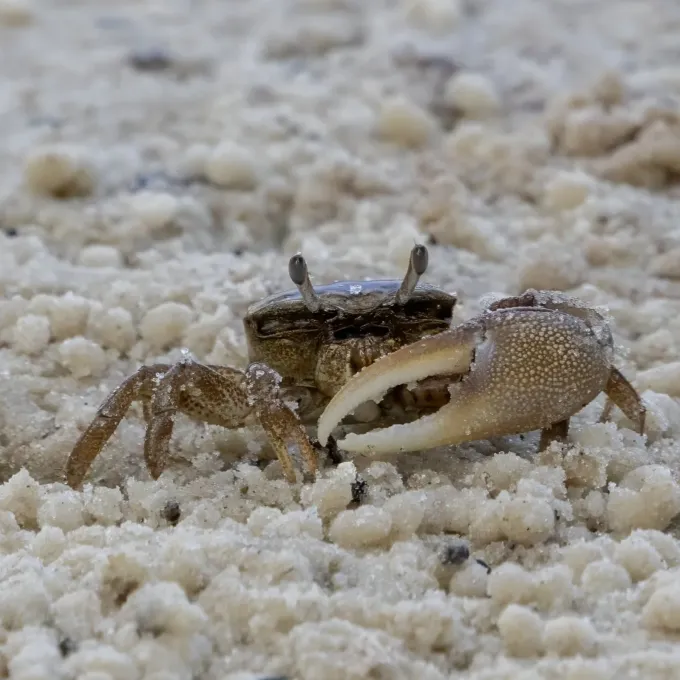
The sand fiddler crab (Uca pugilator) belongs to the order Decapoda and the family Ocypodidae. This species is famous for its distinct dimorphism, where males display one enlarged claw.
The carapace of this crab is generally light in color, ranging from gray to light brown, which provides excellent camouflage against sand environments. Adults typically grow to about 3–5 centimeters in width.
They are primarily known for their complex burrowing behavior in intertidal zones. These burrows can reach significant depths and serve as both a refuge and a site for social interactions.
Fiddler crabs rely on specific moisture levels in the soil, which makes them inhabitants of marshes, estuaries, and sandy beaches rather than typical farmland or agricultural fields.
Identifying these crabs is straightforward as they are highly active during low tide, with males frequently waving their large claws as a territorial display.
What it damages
The sand fiddler crab is not a primary agricultural pest as it does not feed on crops. Its diet consists of detritus, algae, and bacteria found in the sediment.
The damage caused by Uca pugilator is predominantly mechanical. Burrowing activities can compromise the integrity of irrigation systems, dams, and levees in coastal farming regions.
In cases where crops are planted very close to the tide line, the burrowing activity can accidentally damage the root systems of seedlings, causing localized plant stress.
Economic damage is typically restricted to irrigation maintenance costs. There is no evidence suggesting that these crabs actively consume foliage, stems, or fruits of agricultural plants.
Since they are not herbivores, the threat is limited to environmental modification rather than direct consumption or destruction of the harvest itself.
Control measures
Management of sand fiddler crabs focuses on physical barriers rather than chemical intervention. Because they are not agricultural pests, pesticides are rarely warranted.
Physical fortification of irrigation channels using mesh or concrete linings is the most effective way to prevent burrowing damage in areas susceptible to crab activity.
Implementing a buffer zone between the cultivated area and the marshy habitat reduces the likelihood of crabs migrating into the planting zones.
Regular maintenance of coastal land infrastructure is necessary to fill in abandoned burrows, preventing soil erosion or water leakage within the farm's drainage network.
Monitoring the population near farm borders is sufficient to determine if additional structural repairs to dams or irrigation ditches are required during the growing season.
Taxonomy
- Latin name
- Uca pugilator
- Family
- Ocypodidae
- EPPO code
- UCASPU
Discussion
No discussions yet — be the first.