
Fiddler crab
Uca
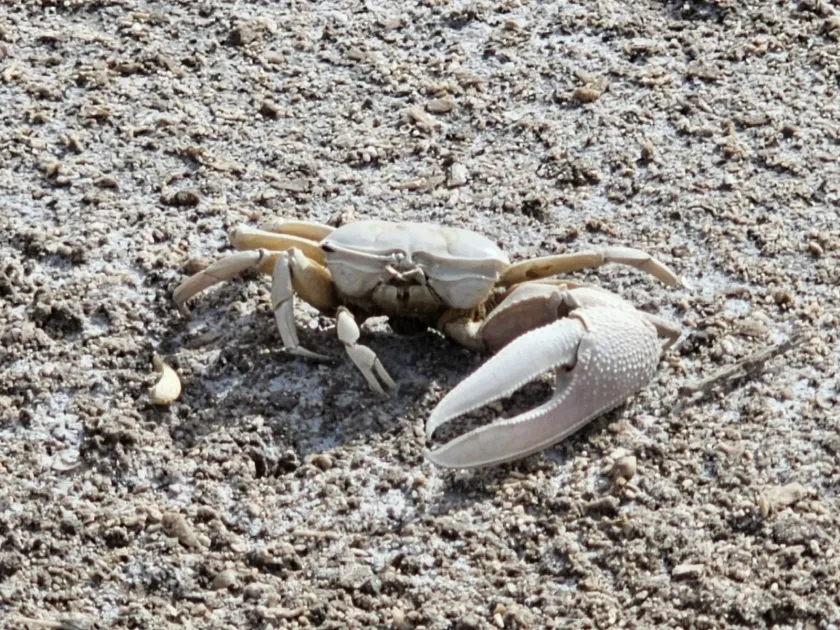
Description
How to identify
The Fiddler crab (genus Uca) belongs to the family Ocypodidae, order Decapoda, and is widely distributed in intertidal zones across the globe.
Male Fiddler crabs are easily identified by their extreme sexual dimorphism, featuring one massive, enlarged claw used for signaling and defense.
These crustaceans typically reach sizes between 2 and 5 centimeters and possess a carapace color that provides camouflage against mud and sand.
They are highly adapted to amphibious life, constructing deep, complex burrow systems in the moist substrates of estuaries and salt marshes.
Their behavior is rhythmically synchronized with the tidal cycles, as they emerge during low tide to forage and communicate with other colony members.
What it damages
The primary economic impact of the Fiddler crab is observed in rice cultivation, particularly in fields located near coastal estuaries.
By excavating extensive networks of tunnels, these crabs cause significant structural damage to earthen dams, bunds, and irrigation canals.
This structural degradation leads to water leakage, preventing the maintenance of the necessary water levels required for optimal rice crop development.
The root systems of young rice plants are frequently severed or destabilized by the crabs' burrowing activities, leading to stunted growth or plant death.
Furthermore, their relentless digging promotes soil erosion and can transform fertile rice paddies into unusable terrain over short periods.
When it appears
Fiddler crab activity is heavily dependent on warmer temperatures, peaking during the spring and summer months when rice crops are typically growing.
During the warmer seasons, the crabs are most active on the surface, where they forage and mate, leading to increased damage to the field surroundings.
As temperatures drop, they retreat deep into their burrows to overwinter in a state of reduced activity, waiting for the return of warmer conditions.
Their lifecycle includes a planktonic larval stage (zoea) that develops in marine environments before transitioning to a terrestrial or semi-terrestrial lifestyle.
The seasonal invasion of rice paddies often coincides with the initial flooding of the fields, which creates a habitat attractive to these crustaceans.
Signs of infestation
The most prominent sign of a Fiddler crab infestation is the presence of numerous small, circular holes in the embankments of rice fields.
Accumulations of excavated soil (pellets or mounds) near the entrance of these tunnels are clear indicators of active colony presence.
Visual confirmation involves spotting the crabs near their burrows during low tide or cloudy weather, often showing their distinct asymmetrical claws.
A sudden, unexplained decrease in the water level of rice paddies often suggests that crab burrows have breached the integrity of the containment walls.
Localized crop decline and yellowing in areas adjacent to banks are indicative of root disturbance caused by underground crab tunnels.
Control measures
Effective management focuses on structural reinforcement, such as lining bunds with geotextiles or compacted clay to prevent tunnel penetration.
Cultural control strategies include managing the salt content of the water, as certain Fiddler crab species are sensitive to specific salinity gradients.
Biological control, by encouraging local predatory bird populations that feed on crabs, can help naturally reduce colony density.
Routine inspection and timely maintenance of field margins during the off-season are critical to preventing the establishment of large-scale colonies.
- Use of mechanical barriers at field inlets to stop crab movement.
- Regular compaction of soil embankments to discourage burrowing.
- Removal of dense vegetation along banks that provides cover for crab activities.
Taxonomy
- Latin name
- Uca
- Family
- Ocypodidae
- EPPO code
- UCASSP
Discussion
No discussions yet — be the first.