
Flour mite
Tyroglyphus grioti
Description
How to identify
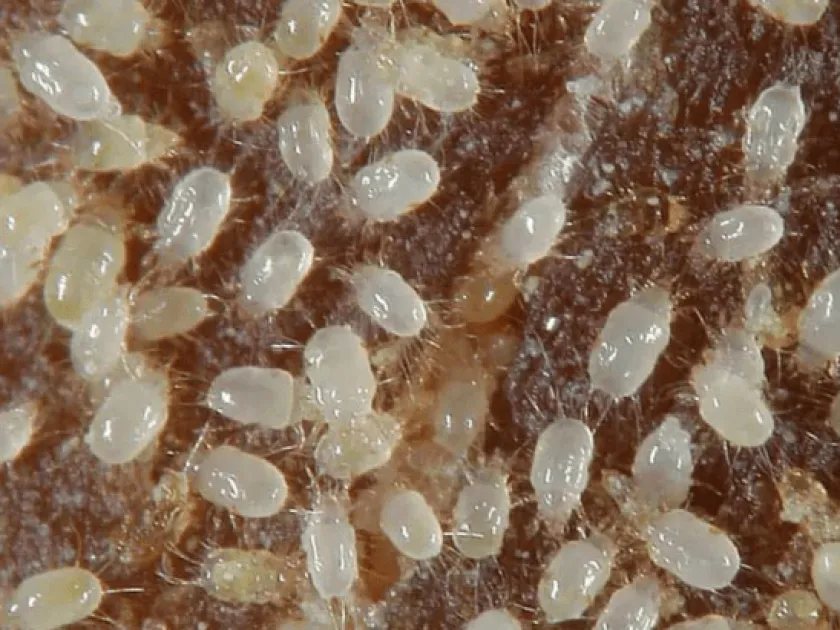
The flour mite, scientifically known as Tyroglyphus grioti, belongs to the family Acaridae, order Acariformes. It is a tiny organism, usually 0.3 to 0.5 mm long, with a translucent, yellowish-white body.
The morphology of these mites is well-adapted to life within grain masses, featuring eight legs that allow them to navigate efficiently through stored commodities and organic dust.
A crucial biological adaptation of this species is the hypopus stage, a dormant and highly resistant phase that allows the mite to survive adverse conditions like extreme dehydration or cold.
Identification often requires magnification, as their small size makes it impossible to distinguish individual mites without professional laboratory equipment and sieving techniques.
When infestation levels become extreme, the accumulation of mites can appear as a brownish, moving dust layer on the surface of the grain heap, indicating an urgent problem.
What it damages
Flour mites primarily target stored cereals, legumes, flour, grains, and animal feed, especially if these products have high moisture levels above 15%.
The mites specifically seek out the germ of the grain, as it is rich in nutrients and fats, causing significant loss of seed viability and overall nutritional value of the stock.
Besides eating the grain, mites contaminate the entire batch with their feces, exuviae, and dead bodies, significantly reducing the hygienic quality of food products.
The biological activity of these mites leads to increased moisture in the grain bulk, which subsequently triggers the growth of harmful molds and mycotoxins.
Economic damage is substantial, as infested grain often becomes unmarketable and must be processed at a significant financial loss or destroyed completely.
When it appears
As a stored product pest, the flour mite does not have a seasonal cycle but rather a continuous cycle dictated by the temperature and humidity within storage facilities.
They thrive best at temperatures between +18 and +25 degrees Celsius and high relative humidity, which allows them to reproduce at an exponential rate.
If temperatures drop significantly, the mites enter a state of reduced metabolic activity, waiting for conditions to improve, but they rarely die due to cold alone.
The reproductive cycle is very fast, with one generation completing its development in as little as 10 to 15 days under optimal conditions, leading to rapid population explosions.
Mites are typically introduced into storage facilities through infested incoming grain, contaminated equipment, transport trucks, or even through small animals like rodents.
Signs of infestation
An early indicator of an infestation is a distinct, sweetish, honey-like odor emanating from the grain, which is caused by the metabolic processes of the mite population.
Visible signs include a greyish-brown dust layer on the surface of the stored product, which, in advanced cases, can form crusty clumps in corners and damp areas.
Infested grain often has a sour, musty smell and looks damaged at the germ, as the mites leave behind holes and fragmented debris.
Laboratory confirmation of the infestation is performed by analyzing grain samples under a microscope to detect the presence of mites or their dormant hypopus stages.
Thermographic monitoring of storage bins frequently reveals temperature hotspots, which are often the first sign that an active mite colony is developing within the grain mass.
Control measures
The most effective strategy is the maintenance of strict storage conditions, specifically ensuring grain moisture remains below 13-14%, which inhibits mite reproduction.
Before stocking, storage facilities must undergo thorough cleaning and professional disinfestation to eliminate any potential breeding grounds for the pests.
- Implementing active ventilation to reduce the temperature and moisture of stored grain.
- Applying fumigation protocols with registered phosphine-based products to eradicate infestations.
- Using hermetic storage solutions to prevent the entry of new pests and maintain gas composition.
Ongoing monitoring of stored stocks with regular grain quality checks is essential to detect mite activity before it reaches economically damaging thresholds.
Effective pest management relies on a combination of climate control, sanitation, and rapid response to any biological threats within the grain silos.
Taxonomy
- Latin name
- Tyroglyphus grioti
- Order
- Mites
- Family
- Tyroglyphidae
- EPPO code
- TYRGGR
Discussion
No discussions yet — be the first.