
Flour mite
Tyroglyphus
Description
How to identify
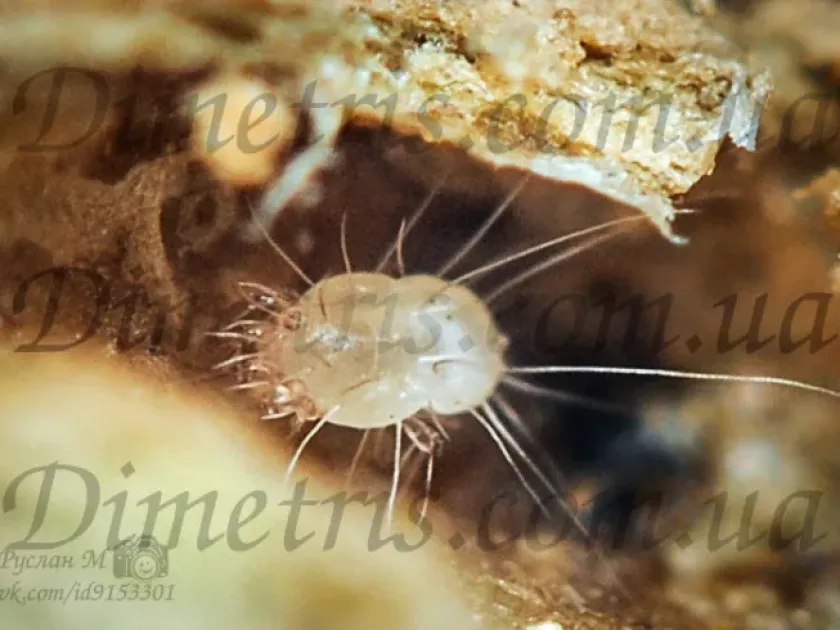
The flour mite (Tyroglyphus farinae), also known as the grain mite, is a member of the Acaridae family. It is a microscopic pest measuring approximately 0.3 to 0.6 mm in length, characterized by a translucent, white-to-yellowish body and eight short legs.
This mite thrives in environments with high humidity and moderate temperatures. Its life cycle progresses through several stages: egg, larva, protonymph, hypopus, deutonymph, and adult. The hypopus stage is uniquely resistant to unfavorable conditions.
The flour mite is highly mobile and can quickly spread through grain bulks. In optimal conditions, such as temperatures between 18°C and 25°C, the mite can complete its life cycle in as little as 10 to 14 days, leading to rapid population growth.
Females are prolific, capable of laying up to 100 eggs during their lifespan. This reproductive efficiency allows the pest to colonize storage facilities in very short periods, often causing significant infestation levels before being detected.
Due to their microscopic size, they are often overlooked during the initial stages of infestation. They prefer the germ portion of seeds, where they find both food and the necessary moisture levels for successful survival.
What it damages
Flour mites primarily target cereal grains, seeds, flour, cereals, and animal feed. By consuming the germ of the seed, they significantly reduce germination rates, rendering the material useless for planting purposes.
They damage products by leaving behind feces, cast skins, and dead carcasses, which contaminate the grain. This contamination introduces a distinct, sweet, and musty odor, significantly reducing the product's market value.
As they feed, mites facilitate the growth of mold and bacteria. They physically carry fungal spores on their bodies, which initiates the process of self-heating within the grain bulk, leading to potential spoilage of entire batches.
Human or animal consumption of grain infested with flour mites can cause allergic reactions, dermatitis, and digestive issues. Consequently, heavily infested products are often discarded for safety and quality reasons.
Economic losses are compounded by the costs of fumigation, cleaning, or the potential total loss of the stored product. Once an infestation is established, it requires rigorous intervention to prevent further spread.
Signs of infestation
The presence of flour mites is often indicated by a dusty or powdery texture on the surface of grain bulks. This is a result of the mites breaking down grain particles through their continuous feeding activity.
A strong, sweet, and characteristic "mite smell" is a key indicator of heavy infestation. When grain is deeply infested, the temperature within the bulk increases due to the metabolic activity of both the mites and the associated fungi.
Visual inspection with a magnifying glass can reveal the movement of white, microscopic mites on the grain surface. Furthermore, the germ of the seed will appear darkened or damaged upon close examination.
Laboratory testing using sifting and microscopic analysis of grain samples is the standard procedure for confirmed detection. In some cases, heating a small sample can encourage mites to move to the surface, making them easier to count.
Another sign is the observation of increased secondary insect presence, as some warehouse pests are attracted to the damaged and decomposing materials left behind by the mite infestation.
Control measures
The most effective strategy for managing flour mites is the maintenance of grain moisture levels below 13-14%. Without adequate moisture, the mites cannot survive or reproduce, making dry storage the primary line of defense.
Regular aeration and cooling of the grain bulk help to lower the temperature and moisture content, creating an unfavorable environment for the pests. This process prevents the establishment of mite colonies.
Chemical fumigation is necessary in cases of severe infestation. Professional application of approved phosphine-based fumigants is standard procedure to eliminate mites in sealed storage structures.
Preventative measures include thorough cleaning and sanitizing of grain bins before new harvests are stored. Ensuring the storage facility is airtight prevents the re-entry of pests and moisture from external sources.
- Maintain grain moisture below 14%.
- Use aeration systems for cooling.
- Perform regular facility inspections.
- Apply professional-grade fumigation when needed.
- Sanitize all equipment prior to loading.
Taxonomy
- Latin name
- Tyroglyphus
- Order
- Mites
- Family
- Tyroglyphidae
- EPPO code
- TYRGSP
Discussion
No discussions yet — be the first.