
Histiogaster
Histiogaster
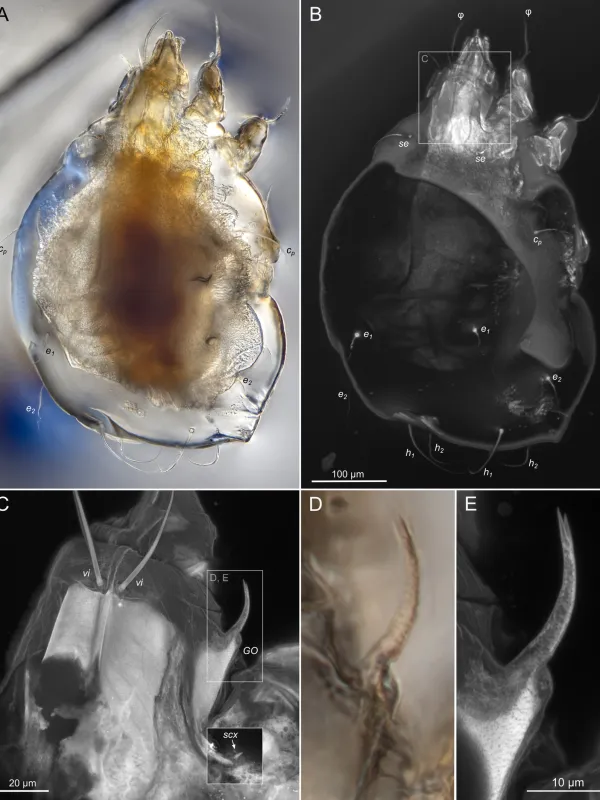
Description
How to identify
Histiogaster is a genus of mites belonging to the family Acaridae. These are microscopic pests characterized by an oval, whitish, or translucent body.
Adult mites possess specialized mouthparts adapted for feeding on decaying organic matter and plant tissues. They often thrive in large colonies, rapidly expanding their population in suitable environments.
A notable biological trait of many species in this genus is the formation of hypopus—a dormant stage that provides resistance against adverse environmental conditions.
They prefer high-humidity environments with poor ventilation, where abundant organic material allows for rapid and uncontrolled reproduction.
Due to their small size (0.5–0.8 mm), field identification often requires the use of magnification tools like a hand lens or a laboratory microscope.
What it damages
These mites are notorious pests in greenhouse environments and commercial mushroom farms, where they damage the fruiting bodies of Agaricus and Pleurotus species.
In crop production, Histiogaster attacks bulbs, tubers, and stored seeds, especially when storage conditions are improperly managed regarding humidity.
The pest bores tunnels into plant tissues, which facilitates the secondary entry of harmful bacteria and fungi, accelerating decay.
Infested plant organs lose their viability and marketability, resulting in significant economic losses for growers and warehouse managers.
In storage facilities, a severe infestation can lead to the total destruction of stored seed stocks within a short period.
Signs of infestation
The primary indicator of an infestation is a distinct, sweet-smelling odor of decay emanating from the substrate or stored produce.
A loose, dusty-looking film often appears on the surface of plant tissues, consisting of a mass of mites, their waste, and fragmented plant debris.
On bulbs, you may observe the softening of the basal plate, discoloration of scales, and internal tunnels filled with fine brown frass.
In mushroom houses, characteristic signs include pitted or eaten stalks and caps, making the mushrooms limp, soggy, and deformed.
High mite density is often visible to the naked eye as a moving, grayish layer on the surface of substrate containers or storage bins.
Control measures
The most effective strategy is strictly maintaining low-humidity and well-ventilated conditions in storage areas, as these mites cannot survive in dry air.
Regular sanitation of storage facilities, tools, and containers using approved acaricides or fumigants is essential to break the mite life cycle.
Before storing crops, ensure all materials are thoroughly dried and meticulously sorted to remove any signs of damage or potential infestation.
If a mass outbreak occurs in greenhouse conditions, contact a professional to apply systemic acaricides specifically approved for the crops in question.
- Ensure proper ventilation to reduce moisture levels.
- Use certified disease-free planting material.
- Adhere to strict sanitation and crop rotation protocols.
Taxonomy
- Latin name
- Histiogaster
- Order
- Mites
- Family
- Tyroglyphidae
- EPPO code
- HISGSP
Discussion
No discussions yet — be the first.