
Trybliographa rapae
Trybliographa rapae
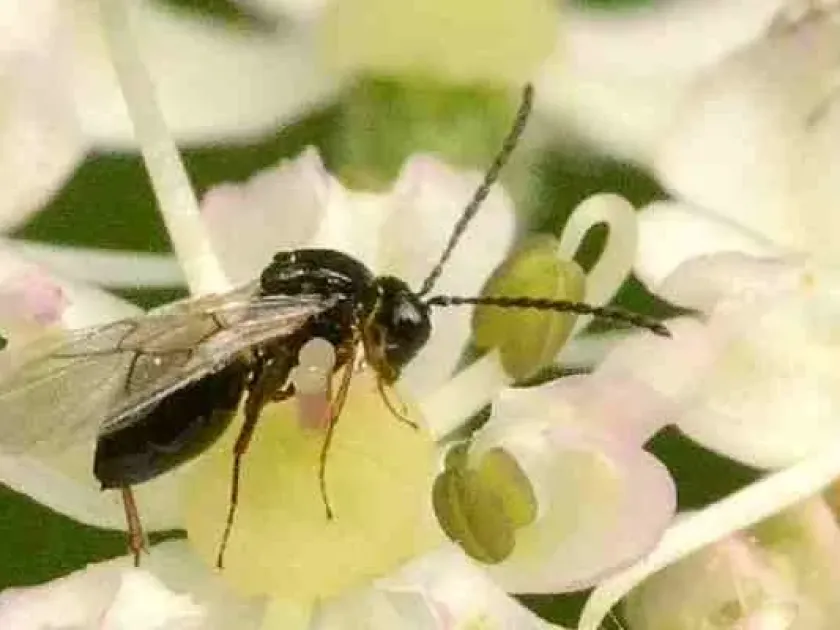
Description
How to identify
Trybliographa rapae is a small hymenopteran insect belonging to the Figitidae family, well-known in agricultural entomology.
It is a specialized parasitoid, meaning its life cycle depends on finding and infecting specific stages of host insects, primarily cabbage maggots.
Adult wasps are characterized by their dark, slender bodies and specialized sensory organs on their antennae used for locating hosts underground.
Unlike many other insect species, Trybliographa rapae is highly beneficial to agriculture as it functions as a natural enemy to crop pests.
Identification typically requires the use of sticky traps or soil-emergent traps, as these insects are too small and elusive to be easily spotted in fields.
What it damages
This insect does not inflict any damage on vegetable crops; on the contrary, it provides essential ecosystem services by controlling pest numbers.
The host species targeted by Trybliographa rapae are cabbage root flies (Delia radicum), which are notorious pests of brassica crops.
The damage to crops is strictly caused by the maggots of the cabbage fly, which tunnel into roots and interfere with nutrient uptake.
By parasitizing these larvae, Trybliographa rapae reduces the reproductive rate of the pest population, directly benefiting the farmer's yield.
Sustainable farming practices rely on protecting this parasitoid from broad-spectrum insecticides that could disrupt its population balance.
When it appears
The emergence of Trybliographa rapae is synchronized with the activity of its host, typically beginning in the late spring.
Adults are active throughout the growing season, tracking the successive generations of cabbage flies that emerge in the soil.
During the peak of the summer, high numbers of this wasp can be found in fields with cabbage, broccoli, and other cruciferous crops.
As the weather cools in autumn, the parasitoids complete their development within the host pupae, which then serves as a overwintering site.
Temperature and soil moisture levels are crucial factors that dictate the annual abundance and effectiveness of this beneficial wasp.
Signs of infestation
There are no direct signs of damage caused by this wasp; instead, its presence is indicated by a healthy balance of insect populations.
Farmers can monitor the effectiveness of these parasitoids by examining the mortality rate of cabbage maggot pupae collected from the field.
Visible signs of cabbage maggot infestation include stunted plants, wilting during mid-day, and root necrosis, which signal the need for monitoring.
If pupae are collected and placed in controlled conditions, the emergence of Trybliographa rapae instead of a fly confirms the parasitoid's success.
Increased field presence of this wasp often correlates with reduced economic impact of root fly infestations in well-managed agroecosystems.
Control measures
There is no need for control measures against Trybliographa rapae, as it is a highly valued natural ally in integrated pest management.
The primary goal for agronomists is to foster conditions that allow these populations to thrive without interference from toxic chemicals.
Practices like reduced tillage and the use of cover crops can preserve the habitats where these beneficial wasps spend their life cycles.
- Avoid unnecessary pesticide applications that kill non-target beneficial insects.
- Implement crop rotation to break the life cycle of the host fly.
- Maintain non-crop floral borders to support adult wasp nutrition.
By integrating biological control into vegetable production, growers can achieve higher yields with less reliance on synthetic chemistry.
Taxonomy
- Latin name
- Trybliographa rapae
- Order
- Hymenoptera
- Family
- Figitidae
- EPPO code
- PSUCGI
Discussion
No discussions yet — be the first.