
Callaspidia
Callaspidia
Description
How to identify
Callaspidia is a genus of insects within the family Figitidae, order Hymenoptera. These are microscopic parasitic wasps that play a complex role in the agro-ecosystem balance.
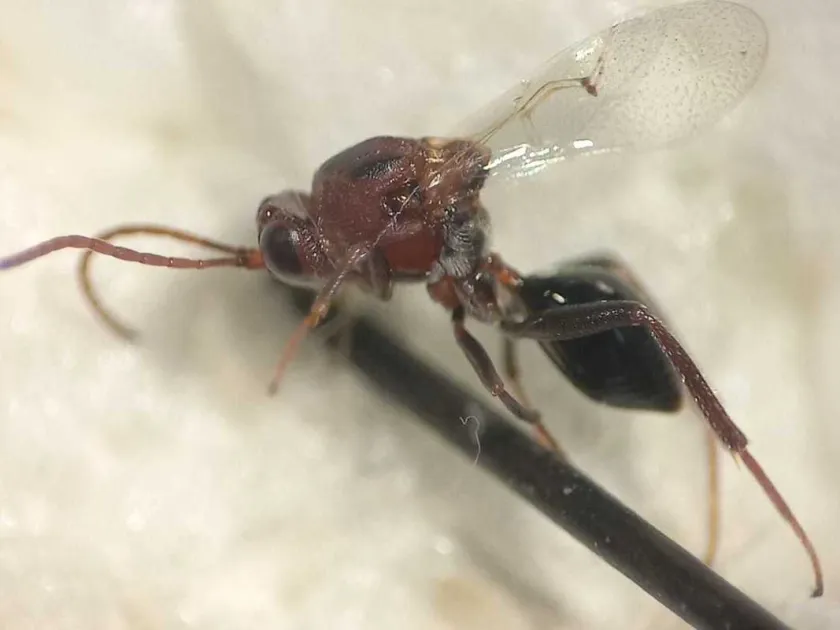
The morphology of adults is defined by a robust, dark-colored body with a highly developed scutellum. Their small size makes them inconspicuous, often requiring magnification for accurate taxonomic identification.
They have evolved specialized sensory organs to locate hosts, which are typically the larvae of other insects that inhabit various agricultural crops.
The wings of these insects are transparent with simplified venation patterns, typical for members of this superfamily. This morphological feature aids in their identification by professional entomologists.
Unlike many other insects, their physiological processes are closely tied to the developmental cycles of their hosts, making them sensitive indicators of the agro-ecosystem health.
What it damages
These insects do not cause direct mechanical damage to crops such as leaves or stems. Instead, their harm is indirect, as they act as hyperparasitoids targeting beneficial entomophagous insects.
By parasitizing the natural enemies of common pests like aphids, Callaspidia indirectly promotes pest outbreaks, leading to significant yield losses in cereals and vegetables.
Their presence destabilizes the integrated pest management programs, as the populations of natural biocontrol agents are suppressed by these tiny parasitic wasps.
This disruption can necessitate the use of chemical interventions that might otherwise be avoided in sustainable and organic farming practices.
Economic damage is assessed through the decrease in the efficacy of biological control and the subsequent surge in populations of harmful pests on the crops.
When it appears
Activity is most pronounced during the vegetative stages of the crop. They emerge in the spring, synchronized with the presence of host larvae in the field environment.
Multiple generations can occur throughout the growing season, with population dynamics heavily dependent on temperature and humidity levels within the crop canopy.
Overwintering usually occurs in the pupal or adult stage, hidden within soil debris or sheltered areas near the borders of the agricultural fields.
Spring emergence is triggered by rising temperatures, allowing the wasps to establish their population early in the season, which potentially impacts the entire crop cycle.
Peak activity periods are typically observed during mid-summer, when the diversity of insect hosts is at its maximum across different farm plots.
Signs of infestation
Visible signs of infestation are absent due to the microscopic scale of the organism. Monitoring relies on technical methods such as sticky traps or sweep netting.
A decline in the density of beneficial insects, such as lady beetles or lacewings, despite stable environmental conditions, is a primary indicator of parasitoid pressure.
Laboratory examination of collected plant samples reveals larvae with internal parasitization, confirming the presence of Callaspidia within the population.
Unexpected shifts in the proportion of pest-to-predator ratios in field surveys serve as a critical warning for agricultural managers and crop scouts.
Regular field inspections and analysis of trapped samples remain the most reliable ways to track the presence and activity of these insects throughout the growing season.
Control measures
Management focuses on maintaining the ecological balance rather than direct eradication, as Callaspidia are part of the complex field web of life.
Selective use of insecticides is highly recommended to protect the broader ecosystem and prevent the indiscriminate killing of natural predators and parasitoids.
Crop rotation and field border management help disrupt the overwintering sites, reducing the likelihood of early spring infestations in the following season.
Integrating habitat management, such as planting flowering strips, can boost the resilience of beneficial insect populations, making them less susceptible to parasitism.
Strategic monitoring and timing of necessary interventions allow for sustainable crop protection while mitigating the negative influence of parasitic insects on total yield.
Taxonomy
- Latin name
- Callaspidia
- Order
- Hymenoptera
- Family
- Figitidae
- EPPO code
- CLLSSP
Discussion
No discussions yet — be the first.