
Trybliographa diaphana
Trybliographa diaphana
Description
How to identify
Trybliographa diaphana is a member of the Hymenoptera order, specifically belonging to the Figitidae family. It is often recognized as a small parasitic wasp that interacts with various soil-dwelling insects within agricultural ecosystems.
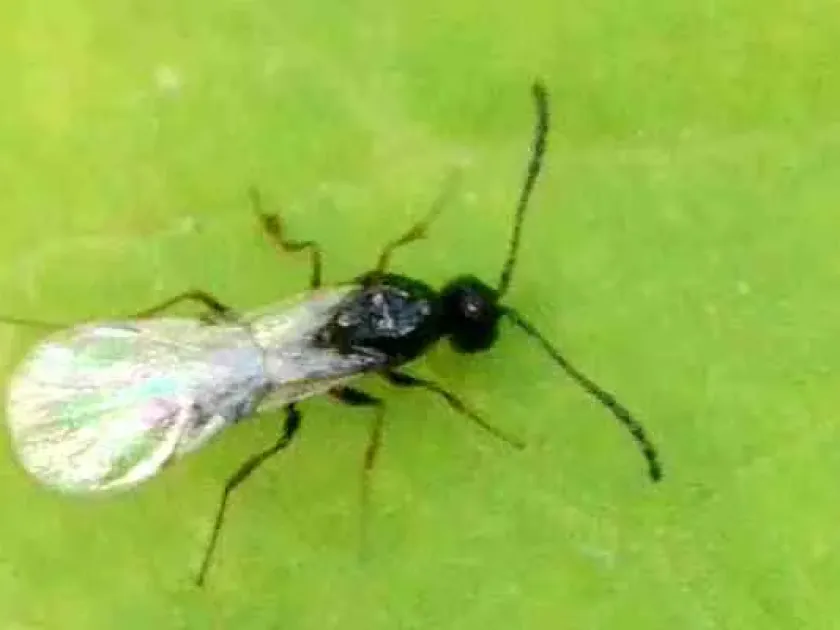
The adult insect is characterized by its dark, compact body and notably transparent wings, which serves as a primary diagnostic feature for identification.
Typically measuring between 2 and 3 millimeters, these insects possess a distinct body structure with clearly defined abdominal segments, making them difficult to spot without professional entomological equipment.
Their life cycle undergoes complete metamorphosis, passing through egg, larval, pupal, and adult stages, adapting effectively to temperate field conditions.
Understanding their morphological traits is essential for agronomists, as accurate species identification is the first step toward determining the appropriate management strategy.
What it damages
This species is primarily associated with cereal crops, including wheat, barley, and rye, where it can influence the health of the plant's basal area.
Larval activity can damage the stem tissues near the root zone, which may predispose the plants to opportunistic fungal infections and root rot diseases.
Plants affected by this pest often show signs of stunted growth, leaf chlorosis, and reduced vigor, which directly impacts the crop's ability to reach its yield potential.
While often acting as a minor pest, high populations can cause significant localized economic losses if the environmental conditions favor their rapid reproduction.
The damage is most pronounced when crops are in the tillering stage, as the physiological stress from the pest can compromise the development of the primary stem.
When it appears
The adult Trybliographa diaphana is most active during the spring and summer months, aligning with the vegetative growth period of cereal crops.
Monitoring efforts should intensify during the crop’s stem elongation phase, as this is when the insect is most mobile and reproductive activity is at its peak.
Temperatures between 18°C and 24°C provide an optimal environment for their biological processes, leading to faster life cycle completion.
As the harvest season approaches, the insects prepare for diapause, typically seeking refuge in the upper soil layers or within decaying plant residue.
Effective scouting requires consistent observations, particularly in fields with high moisture retention, as these areas are favored by the pest.
Signs of infestation
One of the earliest signs of infestation is the yellowing of the lower leaves, which occurs due to the impairment of the nutrient uptake from the roots.
Close inspection of the stem base often reveals micro-lesions caused by larval feeding, which can be observed during the early growth stages of the plant.
Localized patches of weakened or shorter plants within a field serve as a visual indicator of a concentrated pest population.
The use of yellow sticky traps placed near the base of the plants can help confirm the presence and activity levels of adult wasps in the area.
Secondary signs often include the development of necrotic tissues at the root-stem junction, often associated with the entry of soil-borne pathogens facilitated by pest activity.
Control measures
Crop rotation is the most effective preventative measure, as it disrupts the life cycle of the pest by removing its host plants for the duration of the cycle.
Proper soil tillage practices, including deep plowing, are highly recommended to destroy pupae and overwintering adults residing in the soil.
Integrated pest management (IPM) should prioritize biological control by encouraging natural predators, only utilizing chemical insecticides when thresholds are exceeded.
Weed management, especially the removal of perennial grasses, is critical to eliminating alternate host sites and reducing the pest's reproductive capacity.
Selecting vigorous crop varieties that exhibit rapid early growth helps the plants establish strong root systems, making them more resilient to minor pest infestations.
Taxonomy
- Latin name
- Trybliographa diaphana
- Order
- Hymenoptera
- Family
- Figitidae
- EPPO code
- TRYBDI
Discussion
No discussions yet — be the first.