
Green-backed trogon
Trogon viridis
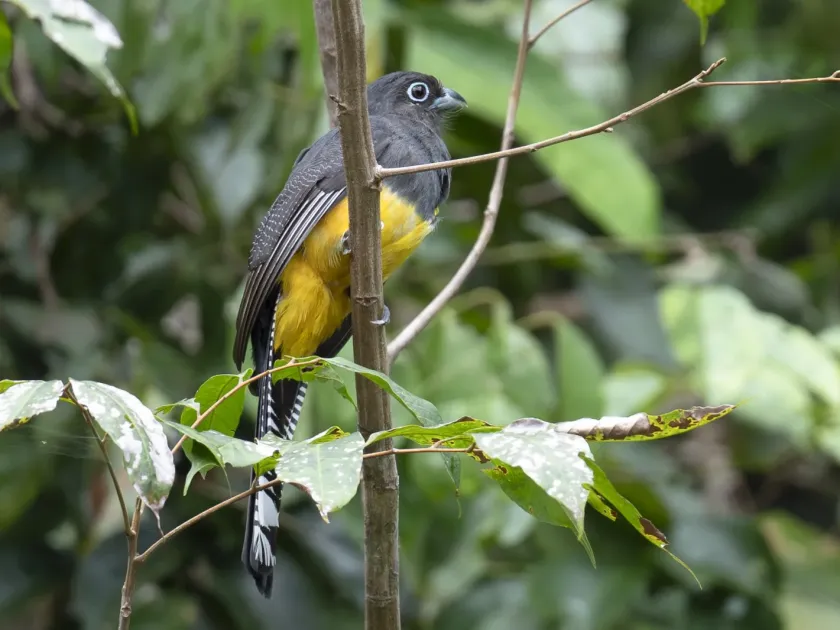
Description
How to identify
The Green-backed trogon (Trogon viridis) is a bird species belonging to the Trogonidae family, known for its distinct plumage and forest habitat.
Males feature a vibrant green back and breast, contrasting sharply with a black throat and face, while the abdomen is typically bright yellow.
The species is best identified by its tail, which displays prominent white bars on the underside, a key diagnostic feature distinguishing it from other trogons.
Females exhibit more subdued brownish-grey tones, providing essential camouflage when the birds nest in natural tree hollows or abandoned insect mounds.
Usually observed in tropical forests, they frequently venture into agricultural zones, especially where fruit-bearing trees are integrated into the landscape.
What it damages
The Green-backed trogon primarily consumes fruits, berries, and seeds, which occasionally puts it in conflict with agricultural interests in tropical regions.
On cocoa and coffee plantations, these birds may peck at ripening fruits, leading to physical damage that reduces the harvest's quality and market value.
While they are not traditional crop destroyers like insects, their feeding habits can lead to localized losses in smaller fruit orchards or plantations.
Conversely, they contribute to the ecosystem by consuming harmful insects and acting as seed dispersers, which benefits the surrounding habitat's health.
The severity of damage is typically correlated with the bird population density in the area and the availability of alternative wild food sources in nearby forests.
When it appears
The activity of these birds in agricultural settings is most pronounced during the ripening stages of the crops they feed upon.
As a non-migratory species, the Green-backed trogon remains in its home range throughout the year, maintaining a constant presence near agricultural plots.
Increased foraging activity often occurs during the breeding season when the birds require extra energy for nesting and feeding their offspring.
While there is no strict seasonal migration, fluctuations in the availability of wild forest fruits often drive the birds toward human-cultivated crops.
Farmers should be alert to the birds' presence throughout the year, particularly during peak harvest times for vulnerable tropical fruit varieties.
Control measures
Non-lethal methods are recommended for managing the presence of Green-backed trogons, focusing on deterrence rather than population reduction.
Physical barriers such as bird-proof netting are the most effective solution for protecting individual high-value fruit trees from damage.
The use of acoustic deterrents, including recorded alarm calls of raptors, can successfully discourage the birds from settling in the orchard area.
Creating wildlife-friendly buffer zones with wild fruit-bearing trees can serve as a distraction, effectively luring birds away from the main production areas.
Visual deterrents, such as reflective holographic tape or predator silhouettes, can be used sparingly and should be moved periodically to maintain their efficacy.
Taxonomy
- Latin name
- Trogon viridis
- Family
- Trogonidae
- EPPO code
- TRGNVI
Discussion
No discussions yet — be the first.