
Quetzal
Pharomachrus
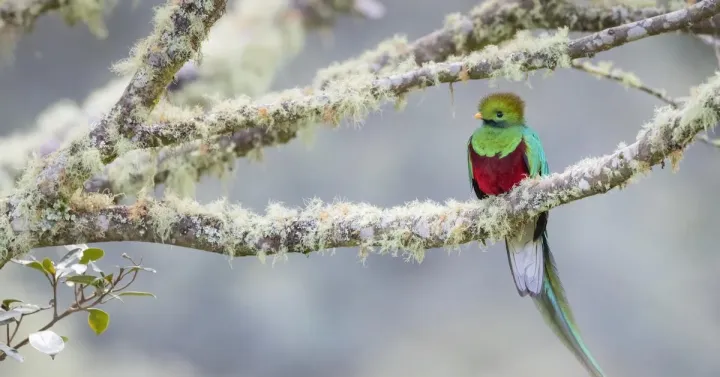
Description
How to identify
The quetzal (Pharomachrus) is a genus of birds in the Trogonidae family and the Trogoniformes order. They are widely recognized for their vibrant plumage and the long, elegant tail feathers of the male.
These birds inhabit the montane cloud forests of Central and South America, maintaining a strictly sedentary lifestyle within these regions.
From an agronomical perspective, the quetzal is not a pest. They are wild forest dwellers that do not interact with human agricultural activities.
Their biological cycle depends heavily on the availability of nesting hollows in mature trees, which limits their habitat to primary or secondary forests.
As rare species, they are often the focus of conservation efforts rather than any form of pest management or agricultural control.
What it damages
The quetzal causes zero damage to agricultural crops, grains, vegetables, or ornamental plants. They are strictly frugivorous and insectivorous within their native forest habitat.
Their diet consists primarily of fruits from trees in the Lauraceae family, as well as insects, lizards, and frogs found in the forest canopy.
They do not possess the feeding habits associated with pests that would cause economic loss to farmers or agricultural industries.
Their ecological impact is positive, as they serve as important seed dispersers for many native tree species, supporting forest regeneration.
Classifying the quetzal as a pest is an inaccurate and unfounded assertion that contradicts all zoological and agronomical evidence.
Control measures
No control measures are necessary for the quetzal, as they pose no threat to plant health or food production systems.
In their native countries, these birds are strictly protected by environmental laws to prevent the decline of their population.
Agricultural practices in their habitat range are encouraged to be organic or ecologically sustainable to prevent habitat degradation.
Protecting the forests where these birds live is a benefit to regional agriculture, as it helps maintain water cycles and natural pest-control mechanisms provided by other bird and insect species.
Farmers are encouraged to appreciate these birds as part of the natural heritage rather than viewing them as a threat to their harvest.
Taxonomy
- Latin name
- Pharomachrus
- Family
- Trogonidae
- EPPO code
- PHMHSP
Discussion
No discussions yet — be the first.